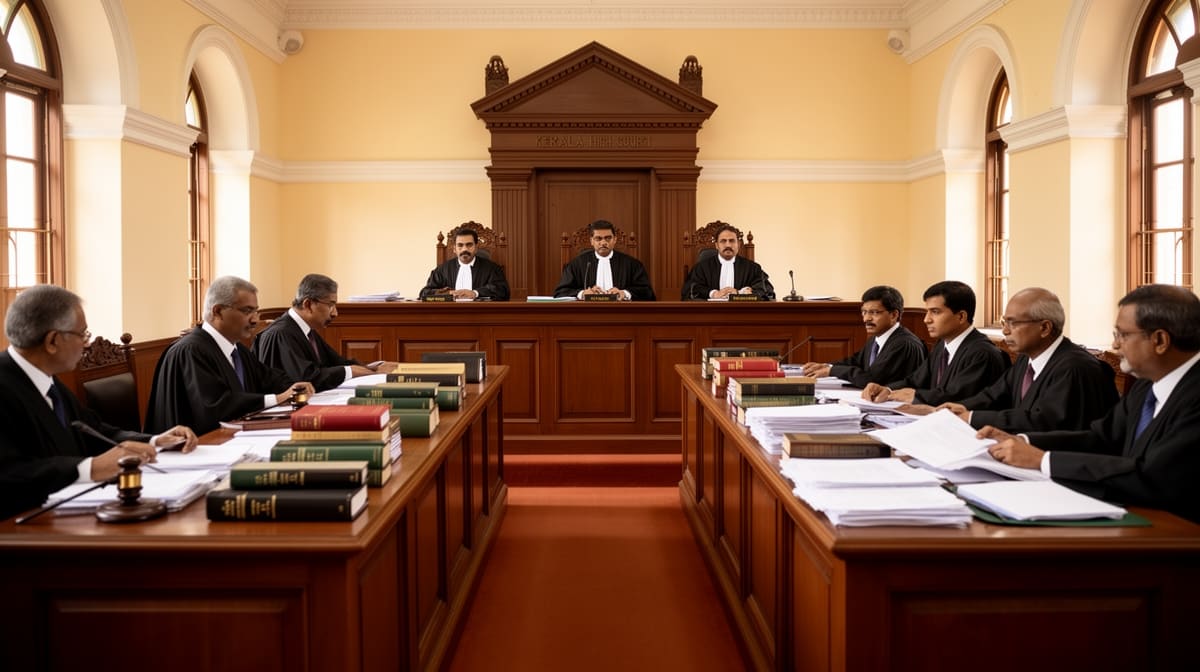
The Kerala High Court has dismissed a writ petition filed under Article 226 of the Constitution of India, holding that disputed questions of fact in contractual disputes cannot be adjudicated in writ proceedings. The Court emphasized that such matters must be relegated to civil suits for proper adjudication.
Background & Facts
The Dispute
The petitioner, a petty contractor, sought a writ of mandamus commanding the respondents to disburse Rs.23,78,066/-. This claim was based on a decision taken in a joint meeting of the respondents on 22.09.2019, as evidenced by Ext.P13 letter dated 07.06.2019 issued by the 2nd respondent to the 3rd respondent. The petitioner relied on Ext.P4 minutes of the meeting of the 1st respondent Grama Panchayat held on 23.07.2010, Ext.P6 decision of the 1st respondent dated 27.02.2019, and Exts.P8 to P12 communications of different dates between the respondents.
Key Facts
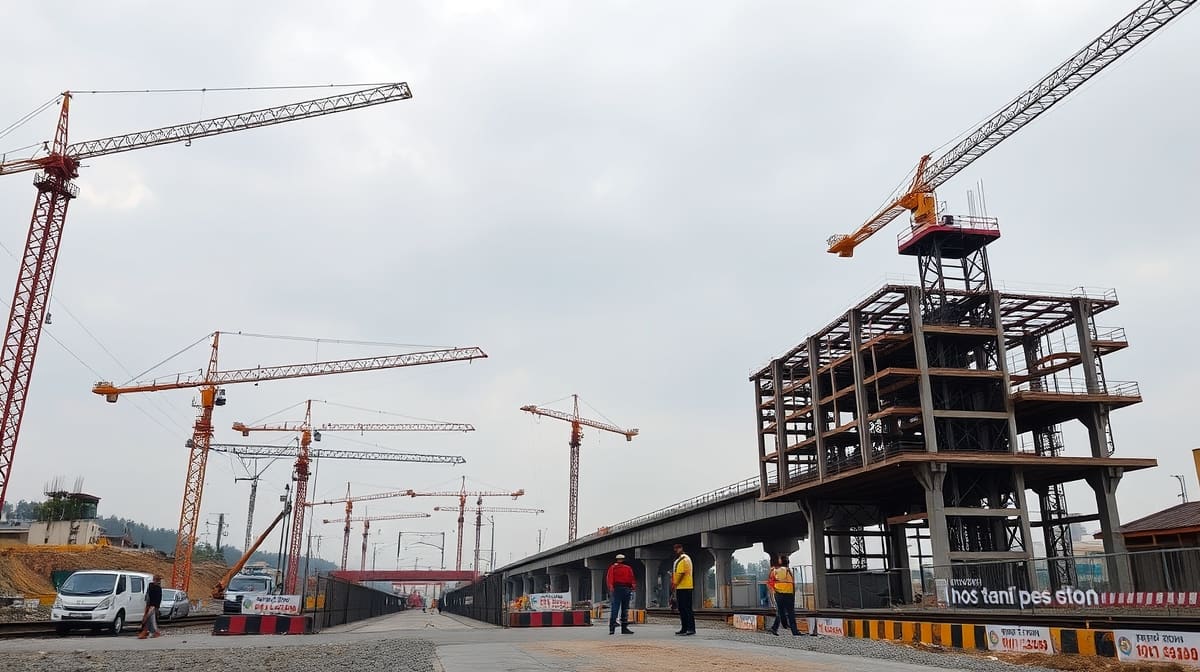
- The 3rd respondent, Goshree Islands Development Authority (GIDA), introduced a Master Plan for the development of Ernakulam city and sanctioned a proposal submitted by the 1st respondent Mulavukad Grama Panchayat to execute civil works such as concreting of footpaths and tarring works within the Panchayat area.
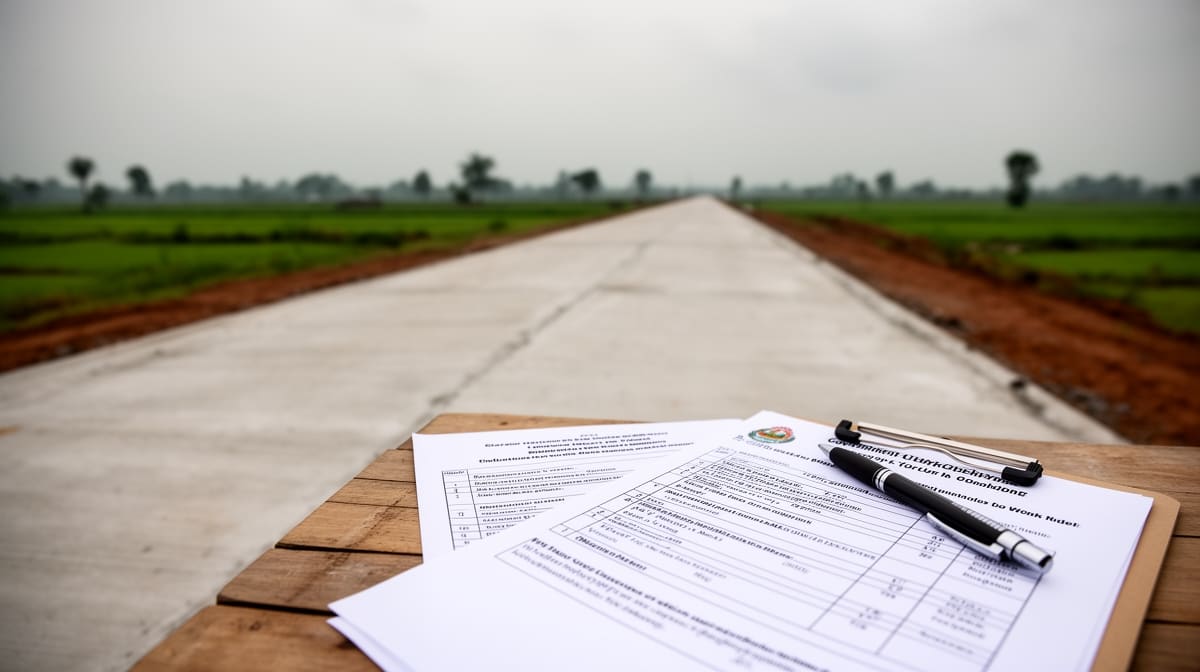
- The petitioner was awarded a contract for concreting 12 footpaths for Rs.33,77,519/- and tarring work of Mulavukadu main road for Rs.8,00,000/-, totaling Rs.41,77,519/-.
- The petitioner completed the work to the satisfaction of the respondents, as per his calculation. The respondents admitted the amount due.
- The petitioner submitted Ext.P2 representation to the 1st respondent on 29.11.2017, which was acknowledged on the same date. He availed loans and sold his wife's gold ornaments to complete the work.
- The petitioner earlier filed W.P.(C)No.1039 of 2018 before this Court, seeking a direction to disburse the money. In that writ petition, respondents 1 and 2 filed a counter affidavit stating that GIDA had earmarked Rs.44 lakhs for 13 civil works within the Panchayat area in its meeting held on 23.07.2010. GIDA filed a counter affidavit stating it was ready to disburse the bill amount to the Panchayat upon certification of completion of work and submission of bills.
- By Ext.P5 judgment dated 18.12.2018, this Court directed the respondents to pay Rs.17,99,433/- to the petitioner. It further ordered that with respect to the remaining amount, necessary steps be taken by the respondents without delay, for which the 2nd respondent shall constitute a joint meeting of respondents 3 and 4 within one month and finalize the proceedings within one month thereafter.
- The petitioner states that he submitted a representation to the 1st respondent and, as per Ext.P6 minutes of the meeting held on 27.02.2019, it was decided to pay Rs.33,76,866/- to the petitioner. When the respondents failed to pay, the petitioner filed Con.Case (C)No.2002 of 2019, and Rs.17,99,433/- was disbursed to the petitioner during the pendency of the contempt petition.
- The petitioner claims that respondents 1 and 2 issued repeated letters to the 3rd respondent to release the entire money to the petitioner. Ext.P8 to P12 are communications between the respondents regarding the disbursal of money.
- As directed by this Court, the 2nd respondent convened a joint meeting of the officials of GIDA, PWD, and the petitioner on 22.09.2019, wherein it was found that the petitioner had carried out the work and the amount had to be given to him. This fact is evident from Ext.P13 letter dated 07.06.2019 issued by the 2nd respondent to the 3rd respondent.
Procedural History
- 14.07.2010: GIDA sanctioned the proposal submitted by the 1st respondent Mulavukad Grama Panchayat to execute civil works.
- 23.07.2010: 1st respondent Grama Panchayat held a meeting to discuss the works.
- 29.11.2017: Petitioner submitted Ext.P2 representation to the 1st respondent.
- 18.12.2018: This Court passed Ext.P5 judgment in W.P.(C)No.1039 of 2018, directing payment of Rs.17,99,433/- to the petitioner and directing the respondents to constitute a joint meeting to finalize the remaining amount.
- 27.02.2019: 1st respondent Panchayat decided to pay Rs.33,76,866/- to the petitioner.
- 14.08.2020: This Court passed Ext.P7 judgment in Con.Case (C)No.2002 of 2019, closing the contempt petition and leaving liberty to the petitioner to work out the remedy in accordance with law.
- 29.04.2021: Present writ petition filed before the High Court.
- 16.07.2026: High Court delivered the judgment dismissing the writ petition.
Relief Sought
The petitioner sought a writ of mandamus commanding the respondents to disburse Rs.23,78,066/-, claiming it as based on the decision taken on the joint meeting of all the respondents on 22.09.2019.
The Legal Issue
The central question was whether a writ petition under Article 226 of the Constitution of India is maintainable in a dispute involving complex questions of fact arising out of a contractual obligation, particularly when the contract is in the realm of private law and not a statutory contract.
Arguments Presented
For the Petitioner
The learned counsel for the petitioner argued that the petitioner was entrusted with 13 works detailed in Ext.P1 letter dated 14.07.2010. In Ext.P5 judgment, this Court directed the respondents to take steps to release the admitted amount of Rs.17,99,433/- and to conduct a joint meeting to finalize the proceedings within one month. Ext.P6 minutes of the meeting held on 27.02.2019 and Ext.P8 letter dated 14.03.2019 issued by the 2nd respondent to the 3rd respondent show that the Panchayat had decided to release Rs.33,76,866/- to the petitioner. The learned counsel relied on Punjab National Bank v. Atmanand Singh [(2020) 6 SCC 256] and Sree Sankara National Institute of Educational Trust v. Union Bank of India [2021 (6) KHC 65] to argue that a writ petition under Article 226 is maintainable even if an alternative remedy is available.
For the Respondent
The learned Standing Counsel for Mulavukad Grama Panchayat argued that the admitted amount in the earlier round of litigation was only Rs.17,99,433/-, which was released to the petitioner. In fact, the said amount was in excess of Rs.1,03,580/- than the actually entitled amount by the petitioner.
The learned Standing Counsel for the 3rd respondent argued that since the disputed question of facts is involved, the proper remedy for the petitioner is a civil suit. Moreover, the claim of the petitioner was already considered in the previous round of litigation, and the present writ petition is barred by principles of res judicata. The petitioner has raised a bogus claim, and a vigilance enquiry was requested by the 3rd respondent.
The learned Government Pleader submitted that the 4th respondent has nothing to do with the claim of the petitioner. The 4th respondent had already handed over the particulars of the work completed by the petitioner to the 2nd respondent. The learned Government Pleader relied on Joshi Technologies International INC v. Union of India [(2015) 7 SCC 728], Hindustan Petroleum Corporation Ltd. v. Dolly Das [(1999) 4 SCC 450], and Kerala State Electricity Board v. Kurien E. Kalathil [(2000) 6 SCC 293] to argue that since the dispute involves questions of fact, a writ petition under Article 226 is not maintainable.
The Court's Analysis
The Court examined the principles governing the maintainability of writ petitions under Article 226 of the Constitution of India in contractual disputes. The Court referred to several Supreme Court judgments, including Atmanand Singh v. Punjab National Bank [(2020) 6 SCC 256], Joshi Technologies International INC v. Union of India [(2015) 7 SCC 728], Hindustan Petroleum Corporation Ltd. v. Dolly Das [(1999) 4 SCC 450], and Kerala State Electricity Board v. Kurien E. Kalathil [(2000) 6 SCC 293], to summarize the legal position:
"The High Court is not deprived of its jurisdiction to entertain a writ petition under Article 226 of the Constitution of India, merely because in considering the petitioner's right of relief, questions of fact may fall to be determined. In a case where material facts referred to in the writ petition are admitted facts or indisputable facts, the High Court may be justified in examining the claim of the petitioner on its own merits in accordance with law. However, when the petition raises complex questions of fact, which may for their determination require oral evidence to be taken, and on that account the High Court is of the view that the dispute should not appropriately be tried in a writ petition, the High Court may decline to try a petition."
The Court observed that the present case involves factual disputes about the amount due to the petitioner for the works undertaken by him on the basis of a contract obtained from the 1st respondent Panchayat. The contract between the parties is in the realm of private law and not a statutory contract. The disputes relating to the interpretation of the terms and conditions of such a contract cannot be agitated in a writ petition under Article 226 of the Constitution of India. The Court held:
"The contract between the parties is in the realm of private law. It is not a statutory contract. The disputes relating to interpretation of the terms and conditions of such a contract could not have been agitated in a petition under Article 226 of the Constitution of India. That is a matter for adjudication by a civil court or in arbitration, if provided for in the contract. Whether any amount is due and if so, how much and refusal of one of the contracting parties to pay it is justified or not, are not the matters which could have been agitated and decided in a writ petition."
The Court further held that the present writ petition is not maintainable before this Court, and the proper remedy for the petitioner is a civil suit before the competent civil court.
The Verdict
The writ petition filed by the petitioner was dismissed. The Court held that the present writ petition under Article 226 of the Constitution of India is not maintainable, as it involves disputed questions of fact that require adducing of evidence. The Court left open the right of the petitioner to approach the Civil Court for necessary reliefs, if he is otherwise entitled to the same, subject to the law of limitation and principles of res judicata.
What This Means For Similar Cases
Writ Petitions Are Not a Substitute for Civil Suits in Contractual Disputes
- The judgment reaffirms that writ petitions under Article 226 are not maintainable for adjudicating disputes arising out of private law contracts, especially when complex questions of fact are involved.
- Practitioners must advise clients to pursue civil suits or arbitration, as provided in the contract, for resolving contractual disputes.
Maintainability of Writ Petitions Depends on the Nature of the Dispute
- The Court emphasized that the maintainability of a writ petition under Article 226 depends on whether the dispute involves public law elements or admitted/indisputable facts.
- If the dispute is purely contractual and involves disputed questions of fact, the High Court may decline to exercise its jurisdiction under Article 226.
Alternative Remedies Must Be Pursued
- The judgment underscores the importance of pursuing alternative remedies provided by statute or contract before invoking the extraordinary jurisdiction of the High Court under Article 226.
- Parties must exhaust statutory remedies or contractual dispute resolution mechanisms before approaching the High Court under Article 226.