The Kerala High Court has reaffirmed that writ jurisdiction under Article 226 of the Constitution cannot be invoked to resolve factual disputes between depositors and banks over unclaimed fixed deposits. Where the existence, maturity, or encashment of deposits is contested, and evidence must be adduced to determine liability, the appropriate forum is a civil court. This judgment clarifies the limits of constitutional remedies in banking disputes involving documentary and evidentiary conflicts.
Background & Facts
The Dispute
The core dispute involves unclaimed fixed deposits originally made in the erstwhile Nedungadi Bank between 1995 and 1996, later merged into Punjab National Bank (PNB), and a separate deposit with Bank of Baroda (BoB). The petitioners, family members of the original depositors, claimed entitlement to amounts totaling over Rs. 26 lakhs based on original fixed deposit receipts (FDRs) produced as photostat copies. The banks denied liability, asserting that no records of these deposits were transferred during the 2003 amalgamation or retained in their archives.
Procedural History
- 1995 - 1996: Fixed deposits made in Nedungadi Bank and Bank of Baroda in names of petitioners.
- 2003: Nedungadi Bank amalgamated with Punjab National Bank; asset-liability schedule prepared.
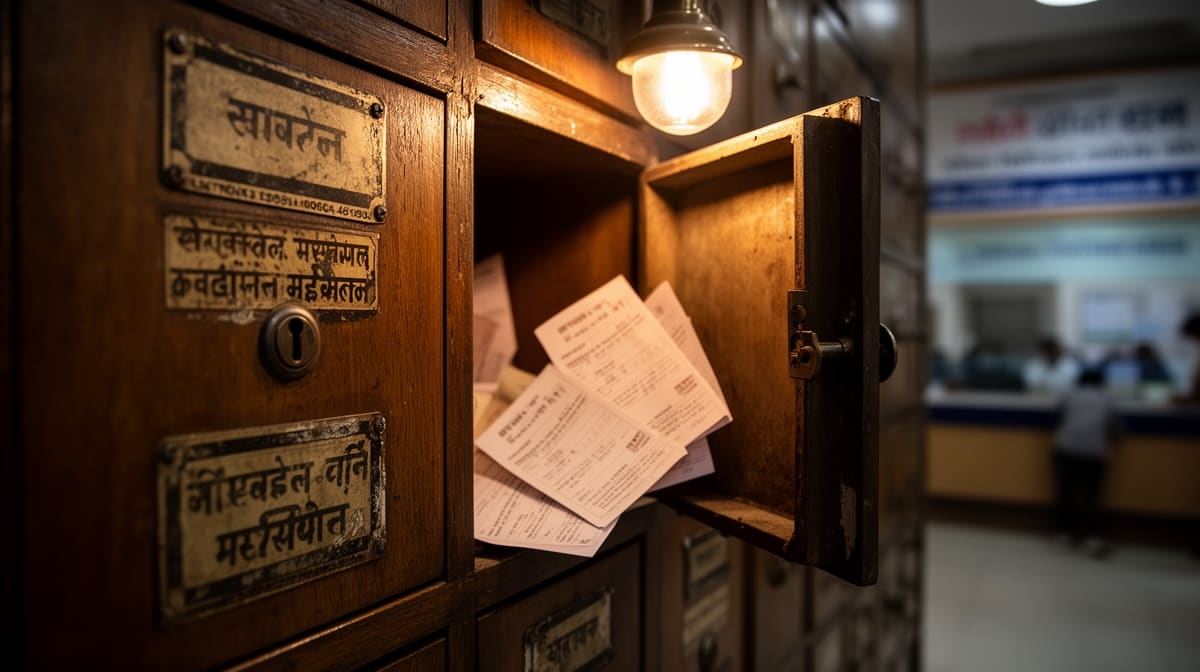
- 2018: Bank of Baroda broke open a safe deposit locker (No. 14) due to unpaid rent; FDRs were found inside and inventoried (Ext.P7).
- 2019: Petitioners filed writ petitions under Article 226 seeking mandamus to release deposit amounts.
- 2024: Single Judge of Kerala High Court directed banks to disburse amounts with indemnity bonds.
- 2025: Banks appealed; interim order allowed petitioners to withdraw Rs. 10,08,051.39 under protest.
- 2026: Kerala High Court set aside the 2024 judgment.
Relief Sought
The petitioners sought a writ of mandamus compelling PNB and BoB to release the principal and interest on the fixed deposits. They argued that the banks’ failure to maintain records or notify depositors of maturity violated RBI guidelines and fiduciary duties.
The Legal Issue
The central question was whether a writ petition under Article 226 of the Constitution is a maintainable remedy to adjudicate disputed factual claims regarding the existence, maturity, and non-payment of fixed deposits, where documentary evidence is contested and no clear record exists in the bank’s system.
Arguments Presented
For the Appellants (Banks)
The banks contended that the matter involved complex factual disputes requiring evidentiary evaluation - such as whether the FDRs were encashed via indemnity bonds, whether deposits were transferred during amalgamation, and whether the petitioners had legitimate possession of originals. They cited Santhosh Kumar Nair v. Suresh P. Sreedharan to argue that writ jurisdiction cannot be used to establish title or resolve disputed facts when a civil suit is available. They emphasized that the absence of records in the bank’s system after 2003 negated liability, and that the petitioners’ delay of over 20 years barred any equitable claim.
For the Respondents (Petitioners)
The petitioners argued that the banks, as fiduciaries, had a duty to maintain records and notify depositors of maturity under RBI guidelines. They contended that the mere production of FDRs, even as photostats, created a prima facie case of entitlement. They asserted that the banks’ failure to trace records or publish unclaimed deposit lists constituted negligence, making a civil suit redundant. They relied on RBI circulars to argue that the burden of proof lay with the banks to explain the disappearance of deposits.
The Court's Analysis
The Court undertook a rigorous examination of the nature of the dispute and the scope of Article 226. It acknowledged that while banks owe fiduciary duties to depositors, this does not convert a factual dispute into a justiciable constitutional issue. The Court emphasized that the petitioners’ claims hinged on contested facts: whether the FDRs were genuine, whether they were encashed, whether the deposits were transferred during amalgamation, and whether the banks acted negligently.
"The dispute pertaining to the fixed deposits raised in these writ petitions are question of fact which needs the adducing of evidence to arrive at a just decision on the point. In a writ petition filed under Article 226 of the Constitution of India, such a disputed question of fact cannot be decided as done in the impugned judgment."
The Court relied on established precedents including Santhosh Kumar Nair, K.S. Rashid, and State of Rajasthan v. Bhawani Singh, which uniformly hold that writ courts cannot act as trial courts to determine title, possession, or liability based on conflicting evidence. The Court noted that the banks had produced affidavits stating no records existed, while the petitioners relied on photostats and oral assertions. Such a conflict, the Court held, demands cross-examination, document authentication, and witness testimony - all beyond the scope of writ jurisdiction.
The Court also rejected the argument that fiduciary duty or RBI guidelines rendered a civil suit unnecessary. While acknowledging RBI’s directives on dormant accounts, the Court clarified that these are regulatory norms, not substitutes for legal proof of entitlement. The absence of records, the Court observed, does not automatically equate to liability; it merely shifts the burden to the claimant to prove ownership, which requires a civil trial.
The Verdict
The Kerala High Court allowed the writ appeals and set aside the 2024 judgment of the Single Judge. The Court held that the petitioners’ claims involved disputed questions of fact that could not be resolved under Article 226. The petitioners were directed to approach the competent civil court within 15 days. The amount already withdrawn by them under interim orders remains subject to the final outcome of the civil suit.
What This Means For Similar Cases
Writ Jurisdiction Cannot Substitute Civil Trial
- Practitioners must avoid filing writ petitions under Article 226 for deposit disputes involving contested ownership, maturity, or encashment.
- Even where banks lack records, the burden of proving entitlement rests with the claimant and requires evidentiary proceedings.
- Fiduciary duty or RBI guidelines do not override the need for a civil suit when facts are disputed.
Photostat Copies Alone Are Insufficient
- Photostat copies of FDRs, without corroboration or proof of original possession, are inadequate to establish prima facie title in writ proceedings.
- Banks are not obligated to pay based on unverified copies; claimants must prove authenticity through civil litigation.
- Courts will not presume bank negligence merely due to absence of records.
Limitation Is Not a Barrier in Civil Court
- While banks raised limitation as a defense, the Court clarified that Section 10 of the Limitation Act, 1963 may apply to fiduciary claims, potentially extending the limitation period.
- Practitioners should plead Section 10 in civil suits to argue that limitation begins only from the date of denial of claim, not from maturity.
- This opens a strategic avenue for depositors in civil courts, even after decades.