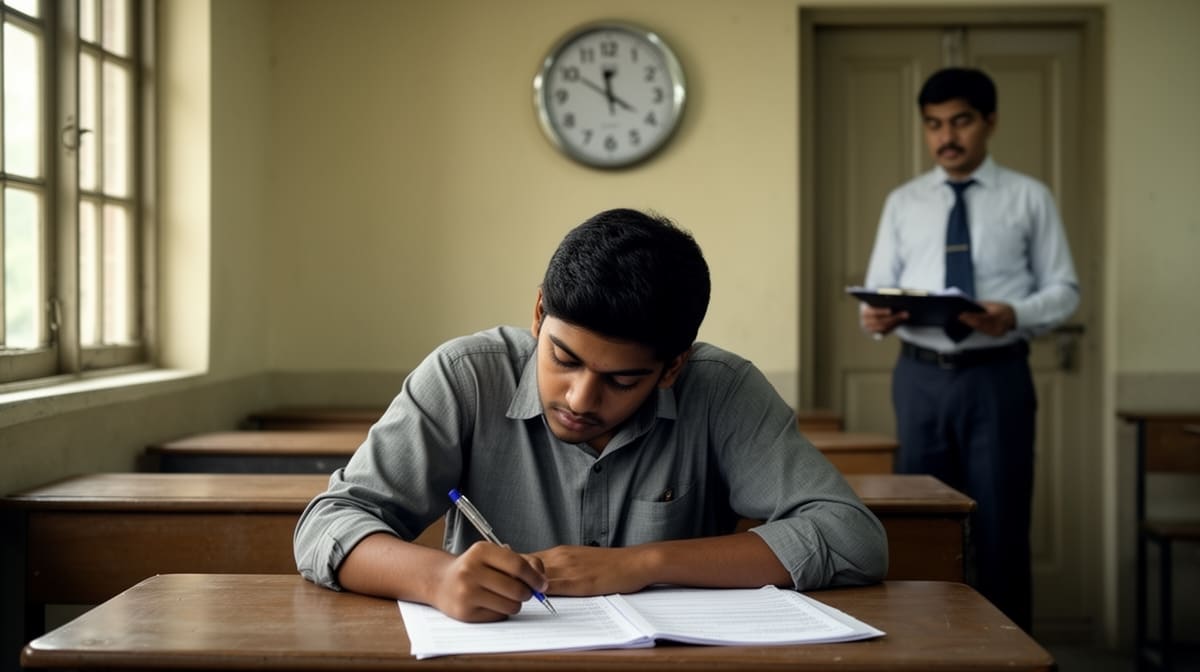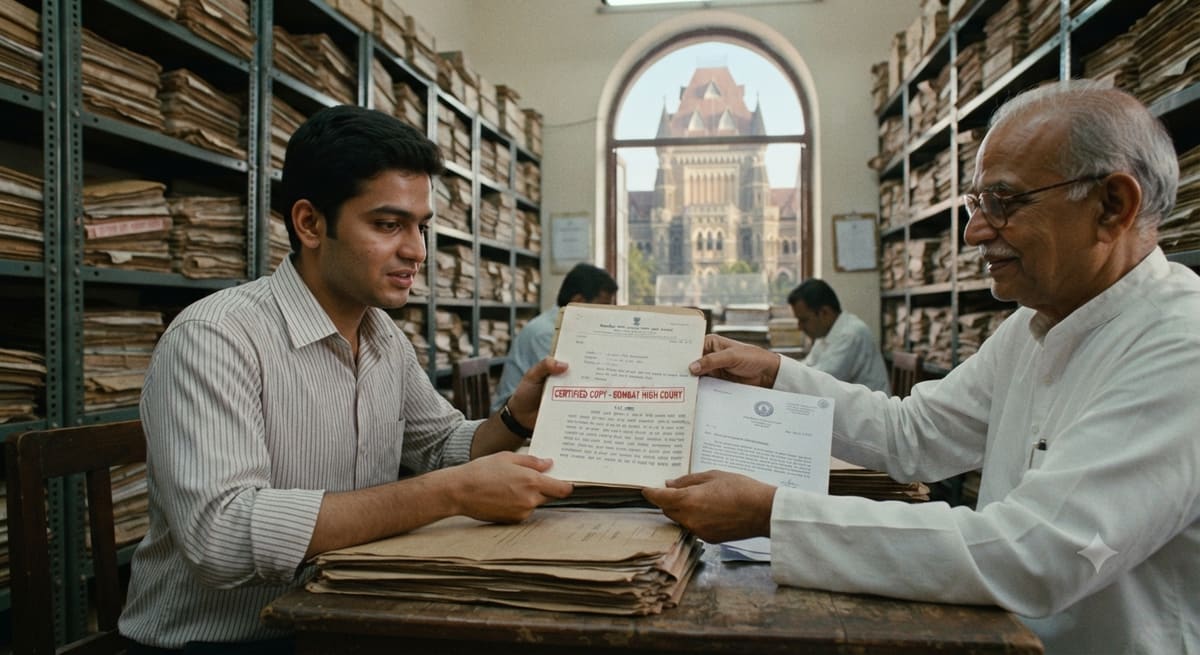
The Bombay High Court has delivered a nuanced judgment addressing two critical issues in legal education: the right of students to obtain certified photocopies of their answer sheets, and the permissibility of writing LL.B. examinations in regional languages like Marathi. While disposing of the writ petition, the Court directed the university to consider the petitioner's representation for linguistic access, reaffirming that restrictions on answer sheet copies may violate Article 19 of the Constitution of India. The judgment underscores the balance between institutional regulations and constitutional rights in academic evaluations.
Background & Facts
The Dispute
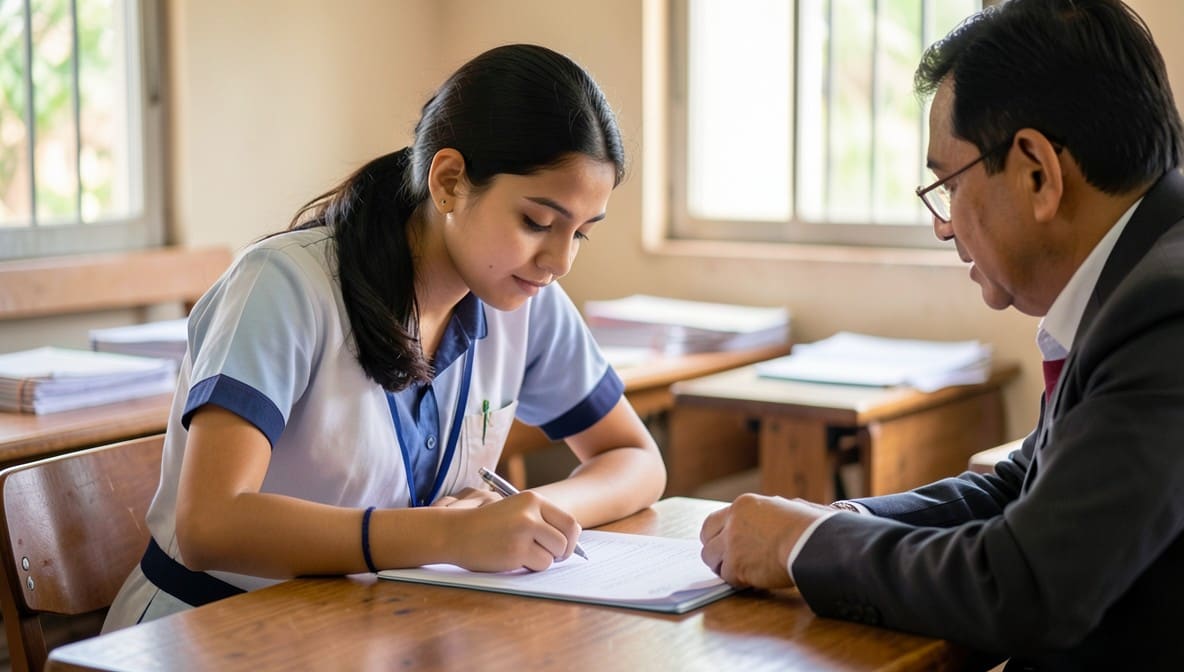
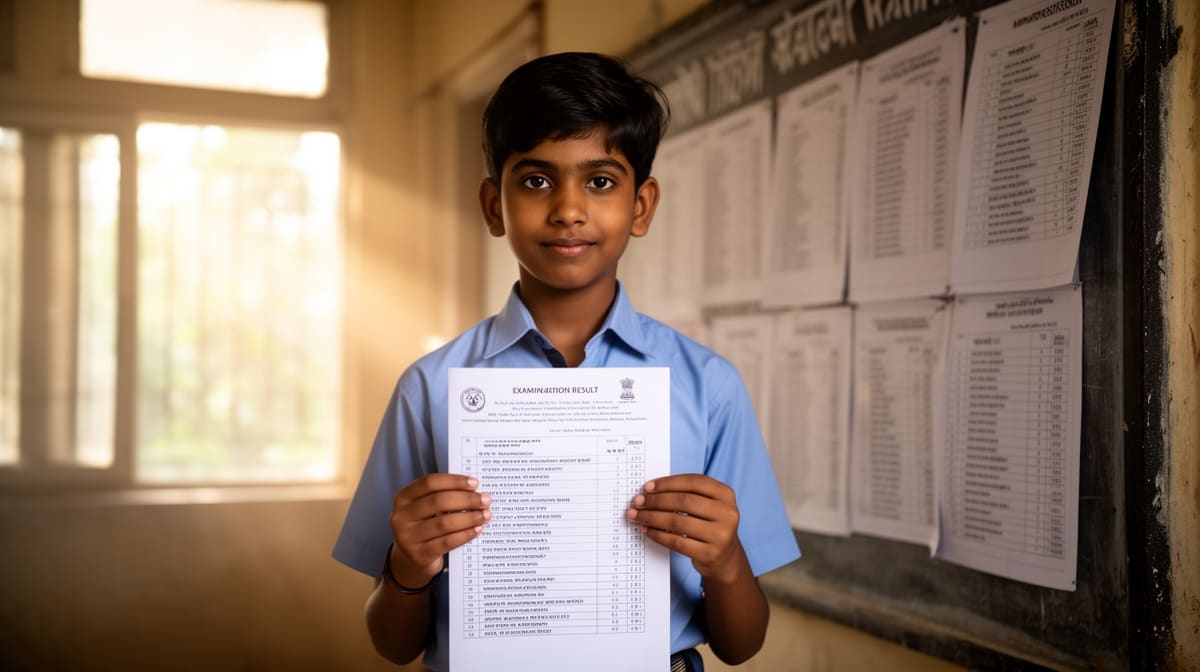
The petitioner, a 64-year-old senior citizen pursuing an LL.B. degree at Rajarshi Shahu College, Barshi, was declared unsuccessful in four subjects during her Third Semester examination conducted in October 2025. Despite clearing her First Year, she faced repeated failures in subsequent semesters, including the April 2026 examination, where she failed all four subjects again. The Fourth Semester results (declared on 29.06.2026) showed partial success: she passed two subjects, failed two, and one subject was marked "RR" (revaluation required).
Key Facts
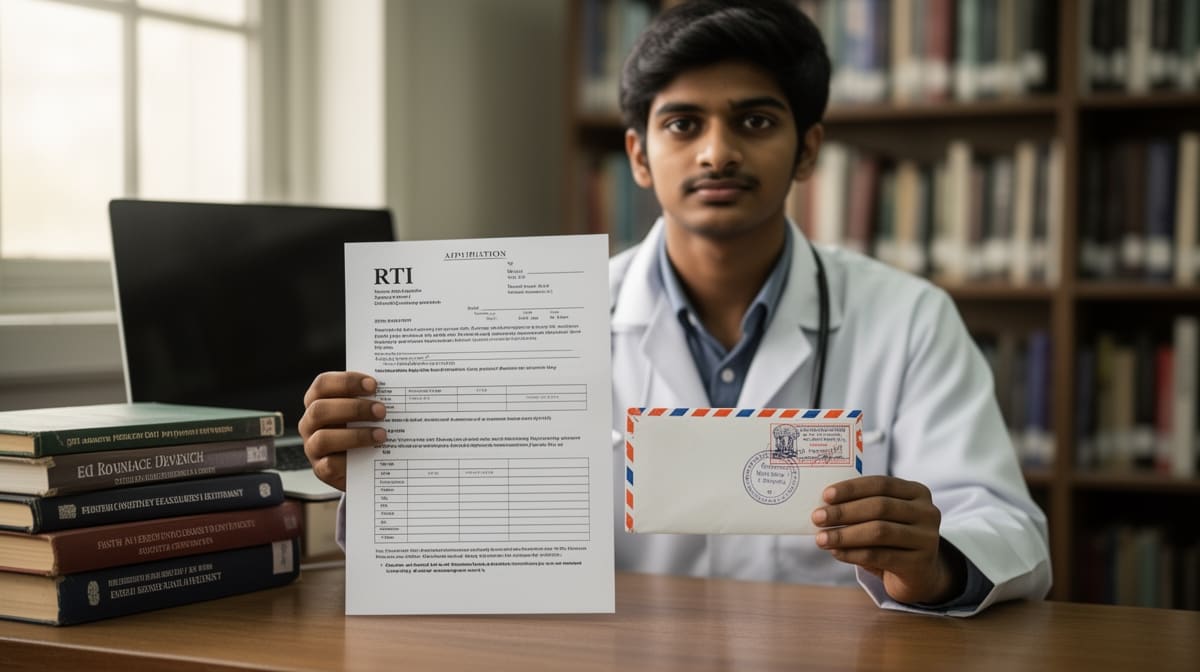
The petitioner requested certified photocopies of her answer sheets for all four disputed subjects.
The university, citing Ordinance No. O.106(B) of 2015, restricted her to copies of only two subjects.
After a court order dated 10.03.2026, the university provided copies of all four answer sheets.
Revaluation of all four subjects (ordered on 01.04.2026) showed "No Change" in marks.
In an affidavit dated 06.07.2026, the petitioner raised a new grievance: denial of permission to write examinations in Marathi, citing:
National Education Policy, 2020
UGC Guidelines dated 19.04.2023
Bar Council of India Circular No. 006 of 2024 dated 20.05.2024
Procedural History
October 2025: Petitioner fails Third Semester exams.
Post-October 2025: Requests certified answer sheet copies; university restricts to two subjects.
10.03.2026: Bombay HC directs university to furnish copies of all four answer sheets.
01.04.2026: Court orders revaluation of all four subjects.
08.04.2026: Revaluation report (marked 'Y-1') shows no change in marks.
April 2026: Petitioner reappears for Third Semester exams; fails all four subjects again.
29.06.2026: Fourth Semester results declared (passed: 2, failed: 2, RR: 1).
16.06.2026: Court directs petitioner to file affidavit regarding revaluation report.
06.07.2026: Petitioner files affidavit raising Marathi-language examination issue.
06.07.2026: Amicus curiae submits written notes on constitutional and regulatory aspects.
13.07.2026: Judgment pronounced.
The Parties' Positions
Petitioner's Contentions
Right to Answer Sheets: The university's restriction to two answer sheets violates Article 19 and is arbitrary. Relied on Central Board of Secondary Education v. Aditya Bandopadhyay (2011) 8 SCC 497 and High Court of Tripura v. Tirth Sarathi Mukherjee (2019) 16 SCC 663.
Linguistic Access: Denial of permission to write exams in Marathi is illegal, supported by National Education Policy, 2020, UGC Guidelines, and Bar Council of India Circular 2024.
Revaluation Transparency: Demanded proof of revaluation process, alleging bias by the university.
University's Position
Regulatory Compliance: Cited Ordinance No. O.106(B) of 2015, which limits answer sheet copies to two subjects.
Revaluation Integrity: Affirmed that revaluation was conducted fairly, with no change in marks.
Linguistic Policy: Argued that permitting Marathi-language exams may contravene Bar Council of India Regulations, 2008.
Relief Sought
The petitioner sought:
Mandatory furnishing of certified photocopies of all four answer sheets within 7 days.
Re-evaluation of all four answer sheets by an independent examiner.
Stay on coercive action, including re-examination requirements.
Waiver or deferment of fees for photocopies and re-evaluation due to age, health, and financial hardship.
Time-bound order to prevent loss of academic year.
Any other relief deemed fit in the interest of justice.
The Legal Issue
The Court addressed two primary questions:
Whether Ordinance No. O.106(B) of 2015, restricting students to certified copies of only two answer sheets, violates Article 19 of the Constitution of India and the Maharashtra Public Universities Act, 2016?
Whether students can be permitted to write LL.B. examinations in Marathi without contravening Bar Council of India Regulations?
Arguments Presented
For the Petitioner
Constitutional Right: Cited Aditya Bandopadhyay and Tirth Sarathi Mukherjee to argue that the right to certified answer sheets is a facet of Article 19(1)(a) (right to information) and Article 21 (right to education).
Purposive Interpretation: Contended that Ordinance O.106(B) should be interpreted in light of the Maharashtra Public Universities Act, 2016, which emphasizes transparency.
Linguistic Equity: Argued that denying Marathi-language exams violates Article 29(1) (right to conserve language) and Article 350A (instruction in mother tongue), supported by NEP 2020 and UGC Guidelines.
For the University
Regulatory Autonomy: Submitted that Ordinance O.106(B) is a reasonable restriction under Article 19(2), balancing administrative feasibility with students' rights.
Bar Council Compliance: Highlighted that Legal Education Rules, 2008 and BCI Circular 2024 do not explicitly permit regional-language exams, implying a need for uniformity in legal education.
The Court's Analysis
The Court conducted a two-pronged analysis, addressing both the procedural and substantive grievances:
Right to Certified Answer Sheets
The Court noted that the petitioner's initial grievance regarding answer sheet copies was already redressed by its order dated 10.03.2026, which directed the university to furnish copies of all four subjects. However, it critically examined the constitutional validity of Ordinance O.106(B):
Article 19 Compliance: Relying on Aditya Bandopadhyay, the Court observed that the right to access answer sheets is integral to transparency in education and falls within the ambit of Article 19(1)(a). Restrictions must satisfy the reasonableness test under Article 19(2).
Purposive Interpretation: The Court emphasized that Ordinance O.106(B) must be interpreted in harmony with the Maharashtra Public Universities Act, 2016, which mandates transparency. A blanket restriction to two answer sheets was deemed arbitrary and unreasonable.
Judicial Precedent: Distinguished Aditya Bandopadhyay, where the Supreme Court held that examinees have a right to certified copies under the Right to Information Act, 2005. The Court implied that similar principles apply to university examinations, even in the absence of explicit RTI provisions.
"The right to access one's own answer sheets is not merely a procedural formality but a substantive right that ensures fairness and accountability in the evaluation process. Any restriction on this right must be justified by compelling administrative reasons, not mere convenience."
Linguistic Access in Legal Education
The Court addressed the novel issue of Marathi-language exams, raised in the petitioner's affidavit dated 06.07.2026:
Constitutional Safeguards: Acknowledged that Article 29(1) (right to conserve language) and Article 350A (instruction in mother tongue) support linguistic diversity. However, these rights are not absolute and must be balanced with regulatory frameworks.
Bar Council Regulations: Examined Legal Education Rules, 2008 and BCI Circular 2024, which do not explicitly prohibit regional-language exams. The Court noted that the discretion lies with the university, provided it does not contravene constitutional or statutory provisions.
Academic Equity: Highlighted that permitting Marathi-language exams aligns with National Education Policy, 2020, which promotes multilingualism and inclusive education. However, the Court refrained from issuing a mandatory direction, instead opting for a representation-based approach.
"While the constitutional recognition of linguistic diversity is sacrosanct, the regulatory framework governing legal education must also be respected. The Bar Council of India's guidelines do not impose an absolute prohibition, leaving room for universities to exercise discretion in a manner that harmonizes constitutional rights with professional standards."
Revaluation Process
The Court deprecated the petitioner's conduct, noting her disgruntlement with the revaluation results. It held:
Judicial Restraint: Under Article 226, the Court cannot engage in a roving inquiry or fact-finding exercise to verify the revaluation process.
Presumption of Regularity: Absent evidence of malafides, the university's statement that revaluation was conducted fairly must be presumed correct.
Senior Citizen Consideration: While acknowledging the petitioner's age and status, the Court cautioned against frivolous allegations against public institutions.
The Verdict
The Court disposed of the writ petition with the following directions:
Representation on Linguistic Access: The petitioner may file a representation to the university within four weeks (by 13.08.2026) seeking permission to write LL.B. examinations in Marathi.
University's Obligation: The university must decide the representation in accordance with law, considering the constitutional provisions, NEP 2020, UGC Guidelines, and BCI Circular 2024.
No Relief on Answer Sheets: The grievance regarding certified answer sheets was deemed satisfied by prior orders, and no further relief was granted.
Costs: The legal fees of both amicus curiae (Ms. Ketaki Patil and Mr. Anand Patil) shall be reimbursed as per applicable rules.
The Court made the rule absolute in these terms, without granting any monetary relief, stay on coercive action, or fee waivers as sought by the petitioner.
What This Means For Similar Cases
Right to Answer Sheets: A Constitutional Imperative
Transparency Overrides Restrictive Rules: Universities cannot arbitrarily limit the number of certified answer sheets a student can obtain. Ordinance O.106(B) or similar provisions must be interpreted purposively to align with Article 19(1)(a).
Judicial Precedent as a Tool: Practitioners can rely on Aditya Bandopadhyay and Tirth Sarathi Mukherjee to challenge restrictive university ordinances. The burden of proof lies on the university to justify limitations under Article 19(2).
Revaluation Challenges: Students dissatisfied with revaluation results must provide substantial evidence of malafides to seek judicial intervention. Courts are reluctant to interfere absent clear irregularities.
Linguistic Access: Discretion with Constitutional Safeguards
Representation-Based Approach: Students seeking to write exams in regional languages should first approach the university with a representation, citing constitutional provisions, NEP 2020, and UGC Guidelines.
Bar Council Regulations Are Not Absolute: While BCI Regulations emphasize uniformity, they do not explicitly prohibit regional-language exams. Universities have discretion to permit such requests, provided they comply with professional standards.
Strategic Litigation: Future litigants should amend pleadings to include linguistic access claims, supported by affidavits and amicus curiae submissions to strengthen their case.
Procedural Compliance: Avoiding Judicial Deprecation
Avoid Frivolous Allegations: Senior citizens or other litigants must refrain from casting aspersions on public institutions without evidence. Courts may deprecate conduct and deny relief on this basis.
Affidavits as Evidence: New grievances raised during proceedings should be supported by affidavits and incorporated into amended prayers to avoid procedural dismissals.
Amicus Curiae as a Strategic Tool: Appointment of amicus curiae can strengthen legal arguments, especially in cases involving constitutional rights or novel legal questions. Their fees may be reimbursed, incentivizing pro bono assistance.