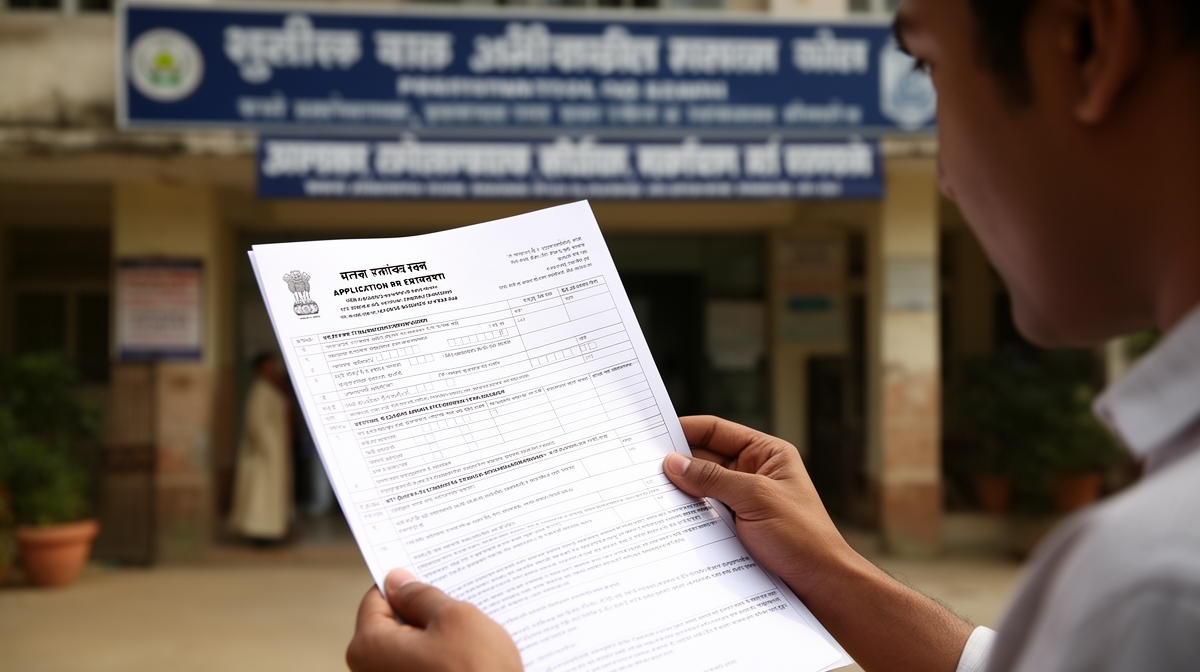

The Central Administrative Tribunal, Allahabad, has held that an applicant who truthfully discloses the pendency of a criminal case cannot be denied appointment solely on that ground. The Tribunal emphasized that employers must conduct a reasoned evaluation of the nature of the offence and the post’s requirements, rather than mechanically relying on adverse police reports. The decision reinforces the principle that acquittal or conviction must precede termination or cancellation of candidature, and that reformative justice must inform administrative discretion.
The Verdict
The applicant won. The Central Administrative Tribunal set aside the order denying training and appointment on the grounds of a pending criminal case. The core legal holding is that truthful disclosure of a pending criminal case precludes automatic disqualification; the employer must conduct a reasoned, case-specific evaluation of the offence’s nature and the post’s sensitivity before denying appointment. The Tribunal directed the respondents to reconsider the applicant’s case within three months, applying the principles laid down in Avtar Singh v. Union of India.
Background & Facts
The applicant, Manish Kumar Srivastava, applied for the post of Senior Commercial-cum-Ticket Clerk (NTPC Level-5) under a 2019 recruitment notification by the Railway Recruitment Board. He successfully cleared all examination stages and completed document verification and medical examination. He was finally selected and ranked high on the merit list.
In March 2019, a criminal case under Sections 147, 323, 504, and 506 of the IPC was registered against him and his family. A cross-FIR was also filed. Charge sheets were submitted in both cases. The applicant disclosed the pendency of this case in his attestation form, as required.
The Railway authorities forwarded his attestation form to the District Magistrate, Deoria, for character verification. The police report dated 11 September 2023, received via the District Magistrate on 18 September 2023, noted the pending case and recommended against character clearance. Based solely on this report, the respondents rejected his appointment by order dated 20 November 2023.
The applicant had previously filed an original application (OA 905/2023), which was disposed of on 20 October 2023 with a direction to reconsider his case. The impugned order of 20 November 2023 was the respondents’ response to that direction. The applicant challenged this order as arbitrary, discriminatory, and violative of natural justice.
The Legal Issue
Can an employer deny appointment to a candidate who has truthfully disclosed the pendency of a criminal case, solely on the basis of an adverse police verification report, without evaluating the nature of the offence, the post’s requirements, or the possibility of reform?
Arguments Presented
For the Petitioner
The applicant’s counsel argued that he had fully and honestly disclosed the pending criminal case in his attestation form, leaving no room for suppression or false declaration. He emphasized that no conviction had been recorded, and mere pendency cannot justify denial of appointment. He cited Avtar Singh v. Union of India to assert that employers must exercise discretion based on the offence’s gravity and the post’s nature. He contended that the respondents mechanically applied outdated Railway Board instructions from 1947 and 1983, which were not applicable to the facts. He further argued that the order was passed without a show-cause notice or hearing, violating principles of natural justice. He highlighted that junior candidates with clean verification reports had already been appointed, rendering the treatment discriminatory under Article 14.
For the Respondent
The respondents’ counsel conceded that the applicant had disclosed the case but argued that appointment is not a right but a privilege subject to satisfactory character verification. They relied on the adverse police report as conclusive evidence of unsuitability. They contended that Avtar Singh does not mandate appointment but only requires reasoned consideration. They asserted that the absence of an acquittal justified a cautious approach, especially in government service. They maintained that the order was passed after due consideration of the Tribunal’s earlier direction and that candidates with favourable verification reports were treated differently on a legitimate basis.
The Court's Analysis
The Tribunal began by quoting Paragraph 30 of Avtar Singh v. Union of India, which provides a structured framework for evaluating candidates with pending criminal cases. The Court emphasized that the key factor is not the mere existence of a case, but whether the candidate disclosed it truthfully. Here, there was no dispute that the applicant had made full disclosure.
"In a case where the employee has made declaration truthfully of a concluded criminal case, the employer still has the right to consider antecedents, and cannot be compelled to appoint the candidate."
The Court clarified that this principle extends to pending cases under Paragraph 30(6), which permits appointment subject to the outcome of the case when disclosure is truthful and the offence is not of serious moral turpitude. The Tribunal noted that the offence alleged - Sections 147, 323, 504, 506 IPC - relates to rioting, hurt, and criminal intimidation, which are not inherently indicative of moral turpitude or disqualification for a clerical railway post.
The Court rejected the respondents’ reliance on outdated Railway Board instructions, noting they were not aligned with the constitutional principles articulated in Avtar Singh. The Tribunal held that mechanical acceptance of police reports without independent evaluation constitutes arbitrariness. The respondents failed to analyze the nature of the offence, the time elapsed since the incident, the absence of conviction, or the suitability of the post.
The Court also found that the absence of a show-cause notice and hearing violated the principles of natural justice. The order was not merely adverse - it was procedurally defective. The Tribunal concluded that the respondents’ action was not a reasoned exercise of discretion but a blanket denial based on procedural compliance with an outdated policy.
What This Means For Similar Cases
This judgment significantly clarifies the legal standard for handling pending criminal cases in government recruitment. Practitioners must now treat Avtar Singh as the definitive framework: truthful disclosure negates grounds for automatic disqualification. Employers must conduct a contextual assessment of the offence’s nature, the post’s sensitivity, and the candidate’s overall suitability. Blanket policies based on police reports without judicial determination are now legally untenable.
The decision reinforces that Article 14 prohibits differential treatment where similarly situated candidates are treated differently based on arbitrary criteria. Candidates with pending cases but clean records should be considered for appointment subject to the outcome of litigation, not denied outright. This applies across all government services, not just railways.
However, the ruling does not confer an automatic right to appointment. If the offence involves moral turpitude, repeated cases, or serious violence, the employer retains discretion to decline. The key is reasoned application, not mechanical rejection. Future litigants should demand written reasons linking the offence to the post’s requirements, and failure to provide such reasoning will invite judicial intervention.