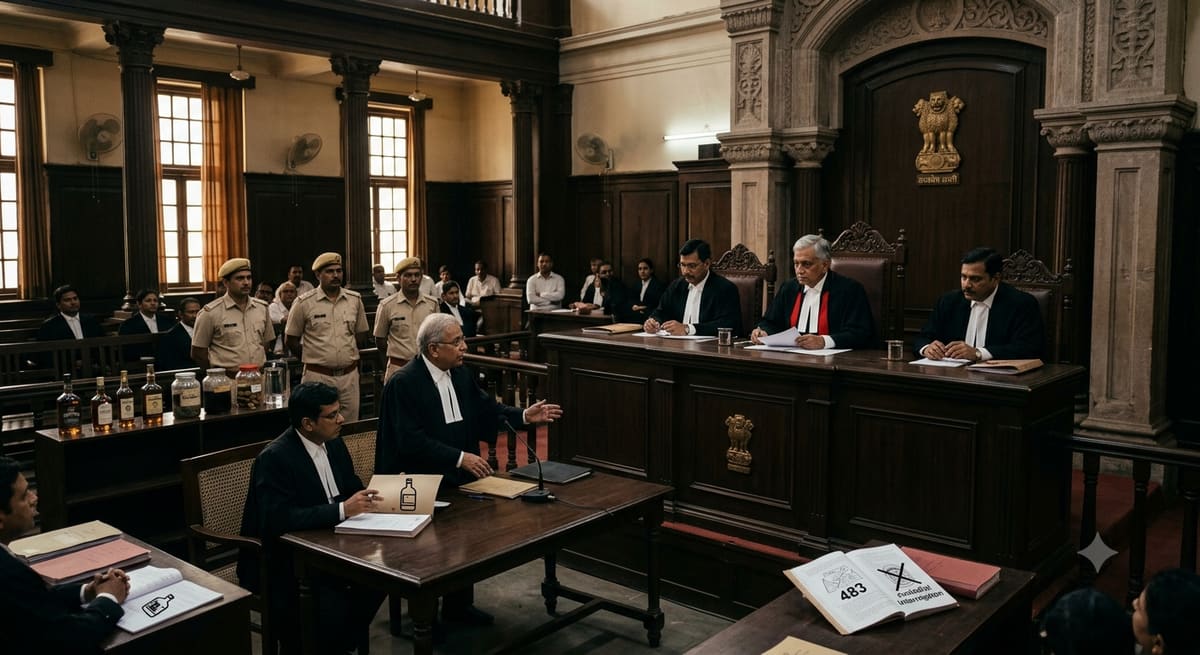
The Supreme Court has reaffirmed that anticipatory bail cannot be denied merely on the gravity of allegations or speculative links to a crime, especially where the accused has no physical connection to the scene of offense and has consistently cooperated with investigation. This judgment reinforces the principle that liberty is the norm and custody the exception, particularly in non-violent economic offenses where custodial interrogation lacks demonstrable necessity.
Background & Facts
The Dispute
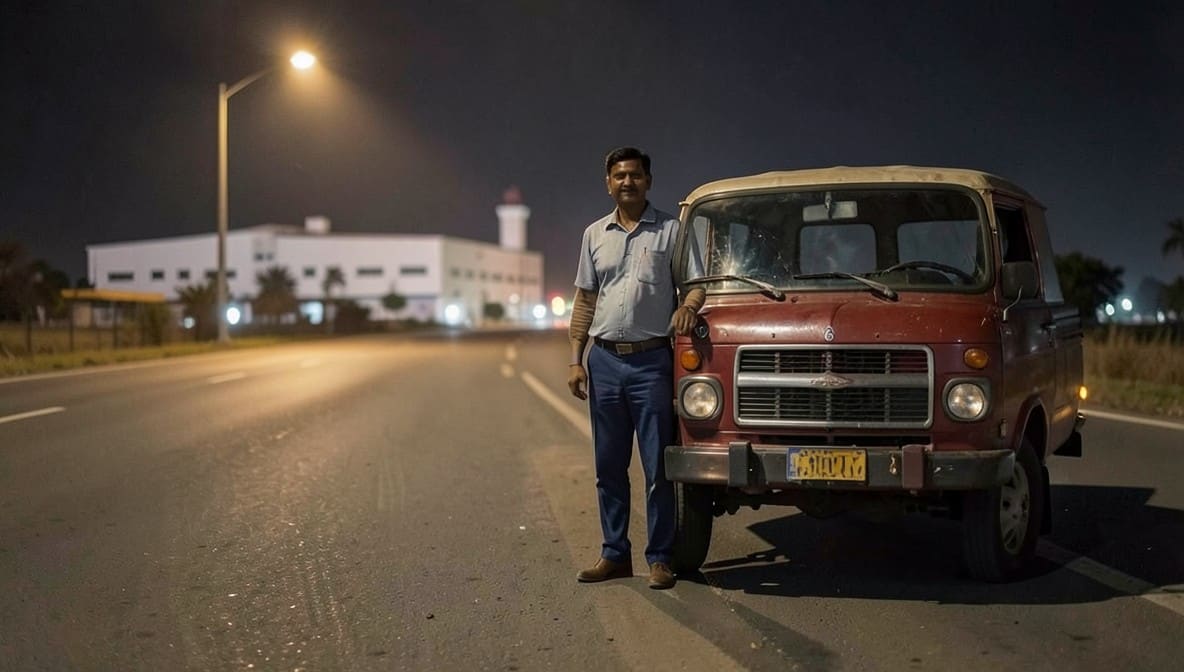
The appellant, Manoj Kumar Mutta, is a licensed businessman operating a plastic and aluminum bottle cap supply unit in Vijayawada. He was not named in the original First Information Report (FIR) Crime No. 171 of 2025, registered after a raid on Ravi Khirana General Stores and A.N.R. Restaurant & Bar, where spurious liquor worth lakhs was seized. The prosecution later sought to add him as accused no. 20, alleging he supplied counterfeit bottles and caps bearing government labels to the primary accused.
Procedural History
- 6 October 2025: Raid conducted at two locations; appellant’s premises untouched.
- 30 October 2025: Prosecution filed memo to add appellant as accused no. 20.
- 11 November 2025: Name amended to "Mutta Manoj Kumar @ Manoj Kotaria".
- 5 December 2025: High Court of Andhra Pradesh denied anticipatory bail.
- 6 January 2026: Supreme Court granted interim protection from arrest.
- 8 - 12 January & 20 January 2026: Appellant appeared before Investigating Officer multiple times.
Relief Sought
The appellant sought anticipatory bail under Section 438 of the CrPC, arguing that he was wrongly implicated without direct evidence, no raid on his premises, and no prior criminal record. He emphasized his consistent cooperation and the absence of any allegation of witness tampering or flight risk.
The Legal Issue
The central question was whether anticipatory bail can be denied solely on the basis of an alleged indirect role in a serious economic offense, where the accused has no physical connection to the crime scene, has never been arrested before this case, and has voluntarily cooperated with investigation despite being named belatedly.
Arguments Presented
For the Appellant
Shri K. Parameshwar, Senior Counsel, argued that the prosecution’s case was built on hearsay and inconsistent witness statements. He highlighted that no raid was conducted at the appellant’s business, no incriminating material was recovered from his premises, and the appellant had already appeared before the Investigating Officer on multiple occasions. He relied on Arnesh Kumar v. State of Bihar to contend that custodial interrogation cannot be presumed necessary in non-violent offenses without concrete grounds. He also pointed to two prior cases against the appellant, both dismissed after bail, as evidence of frivolous implication.
For the Respondent
Shri S.V. Raju, Additional Solicitor General, contended that the appellant played a critical role in the supply chain of spurious liquor by providing branded bottles and caps with government labels, which are essential for counterfeiting. He argued that custodial interrogation was necessary to trace the larger conspiracy and money trail across the state. He cited the volume of transactions and 400 phone calls between the appellant and accused no. 23 as indicative of active participation.
The Court's Analysis
The Court conducted a meticulous review of the factual matrix and found no direct or circumstantial evidence linking the appellant to the actual production or blending of spurious liquor. The Court emphasized that the prosecution’s case rested entirely on witness statements and financial trails, neither of which established active participation in the criminal enterprise.
"The appellant was not initially named in the FIR and no raid was ever conducted at his place of business. Admittedly, the raid was conducted at Ravi Khirana General Stores... and A.N.R. Restaurant & Bar - both of which do not belong to the appellant."
The Court noted that the appellant had been granted interim protection and had appeared before the Investigating Officer without evasion. It further observed that the appellant had been named in two prior cases with identical allegations, both of which ended in bail, suggesting a pattern of speculative inclusion. The Court rejected the State’s argument that custodial interrogation was essential to uncover a larger conspiracy, holding that such speculative assertions cannot override the fundamental right to liberty under Article 21.
The Court also distinguished this case from those involving direct involvement in violent or organized crime, noting that the appellant’s role, even if proven, was ancillary and non-violent. The absence of any allegation of witness intimidation or flight risk further undermined the State’s opposition to bail.
The Verdict
The appellant won. The Supreme Court set aside the High Court’s order denying anticipatory bail and made its interim protection absolute. The Court held that anticipatory bail must be granted where there is no direct link to the crime scene, no recovery from the accused’s premises, and consistent cooperation with investigation, even in serious economic offenses under the Andhra Pradesh Excise Act.
What This Means For Similar Cases
Custodial Interrogation Cannot Be Presumed
- Practitioners must challenge demands for custodial interrogation in non-violent economic cases where the accused has no physical connection to the crime scene.
- Merely alleging a "supply chain role" without direct evidence or recovery from the accused’s premises is insufficient to justify arrest.
Cooperation Overrides Speculative Links
- Voluntary appearances before investigating officers, even after belated inclusion in an FIR, constitute strong grounds for anticipatory bail.
- Multiple prior cases with identical allegations and eventual bail support a pattern of mala fide implication - this must be pleaded and proven.
Indirect Participation ≠ Criminal Liability
- Supply of generic materials (e.g., bottles, caps) without proof of knowledge of illicit use does not establish intent under Section 34 IPC or vicarious liability.
- Prosecutors must now establish a direct nexus between the accused’s actions and the commission of the offense - not just association with the supply chain.