The Punjab & Haryana High Court reinstated a trial court decree granting a co-sharer the right of pre-emption over land, clarifying that a subsequent amendment to the Haryana land law cannot be applied retrospectively to defeat rights that accrued before the decree. The judgment underscores the principle that statutory changes must be expressly prospective to affect existing property rights.
Background & Facts
The Dispute
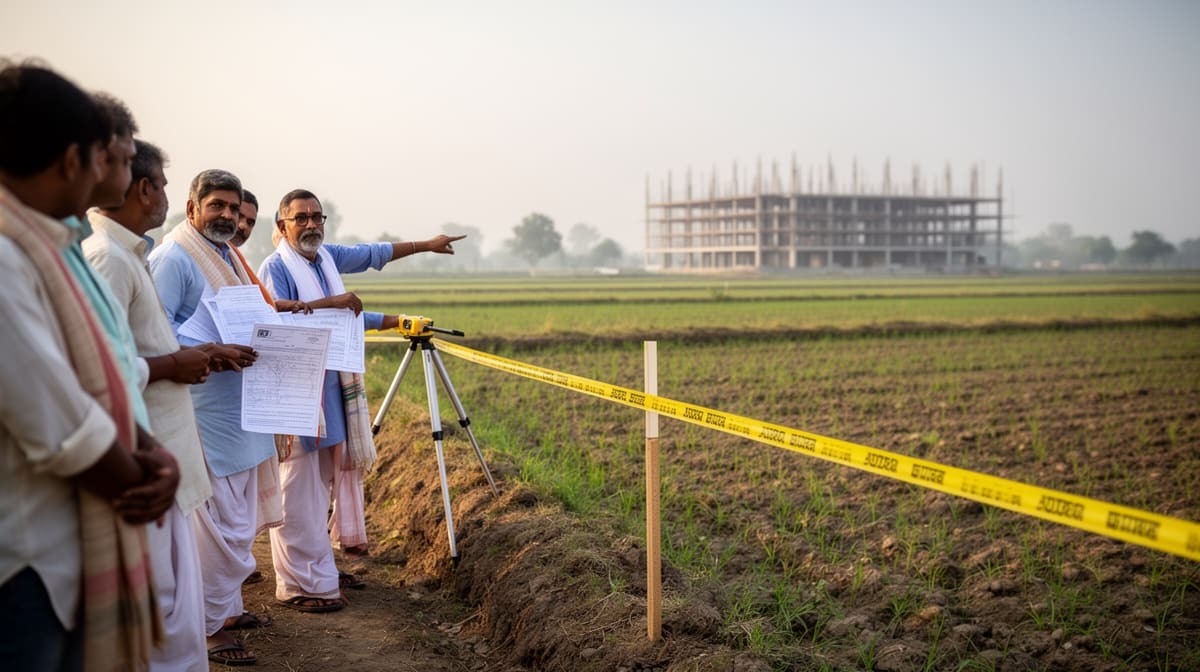
The appellant, Hawa Singh, claimed a preferential right of pre-emption over a suit land in Khewat No.443. The land had been sold by co-sharer Pahar U Singh to the respondents, Ragbhir Singh and another, by sale deed No.96 dated 29.07.1991 for a total consideration of Rs.54,000. The appellant alleged that as a co-sharer he was entitled to pre-empt the sale and therefore instituted a suit for possession by way of pre-emption.
Key Facts
- 29.07.1991: Sale deed executed by Pahar U Singh in favour of the respondents for Rs.54,000.
- 03.08.1993: Defendant No.1 failed to appear; the court proceeded ex parte.
- 03.10.1994: Sub-Judge, Charkhi Dadri, decreed in favour of the appellant, granting possession on payment of Rs.54,000 less 1/5th pre-emption money already deposited, plus stamp and registration charges.
- 19.10.1995: First Appellate Court set aside the trial decree, relying on a 1995 amendment to the Haryana law that purported to remove the co-sharer's pre-emption right during pendency of appeal.
- 1995: Haryana Amendment Act introduced Section 15, altering the pre-emption regime.
- 2001: Supreme Court in Shyam Sunder & Another v. Ram Kumar & Another held that a pre-emptor must prove the continuation of his right up to the decree of the first court and that a subsequent amendment does not affect rights accrued before the decree unless expressly retrospective.
- 08.07.1997: Order allowing the appellant to withdraw the amount already deposited (1/5th of the pre-emption money).
- 27.07.2026: High Court delivered the present judgment.
Procedural History
- 03.10.1994: Trial court decree in favour of appellant.
- 19.10.1995: First Appellate Court set aside the trial decree.
- 27.07.2026: Regular Second Appeal filed by appellant; High Court hearing and judgment.
Parties' Positions
- Appellant (Hawa Singh): Asserted that his pre-emption right existed at the time of the trial decree and that the 1995 amendment could not retrospectively extinguish that right.
- Respondent (Ragbhir Singh): Contended that the amendment removed the co-sharer's pre-emption right during the pendency of the appeal, thereby justifying the appellate court’s reversal.
Relief Sought
The appellant sought restoration of the trial court decree, permission to deposit the balance sale consideration within two months, and costs of the appeal.