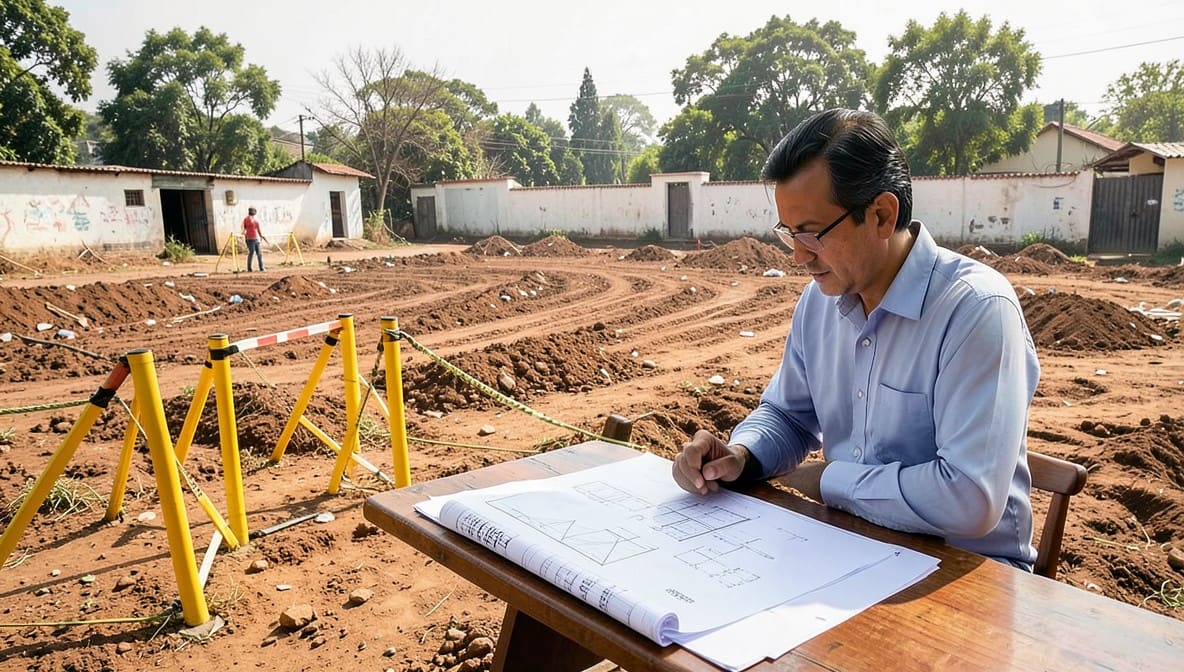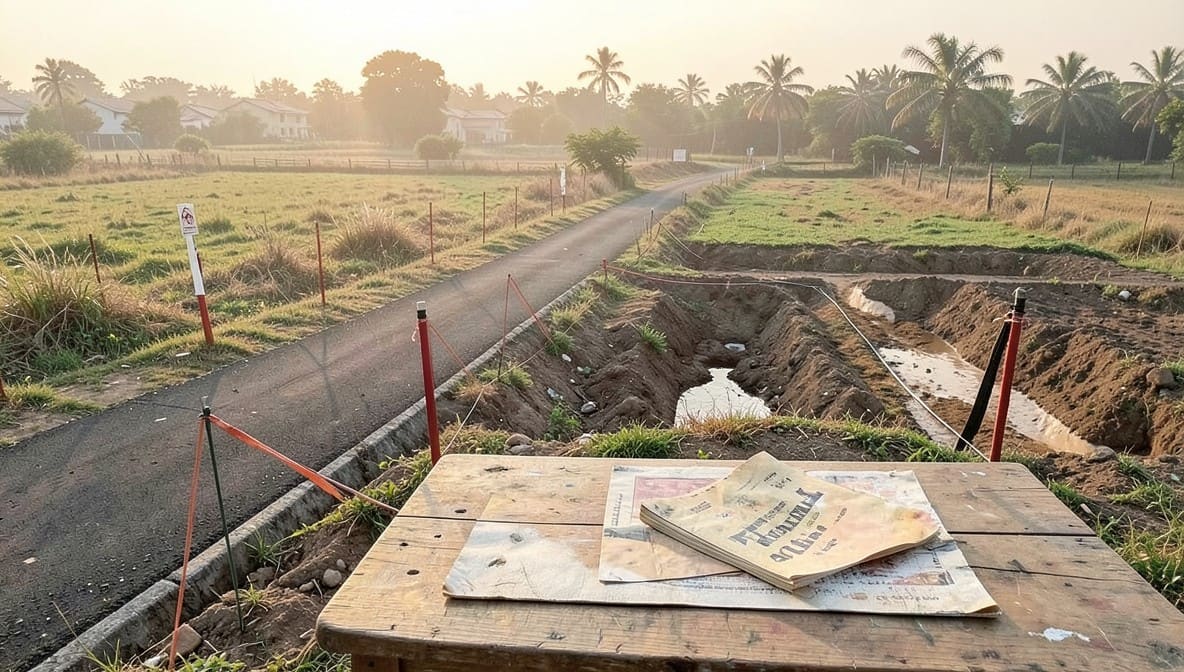
The Income Tax Appellate Tribunal, Ahmedabad, has delivered a significant ruling clarifying that the sale of agricultural land beyond municipal limits does not attract capital gains tax, even if sold to a company or with unaccounted cash consideration. The decision reinforces the statutory definition of "capital asset" under Section 2(14) and invalidates tax additions based on speculative or reverse-calculated valuations.
Background & Facts
The Dispute
The appellant, Jignesh Harshadbhai Patel, sold a 21,145 sq. meter plot of agricultural land in Village Dholi, Ahmedabad, to Dholi Integrated Spinning Park Pvt. Ltd. The transaction involved a declared sale consideration of Rs. 45,00,000 via cheque and an alleged unaccounted cash component of Rs. 66,25,000. The appellant, holding a 1/3rd share, declared no income from the sale in his original return filed on 23.10.2019 for Assessment Year 2019-20.
Key Facts
- The land was acquired by the appellant and co-owners on 15.04.2008 for Rs. 24,11,000
- The sale deed was executed on 10.01.2019 for Rs. 45,00,000
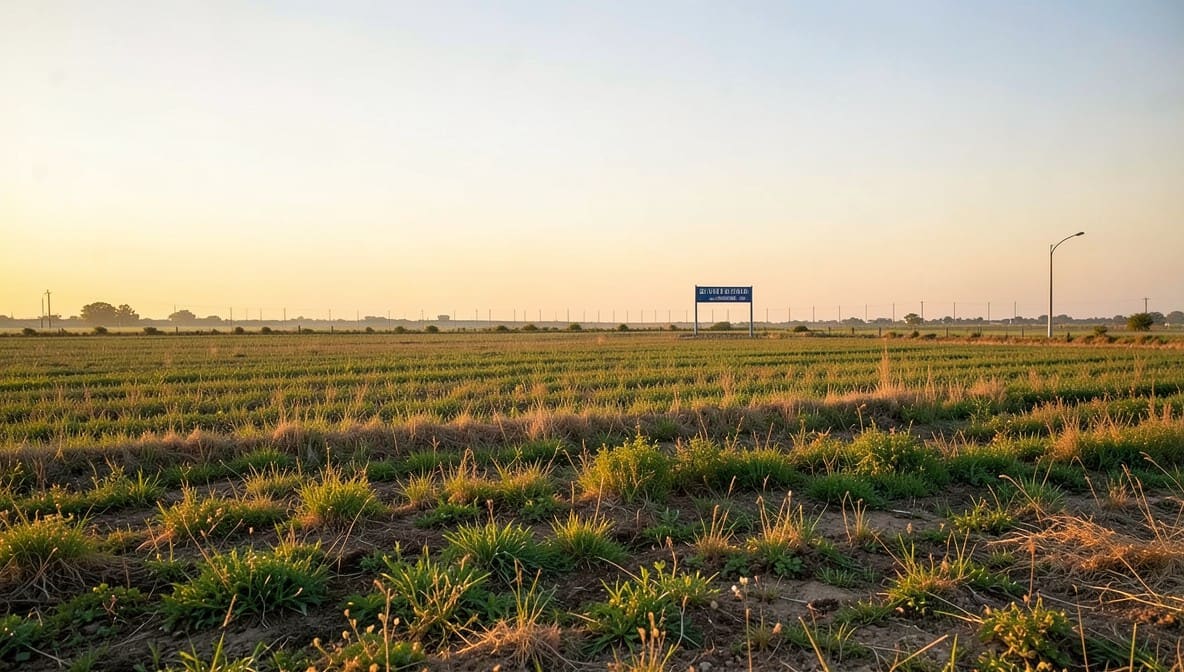
- The land was located in Village Dholi, outside the notified municipal limits of Ahmedabad
- The appellant submitted a Talati-cum-Mantri certificate dated 12.03.2019 confirming agricultural use
- Google Maps and 7/12 extracts showed no urban development within 8 km
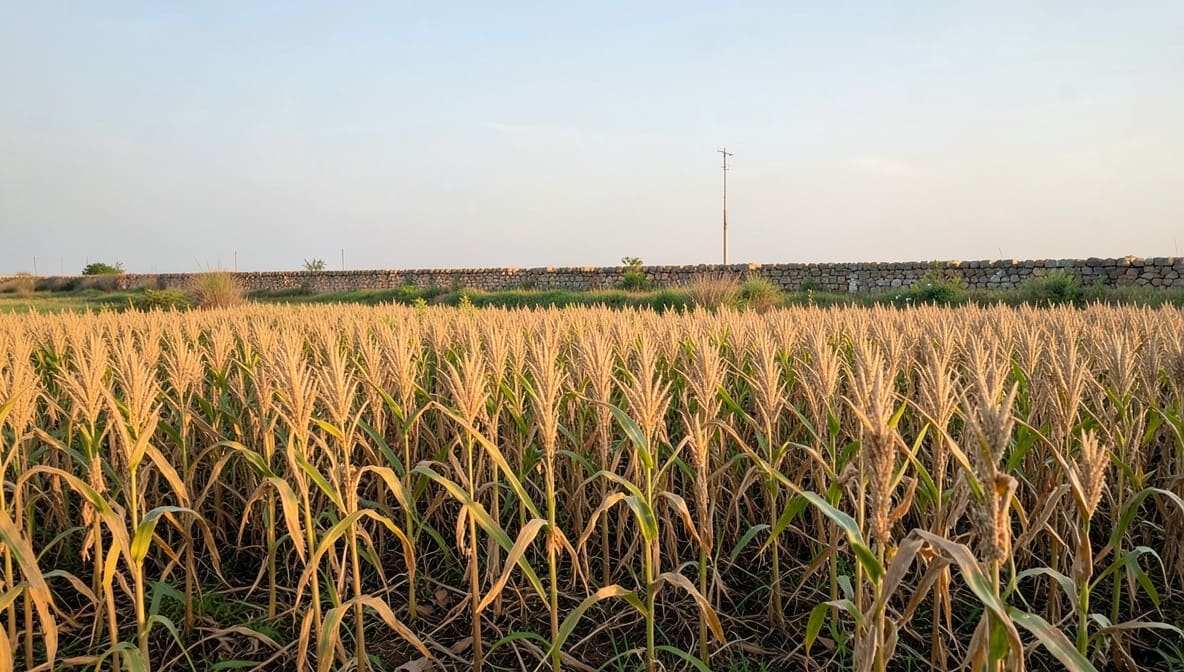
- Agricultural cultivation of "Makai" (maize) was documented on the land until the date of sale
- Stamp duty of Rs. 6,50,000 was paid, calculated at 4.9% on a deemed value of Rs. 1,32,65,306
- The purchaser applied for permission under Section 63AA of the Gujarat Tenancy and Agricultural Lands Laws for industrial use after purchase
- Co-owners of the same land had their agricultural status accepted by the Department in their respective assessments
Procedural History
- 23.10.2019: Original return filed declaring income of Rs. 1,13,410
- 31.03.2023: Notice under Section 148 issued for reassessment
- 02.05.2023: Revised return filed, same income declared
- 17.06.2024: Assessment order passed under Section 147 adding:
- Rs. 44,21,768 as long-term capital gain under Section 50C
- Rs. 22,08,333 as unexplained cash under Section 69A read with Section 115BBE
- 16.05.2024, 13.06.2024, 04.07.2024, 28.05.2025: Multiple notices issued by Ld. CIT(A) for hearing
- 17.06.2025: Ld. CIT(A) dismissed appeal ex parte for non-appearance
- 15.05.2026: ITAT Ahmedabad heard appeal and delivered judgment
The Parties' Positions
For the Appellant
- Contended that the land was agricultural and not a capital asset under Section 2(14)
- Submitted Talati certificate, 7/12 extracts, Google Maps, and cultivation records
- Argued that Section 50C is inapplicable as the land is not a capital asset
- Asserted that Section 69A addition is invalid as the source (sale of agricultural land) is exempt
- Cited precedents from ITAT Ahmedabad and Delhi Bench
For the Respondent
- Argued that sale to a company indicated non-agricultural intent
- Relied on stamp duty valuation as proof of commercial character
- Contended that seized documents and third-party statements proved unaccounted cash
- Maintained that the appellant failed to rebut evidence during appellate proceedings
Relief Sought
The appellant sought deletion of:
- Rs. 44,21,768 added as long-term capital gain
- Rs. 22,08,333 added under Section 69A
- All penalties under Section 270A
- Reversal of the ex parte dismissal of appeal
The Legal Issue
The central question was whether agricultural land situated beyond municipal limits, as defined under Section 2(14) of the Income-tax Act, 1961, constitutes a "capital asset" and whether Section 50C and Section 69A can be invoked to tax gains or unexplained cash arising from its sale.
Arguments Presented
For the Appellant
The appellant relied on the statutory definition of "capital asset" under Section 2(14), which excludes agricultural land situated beyond specified municipal limits. He submitted documentary evidence including Talati certificate, 7/12 extracts, and Google Maps to establish the land’s agricultural character. He cited ITO v. Urmila Bharatbhushan Agrawal (ITA No. 417/Ahd/2023) and Rasilaben Yogeshbhai Patel v. ITO (ITA No. 631/Ahd/2019) to show that the Department had previously accepted identical land as agricultural in the hands of co-owners. He argued that Section 50C cannot apply unless the asset is a capital asset, and Section 69A cannot tax income whose source is exempt.
For the Respondent
The Revenue contended that the sale to a company indicated commercial intent, and the stamp duty valuation reflected the land’s non-agricultural character. It relied on seized handwritten notes and the statement of Shri Kailashnath Upadhyay to substantiate the cash receipt. It argued that the appellant’s non-appearance before the CIT(A) rendered his submissions invalid, and the Assessing Officer’s findings were based on credible evidence.
The Court's Analysis
The Tribunal conducted a meticulous review of the evidence and statutory provisions. It emphasized that the nature of land under Section 2(14) is determined by its character and location on the date of transfer, not by the purchaser’s future intent. The court observed:
"Merely because agricultural land is sold to a non-agriculturist or company does not automatically convert agricultural land into non-agricultural land for purposes of Income-tax Act."
The Tribunal rejected the Revenue’s reliance on stamp duty valuation as conclusive proof of land classification. It noted that the stamp duty was computed under state land laws for purposes of industrial use permission under Section 63AA, which is irrelevant to the Income-tax Act’s definition of capital asset.
The Tribunal further held that the Department’s prior acceptance of the same land as agricultural in the hands of co-owners created a binding principle of consistency. It cited Rasilaben Yogeshbhai Patel to affirm:
"Therefore, in our considered view when the long term capital gain and exemption claimed by the co-owner has been accepted, then the assessee cannot be treated indifferently."
Regarding Section 50C, the Tribunal held that its deeming fiction is contingent on the asset being a capital asset. Since the land was not a capital asset, Section 50C was inapplicable ab initio. The court stated:
"Once we have already held [...] that the land sold by the assessee was agricultural land outside the scope of 'capital asset' under Section 2(14), the deeming fiction contained in Section 50C automatically becomes inapplicable."
On Section 69A, the Tribunal relied on ACIT v. Kamlesh Kumar Rathi (Delhi Bench), which held that income from the sale of agricultural land, whether declared or unaccounted, partakes the character of exempt income. The Tribunal concluded:
"Once the underlying asset itself is held to be agricultural land outside the ambit of 'capital asset', there remains no justification for separately taxing alleged on-money receipts arising from the same transaction."
The Tribunal also noted that the ex parte dismissal by the CIT(A) was rendered academic in light of the merits being decided in favor of the appellant.
The Verdict
The appeal was allowed. The Tribunal directed deletion of:
- Rs. 44,21,768 added as long-term capital gain
- Rs. 22,08,333 added under Section 69A read with Section 115BBE
- All penalty proceedings under Section 270A The order was pronounced on 15.05.2026.
What This Means For Similar Cases
Agricultural Land Classification Is Fact-Specific
- Practitioners must collect and submit location-specific evidence: Talati certificates, 7/12 extracts, Google Maps, and cultivation records
- Municipal boundary notifications must be verified from official sources, not assumptions
- Future use by purchaser is irrelevant; only the land’s status on the date of transfer matters
Section 50C Cannot Be Applied to Non-Capital Assets
- Section 50C is a deeming provision that applies only if the asset is a capital asset
- Reverse calculation of stamp duty value without official certification is legally unsustainable
- Any addition under Section 50C must be preceded by a valid determination of capital asset status
Section 69A Additions Are Invalid for Exempt Sources
-
Unexplained cash receipts from sale of agricultural land cannot be taxed under Section 69A
-
The source of income determines taxability; exempt source = exempt income
-
Revenue cannot bifurcate sale proceeds into "declared" and "on-money" for taxation if the underlying asset is exempt
-
Practitioners should cite ACIT v. Kamlesh Kumar Rathi and Rasilaben Yogeshbhai Patel to challenge Section 69A additions in agricultural land cases
-
Consistency in treatment of co-owners in the same transaction is a strong legal argument