The Income Tax Appellate Tribunal, Mumbai, has clarified that agricultural land situated beyond notified municipal limits cannot be classified as a capital asset merely due to absence of agricultural income or active cultivation, reinforcing the statutory distinction between land classification and actual use under Section 2(14)(iii) of the Income-tax Act.
Background & Facts
The Dispute
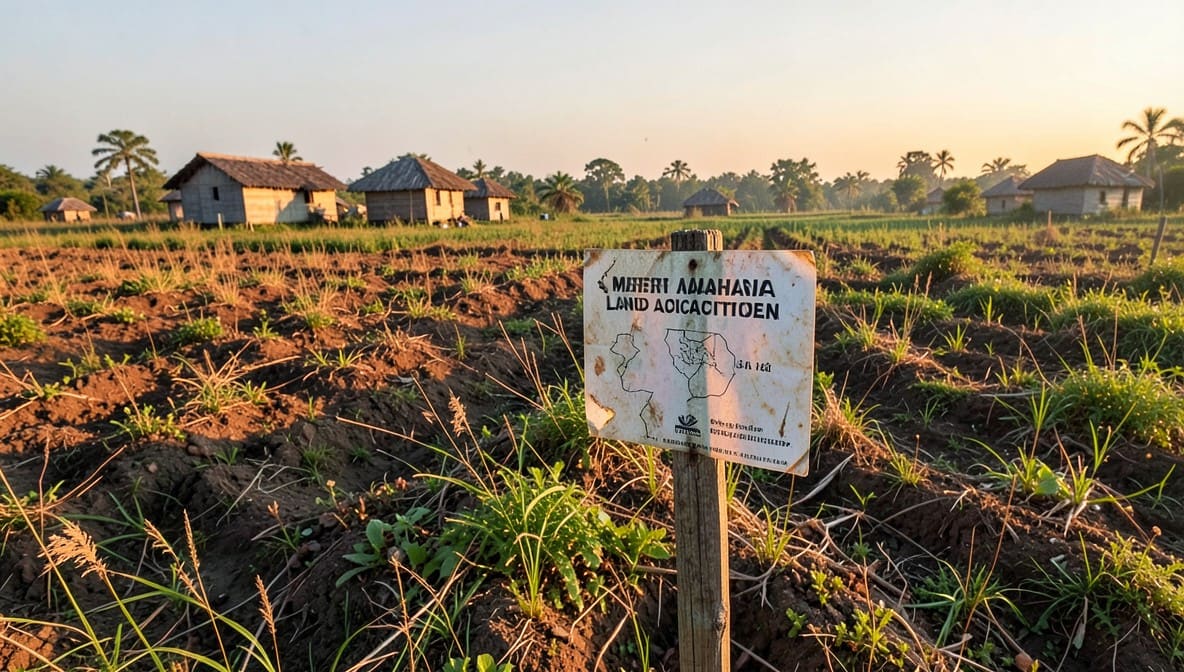
The appellant, Sohanlal Sewaram Jaggi (HUF), sold agricultural land situated at Village Wada Bolhai, Taluka Haveli, District Pune. The Assessing Officer (AO) reassessed the transaction under Section 147 and treated the land as a capital asset, charging long-term capital gains of Rs.49,04,000. The AO rejected the appellant’s claim that the land was exempt under Section 2(14)(iii) on the grounds that no agricultural income was reflected in the return and no documentary evidence of cultivation - such as sale receipts, irrigation expenses, or labor payments - was produced. The Commissioner of Income Tax (Appeals) (CIT(A)) affirmed this view.
Key Facts
- The land is part of Gat No.831/2, Village Wada Bolhai, Taluka Haveli, District Pune.
- The land is classified as agricultural in official revenue records, including 7/12 extracts.
- The land is located approximately 17 to 18 kilometers from the municipal limits of Pune.
- No permission for non-agricultural conversion was ever obtained by the appellant or the purchaser.
- The land falls within a "No Development Zone" as per local planning.
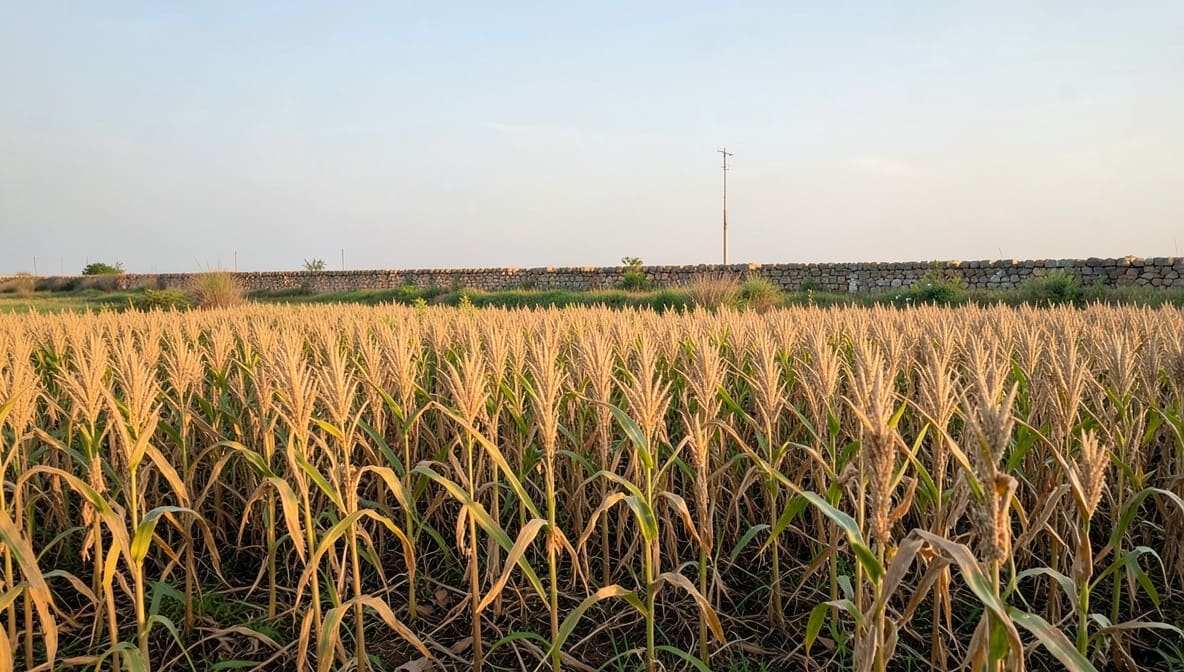
- Survey records and 7/12 extracts confirm cultivation of Bajra and other agricultural produce.
- The purchaser continued agricultural activities after purchase.
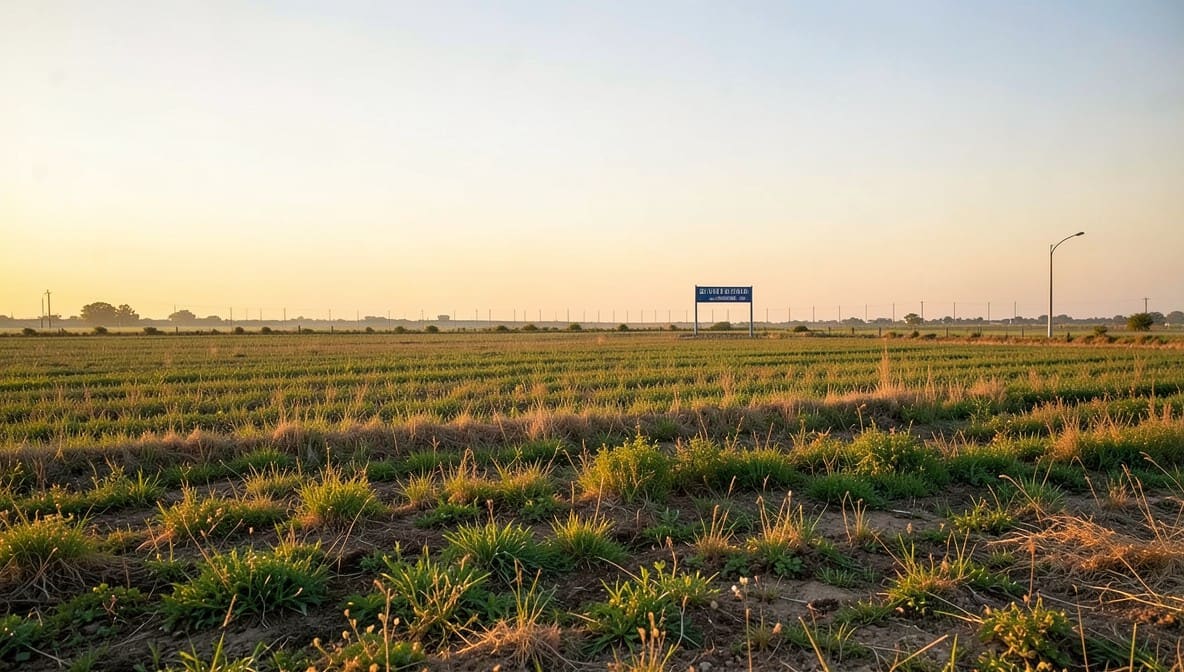
- The surrounding area remains rural, with no industrial estates or housing complexes.
- The appellant, due to advanced age, relied on local caretakers for cultivation; produce was retained for maintenance, not for commercial sale.
- No agricultural income was shown in the return, as the yield was insufficient to generate surplus.
- In a related reassessment involving a co-owner (Talikraj Sewaram Jaggi HUF), the Department accepted the agricultural character of the same land and did not levy capital gains.
Procedural History
- 13.11.2025: Order of the CIT(A) passed, confirming the addition of Rs.49,04,000 as long-term capital gains.
- 06.05.2026: Hearing before the Income Tax Appellate Tribunal, Mumbai.
- 27.05.2026: Judgment pronounced by the Tribunal.
The Parties' Positions
For the Appellant
The appellant argued that the land qualifies as agricultural land under Section 2(14)(iii) because:
- It lies beyond the 8-kilometer radius from Pune’s municipal limits.
- It has no population of 10,000 or more within its jurisdiction.
- Revenue records consistently classify it as agricultural.
- No non-agricultural conversion permission was sought or granted.
- The absence of reflected agricultural income does not negate agricultural character.
- The legislative intent behind the 1970 amendment was to tax only urban and peri-urban agricultural land, not rural holdings.
- Sections 54B and 10(37), which require actual agricultural use, are distinct from Section 2(14)(iii), which does not contain such a condition.
For the Respondent
The Revenue contended that:
- Actual agricultural use is a necessary factor in determining agricultural character.
- Absence of agricultural income and cultivation evidence indicates the land was not genuinely used for agriculture.
- Judicial precedents such as Sarifabibi Mohmed Ibrahim v. CIT and GRK Reddy & Sons (HUF) support the view that surrounding circumstances and user are decisive.
- The land’s proximity to Pune and its commercial potential indicate non-agricultural intent.
- The appellant’s failure to produce cultivation records undermines the claim.
Relief Sought
The appellant sought deletion of the capital gains addition of Rs.49,04,000 and a declaration that the land was not a capital asset under Section 2(14)(iii).
The Legal Issue
The central question was whether Section 2(14)(iii) of the Income-tax Act requires proof of actual agricultural use or reflected agricultural income to classify land as exempt from capital gains tax, or whether compliance with the statutory criteria of location and municipal population alone is sufficient.
Arguments Presented
For the Appellant
The appellant’s counsel relied on the legislative history of Section 2(14)(iii), emphasizing that the Finance Act, 1970, shifted the focus from subjective tests of agricultural use to objective criteria: municipal jurisdiction and population. He cited Ashok Chaganlal Thakkar v. National Faceless Assessment Centre, CIT v. Debbie Alemao, and PCIT v. Anthony John Pereira to show that courts have consistently held that revenue records and geographical location are decisive. He highlighted that Sections 54B and 10(37) explicitly require actual agricultural use, whereas Section 2(14)(iii) does not, indicating a deliberate legislative omission. He argued that the Tribunal must not judicially import conditions absent from the statute.
For the Respondent
The Revenue relied on Sarifabibi Mohmed Ibrahim v. CIT and GRK Reddy & Sons (HUF) to argue that actual use and surrounding circumstances are critical. It contended that the absence of agricultural income, cultivation records, and the land’s proximity to Pune indicated commercial intent. It asserted that revenue records alone are not conclusive and must be corroborated by evidence of use.
The Court's Analysis
The Tribunal undertook a comprehensive review of the statutory framework, legislative history, and judicial precedents. It emphasized that the 1970 amendment to Section 2(14)(iii) was not merely procedural but substantive: Parliament consciously replaced a broad exclusion of all agricultural land with a targeted exclusion limited to rural land beyond specified urban thresholds.
"The entire edifice of the assessment order as well as the impugned appellate order proceeds substantially on the premise that unless the assessee demonstrates actual and continuous agricultural operations immediately preceding transfer coupled with reflected agricultural income in the return, the land cannot retain agricultural character. In our considered opinion, such an approach not only oversimplifies the statutory framework but also overlooks the fundamental legislative distinction consciously embedded by Parliament itself in the Act."
The Tribunal noted that Section 54B and Section 10(37) contain express language requiring land to have been "used for agricultural purposes" in the two years preceding transfer. The absence of such language in Section 2(14)(iii) was deemed intentional. The Court invoked the principle of statutory interpretation that where Parliament uses specific language in one provision and omits it in another, courts cannot supply the omitted words.
The Tribunal further distinguished between "agricultural income" under Section 2(1A) and "agricultural land" under Section 2(14)(iii). It held that subsistence farming, cultivation by caretakers, and negligible produce do not negate agricultural character. The absence of reflected income, particularly in cases of elderly landowners, cannot be equated with non-use.
The Tribunal also rejected the Revenue’s reliance on cases like GRK Reddy & Sons and Prashant Jaipal Reddy, distinguishing them on facts: those involved clear commercial development, adjacent non-agricultural use, and contradictory conduct by the assessee. In contrast, the present case involved no such evidence, and the land remained within a "No Development Zone" with no conversion permission sought.
The Tribunal affirmed that revenue records, geographical location, and continuity of agricultural classification are sufficient to establish exemption under Section 2(14)(iii), absent evidence of actual conversion or commercial intent.
The Verdict
The appellant succeeded. The Tribunal held that the land was not a capital asset under Section 2(14)(iii) and deleted the addition of Rs.49,04,000 as long-term capital gains. The order of the CIT(A) dated 13.11.2025 was set aside. No interest or costs were awarded, as the matter was resolved on statutory interpretation.
What This Means For Similar Cases
Revenue Records and Location Are Sufficient for Exemption
- Practitioners must now argue that if land is classified as agricultural in revenue records and lies beyond municipal limits or the 8-km notified radius, it qualifies for exemption under Section 2(14)(iii), regardless of whether agricultural income was declared.
- The burden shifts to the Revenue to prove actual conversion or commercial intent - not to disprove cultivation.
Actual Use Is Not a Statutory Requirement
- The absence of cultivation records, labor payments, or produce sales cannot be used to deny exemption under Section 2(14)(iii).
- Subsistence farming, caretaker-managed plots, and lack of surplus income are legally acceptable under rural agricultural norms.
Legislative Intent Overrides Judicial Precedents on Pre-1970 Law
- Courts must not apply pre-1970 tests (e.g., Sarifabibi) to post-amendment cases. The statutory framework has changed.
- Cases like Ashok Chaganlal Thakkar and PCIT v. Anthony John Pereira now form the binding precedent for post-1970 assessments.
Consistency in Departmental Treatment Matters
- Where the Department has accepted agricultural character in a related case involving the same land and transaction, inconsistency may be raised as a fairness argument, even if res judicata does not strictly apply.
Avoid Misapplying Sections 54B and 10(37)
-
Tax officers must not conflate the conditions of Sections 54B and 10(37) with Section 2(14)(iii). The former govern exemptions from tax on gains; the latter defines what constitutes a capital asset.
-
Practitioners should cite Section 2(14)(iii) as a standalone exclusion based on geography and classification, not as a conditional exemption.