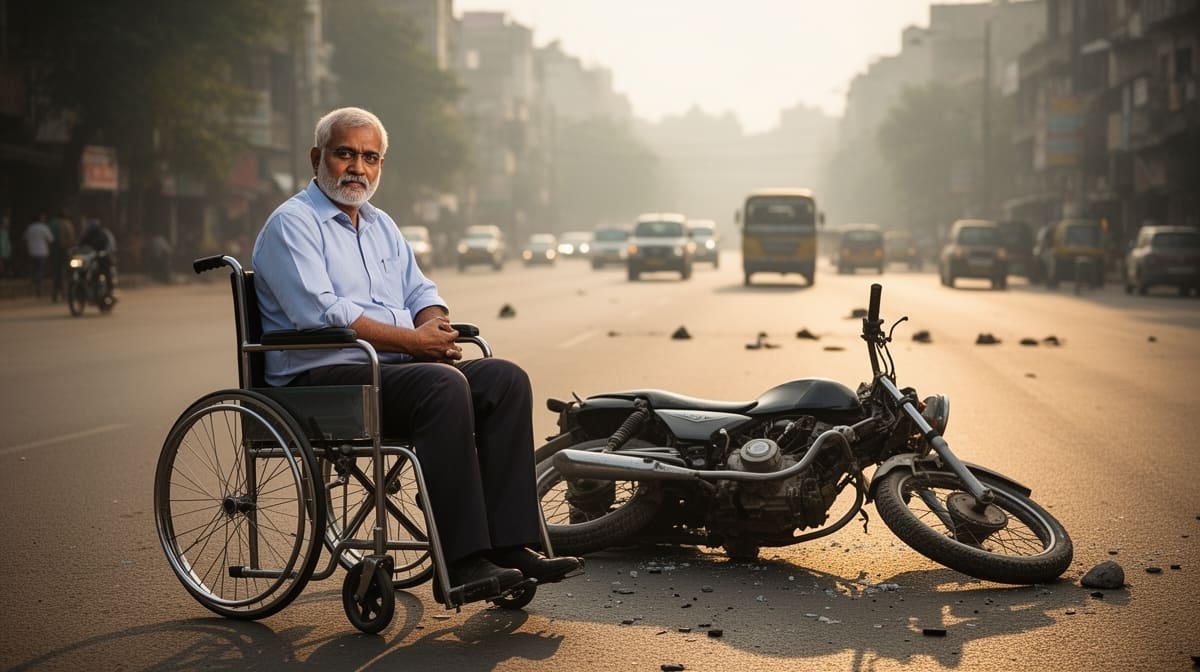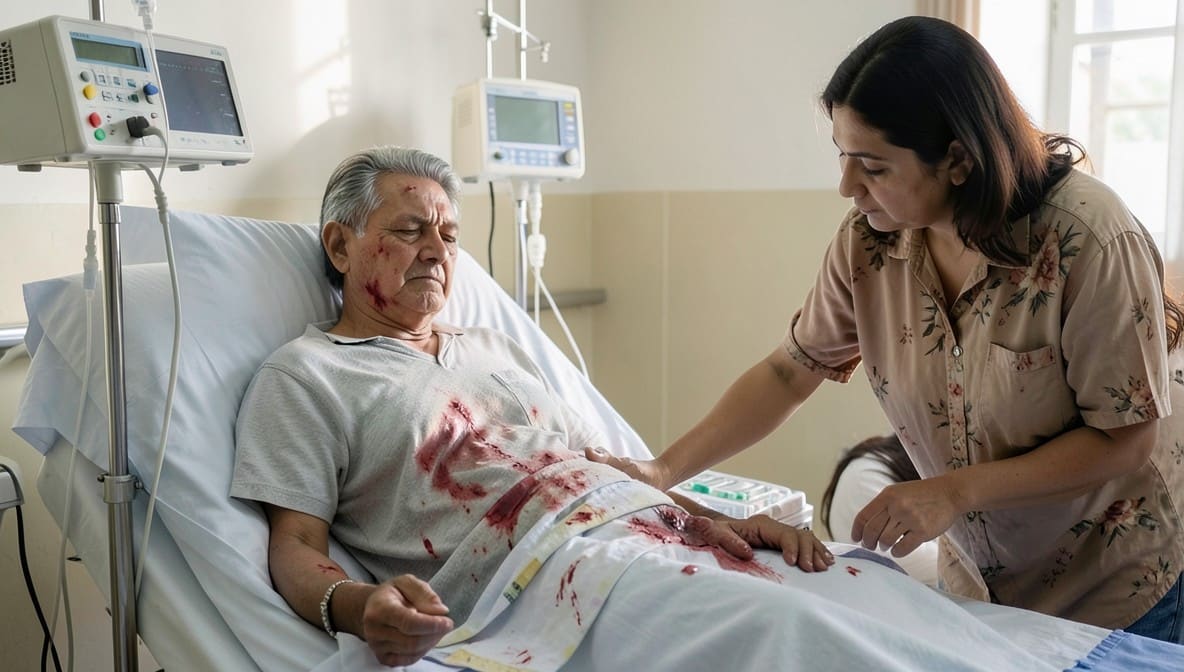
The Himachal Pradesh High Court has enhanced compensation awarded to a motor accident victim by adding 40% towards future prospects to the notional monthly income, holding that failure to do so would result in inadequate compensation. The Court also clarified the heads of compensation in personal injury cases, emphasizing the need to assess both pecuniary and non-pecuniary damages objectively.
Background & Facts
The Dispute
The appellant, Pawan Vikrant, filed an appeal under Section 173 of the Motor Vehicles Act, 1988 against the award dated 01.04.2016 passed by the Motor Accidents Claims Tribunal (IV), Shimla. The Tribunal had awarded compensation of Rs. 6,03,000 with interest at 7.5% per annum from the date of filing of the petition till realization. The appellant sought enhancement of the compensation, contending that the Tribunal had erred in not awarding compensation towards future prospects and that the awarded compensation under other heads was inadequate.
Key Facts
- 16.04.2010: The appellant was travelling as a cleaner in a vehicle (registration No. HP-30-1752) when it rolled over near Kali Miti Bithal due to rash and negligent driving by respondent No. 2.
- The appellant sustained multiple injuries, including fractures in the fingers of his left hand, resulting in amputation of two fingers and 60% permanent disability as per disability certificate (Ext. PW-3/A).
- The appellant was treated at Civil Hospital, Rampur, and later at IGMC, Shimla, from 17.05.2010 to 26.05.2010, incurring expenses exceeding Rs. 3,00,000.
- Prior to the accident, the appellant earned approximately Rs. 5,000 per month from selling vegetables and milk. Post-accident, he was unable to work due to disability.
- The appellant filed a claim petition under Section 166 of the Motor Vehicles Act, 1988, seeking compensation of Rs. 15,00,000.
- Respondents No. 1 and 2 did not file a reply, and their right to file the same was closed by the Tribunal on 01.06.2011.
- Respondent No. 3 (Insurance Company) contested the petition, denying the appellant's earning capacity and hospitalization.
Procedural History
- 14.10.2014: Claim petition (MAC Petition RBT No. 71-S/2 of 14/10) filed before the Motor Accidents Claims Tribunal (IV), Shimla.
- 01.04.2016: Tribunal allowed the claim petition, awarding Rs. 6,03,000 with 7.5% interest from the date of filing till realization. Respondent No. 3 was directed to indemnify the award.
- FAO (MV) No. 271 of 2016: Appeal filed by the appellant for enhancement of compensation.
- 08.07.2026: Appeal reserved for judgment.
- 21.07.2026: Judgment delivered by the Himachal Pradesh High Court.
Relief Sought
The appellant sought enhancement of compensation, specifically:
- Addition of 40% towards future prospects to the notional monthly income.
- Enhancement of compensation under heads such as pain and suffering, loss of amenities of life, and future loss of earnings.
The Legal Issue
The central question was whether the Motor Accidents Claims Tribunal erred in not awarding compensation towards future prospects to the notional income of the appellant, a 24-year-old injured claimant with 60% permanent disability, and whether the compensation awarded under other heads was adequate.
Arguments Presented
For the Appellant
- The learned counsel for the appellant contended that the Tribunal had gravely erred in not awarding compensation towards future prospects on account of the disability suffered by the appellant.
- It was argued that the compensation awarded under other heads, such as pain and suffering and loss of amenities of life, was inadequate.
For the Respondent
- The learned counsel for respondent No. 3 (Insurance Company) supported the impugned award and prayed for dismissal of the appeal.
The Court's Analysis
The Court examined the principles governing compensation in motor accident cases, distinguishing between pecuniary and non-pecuniary damages. The Court relied on several Supreme Court judgments to underscore the objective standards required in assessing compensation:
"Whenever any amount is determined as the compensation payable for any injury suffered during an accident, the object is to compensate such injury 'so far as money can compensate' because it is impossible to equate the money with the human sufferings or personal deprivations."
The Court emphasized that compensation must be just and adequate, fully and adequately restoring the claimant to the position prior to the accident. The Court referred to R.D. Hattangadi v. Pest Control (India) Pvt. Ltd. (1995) 1 SCC 551, Arvind Kumar Mishra v. New India Assurance Co. Ltd. (2010) 10 SCC 254, and Raj Kumar v. Ajay Kumar (2011) 1 SCC 343, to highlight the heads of compensation and the methodology for assessing future loss of earnings.
The Court also relied on National Insurance Company Ltd v. Pranay Sethi (2017) 16 SCC 680, which held that in cases where the deceased or injured was self-employed or on a fixed salary and below the age of 40 years, an addition of 40% of the established income towards future prospects should be made. The Court noted that the appellant was 24 years old at the time of the accident and had no permanent job, making the addition of 40% to the notional monthly income of Rs. 4,000 necessary.
The Court further clarified that the percentage of permanent disability does not equate to the percentage of loss of earning capacity. The loss of earning capacity must be assessed with reference to the evidence in entirety, including the nature of the profession, occupation, age, education, and other factors.
The Verdict
The appeal was allowed in part. The Court enhanced the compensation to Rs. 9,10,060, broken down as follows:
- Pain and suffering: Rs. 75,000 (enhanced from Rs. 20,000).
- Loss of earning during hospital stay: Rs. 5,000.
- Medical expenses: Rs. 29,300 (as awarded by the Tribunal).
- Loss of future earnings: Rs. 7,25,760 (calculated at Rs. 5,600 per month after adding 40% future prospects to the notional income of Rs. 4,000, with a multiplier of 18).
- Loss of amenities of life: Rs. 75,000 (awarded for the first time).
The interest component of 7.5% per annum from the date of filing of the petition till realization remained unchanged. The appeal was disposed of accordingly.
What This Means For Similar Cases
Future Prospects Must Be Added for Claimants Below 40 Years
- In cases involving claimants below 40 years of age who are self-employed or on a fixed salary, an addition of 40% to the notional monthly income towards future prospects is mandatory.
- This addition ensures that the compensation reflects the claimant's potential earning capacity over their working life, providing a more realistic assessment of loss.
Loss of Amenities of Life Is a Separate Head of Compensation
- Courts must explicitly award compensation under the head 'loss of amenities of life' in cases involving permanent disability.
- This head compensates for the loss of normal life activities, such as the inability to walk, run, or sit, and must be assessed objectively based on the claimant's age, nature of injury, and its impact on daily life.
Objective Assessment of Compensation Is Non-Negotiable
- Compensation must be assessed objectively, excluding speculation or fancy.
- The multiplier method for assessing future loss of earnings must be applied consistently, with the multiplier chosen based on the claimant's age at the time of the accident.
- The percentage of permanent disability does not automatically equate to the percentage of loss of earning capacity; each case must be assessed on its own facts.