The Madhya Pradesh High Court has established a critical precedent affirming that public sector employers remain liable to pay interest on delayed retiral dues, even after operational winding up, if the employee’s service continued until superannuation. This ruling reinforces the state’s fiduciary duty toward its retirees and sets a clear benchmark for timely settlement of statutory entitlements.
Background & Facts
The Dispute
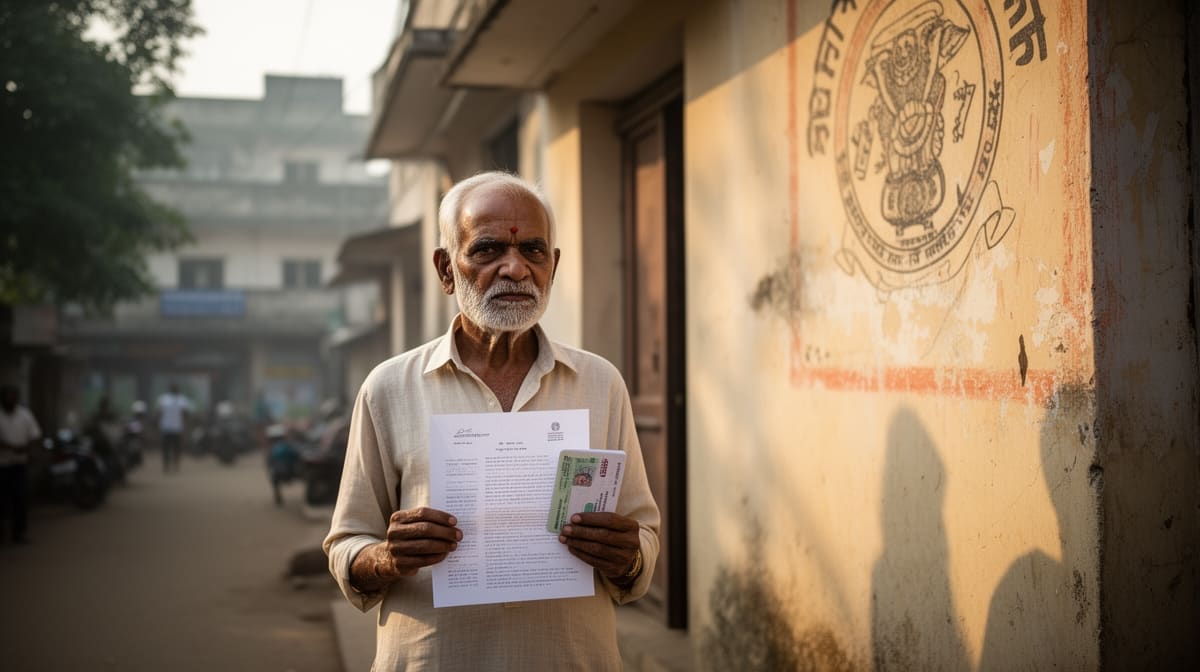
Rajesh Sharma, a former employee of a state-linked corporation, retired on 30 June 2021 after completing his tenure. Despite his service ending in 2021, his retiral benefits - including gratuity, provident fund dues, and other terminal benefits - were not disbursed until January 2025, nearly four years later. The petitioner contended that this delay was unjustified and caused financial hardship, particularly as he relied on these payments for post-retirement livelihood.
Procedural History
The petitioner filed a writ petition under Article 226 of the Constitution seeking:
- Immediate payment of outstanding retiral dues
- Interest on the delayed amount from the date of retirement
- A direction to the state and corporation to ensure prompt settlement of future retiral claims
The State and the corporation opposed the claim, arguing that the corporation had been functionally wound up and lacked independent financial resources. Payments were allegedly delayed due to fund mobilization from multiple government sources.
Relief Sought
The petitioner sought interest at a market rate, or at minimum, statutory interest, from the date of retirement until actual payment, citing principles of natural justice and equitable compensation for state delay.
The Legal Issue
The central question was whether an employer, even after functional winding up but before formal closure under Section 25-O of the Industrial Disputes Act, remains legally obligated to pay interest on belated retiral dues when the employee’s service continued until superannuation.
Arguments Presented
For the Petitioner
The petitioner’s counsel relied on the principle that continuation of employment until superannuation creates a continuing obligation to settle terminal benefits within a reasonable time. He cited State of Punjab v. Jagjit Singh to argue that delay in payment of statutory dues amounts to violation of Article 14 and Article 21, and that interest is a necessary corollary to compensate for the loss of use of funds. He emphasized that the petitioner was not a casual or temporary worker but a permanent employee entitled to full retiral benefits under service rules.
For the Respondent/State
The State and corporation contended that since the corporation had ceased operations and was not formally closed under Section 25-O, it lacked the financial capacity to pay interest. They argued that the delay was not willful but structural, arising from the need to coordinate funding across multiple government departments. They cited Union of India v. Rameshwar Prasad to assert that interest cannot be awarded absent a clear statutory mandate or contractual obligation.
The Court's Analysis
The Court examined the nature of the employer-employee relationship and the legal status of the corporation. It noted that while the corporation’s operations had been wound up, its legal existence persisted because it had not been formally closed under Section 25-O of the Industrial Disputes Act. The petitioner’s employment continued until 2021, meaning the employer-employee relationship remained intact until retirement.
"The Corporation was bound to settle retiral benefits within some reasonable time, and the time period of 3-5 years is undoubtedly exorbitant for settlement of retiral benefits, more so when the employees are only paid meagre pension under the Employee Pension Scheme 1995."
The Court rejected the argument that financial hardship absolves the state of its duty. It held that delay in payment of statutory dues to retirees cannot be justified by administrative inefficiency. The Court emphasized that the Employee Pension Scheme 1995 provides only minimal monthly pensions, making timely settlement of lump-sum retiral benefits critical for dignity and subsistence. The Court applied the doctrine of equitable compensation and found that interest at 6% per annum was a reasonable and proportionate remedy to offset the loss of use of funds over four years.
The Verdict
The petitioner succeeded. The Court held that interest at 6% per annum must be paid on belated retiral dues from the date of retirement until actual payment, even if the employer is functionally wound up, provided employment continued until superannuation and formal closure under Section 25-O had not occurred. Payment was directed within 90 days.
What This Means For Similar Cases
Employer Obligation Survives Functional Winding Up
- Practitioners representing retirees must now argue that functional cessation of operations does not extinguish liability for retiral dues if legal existence persists
- The absence of formal closure under Section 25-O is a decisive factor - employers cannot evade obligations by merely halting operations
Interest Is Not Discretionary but Remedial
- Interest is not a windfall but a compensatory remedy for state delay in fulfilling statutory obligations
- 6% per annum is now a recognized benchmark for such delays in public sector employment cases
- Future petitions may cite this judgment to claim interest even where no statute explicitly mandates it
Procedural Compliance Is Non-Negotiable
- Public sector entities must establish clear timelines for retiral benefit disbursement
- Delays exceeding 12 - 18 months will now be presumed unreasonable and attract interest
- Government departments must audit and streamline retiral payment mechanisms to avoid litigation