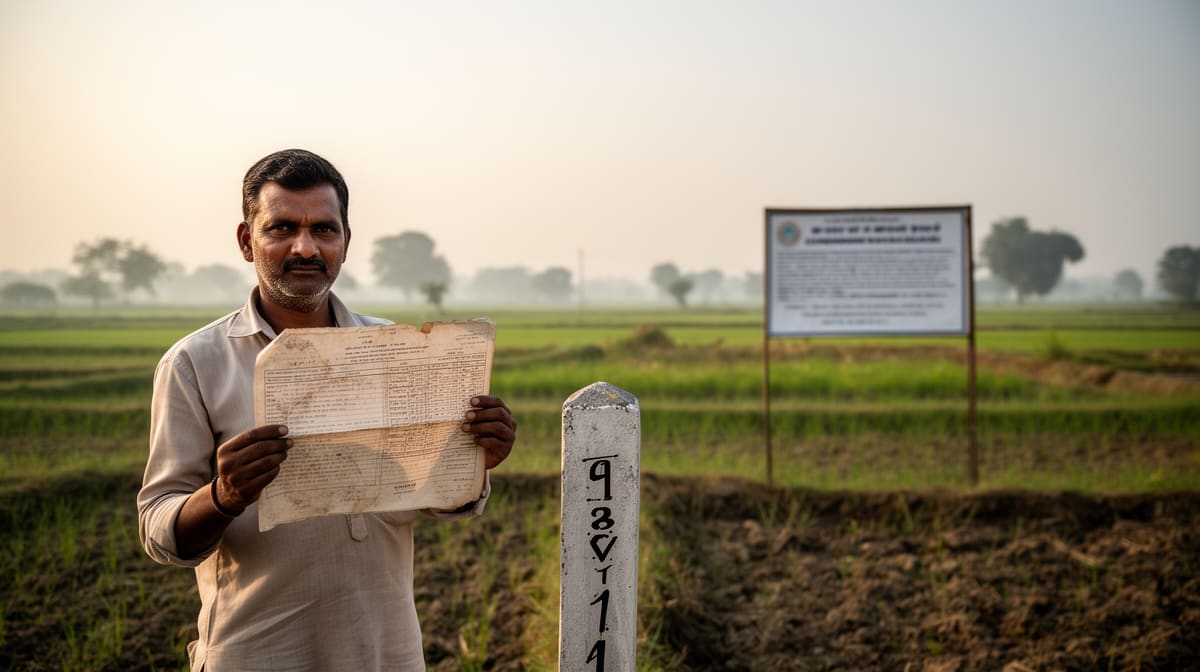
The Bombay High Court has reaffirmed a foundational principle of Indian civil procedure: constitutional remedies under Article 226 cannot substitute for adjudication of title disputes in civil courts. In dismissing a writ petition concerning long-standing land possession, the Court emphasized that questions of ownership, inheritance, and proprietary rights must be resolved through the civil judicial process, not by writ jurisdiction.
Background & Facts
The Dispute
The petitioners, Swarna Deepak Udasin and others, claimed continuous possession of a property for over a century and challenged actions taken by revenue authorities that allegedly undermined their rights. They sought writ relief to prevent eviction or interference with possession, asserting historical entitlement and adverse possession.
Procedural History
- The petition was filed in 2023 under Article 226 of the Constitution seeking protection from state interference.
- An interim order was granted on 8 November 2023, restraining state authorities from disturbing possession.
- The petitioners did not file a civil suit for declaration of title despite having the option.
- The State opposed the petition on grounds of maintainability, arguing that title disputes are exclusively within the domain of civil courts.
Relief Sought
The petitioners sought continuation of the interim protection and a direction to the State to recognize their possession as lawful. They also requested that the Court adjudicate their claim to title.
The Legal Issue
The central question was whether a writ petition under Article 226 is maintainable to resolve disputes over title and ownership of land when an adequate alternative remedy exists in the form of a civil suit.
Arguments Presented
For the Petitioner
The petitioners’ counsel, Senior Advocate P.R. Katneshwarkar, argued that the prolonged interference by revenue authorities had created a situation of irreparable harm, justifying constitutional intervention. They relied on the fact of over 100 years of uninterrupted possession to suggest that equity favored judicial protection under Article 226. They contended that civil courts are often slow and that writ jurisdiction should be invoked to prevent loss of heritage property.
For the Respondent
The Additional Government Pleaders contended that the petition was an abuse of process. They cited settled precedent that disputes concerning title, possession, and proprietary rights are civil in nature and must be resolved by civil courts under the Code of Civil Procedure. They emphasized that writ jurisdiction is not meant to act as a substitute for civil litigation, especially where the parties have a clear, adequate, and efficacious remedy.
The Court's Analysis
The Court undertook a thorough review of the doctrine of alternative remedy and its application in land title disputes. It held that the mere assertion of long possession does not convert a civil dispute into a constitutional issue. The Court observed that the petitioners had not challenged any specific statutory order under revenue law but instead sought a general declaration of title - a matter exclusively within the competence of civil courts.
"The High Court is not a forum for adjudicating title disputes between private parties. Where the rights of the parties are founded in property law, the appropriate forum is the Civil Court, and the writ jurisdiction must not be invoked to circumvent that.
The Court further clarified that the interim protection granted earlier was procedural and not a determination of merits. It stressed that no finding on title, possession, or validity of revenue orders had been made or intended. The Court also noted that the petitioners had not exhausted their civil remedy, which remains open and viable.
The Court rejected the argument that delay in civil courts justifies resort to writ jurisdiction, noting that such an approach would undermine the structured hierarchy of judicial remedies.
The Verdict
The petitioners’ writ petition was dismissed. The Court held that title disputes must be resolved by civil courts, and writ jurisdiction cannot be invoked as a substitute for civil litigation. The interim protection was extended for four months to allow petitioners time to file a civil suit.
What This Means For Similar Cases
Alternative Remedy Bars Writ Jurisdiction
- Practitioners must assess whether a civil suit is available before filing a writ petition in land title matters.
- Courts will routinely dismiss writ petitions where the dispute is essentially one of ownership, easement, or inheritance.
- The existence of a civil remedy - even if perceived as slow - is sufficient to render a writ petition non-maintainable.
No Merits Adjudicated in Writ Proceedings
- This judgment reinforces that interim orders in writ petitions do not constitute findings on title or possession.
- Civil courts must decide such matters afresh, without being bound by any observations made in writ proceedings.
- Lawyers must avoid citing interim writ orders as precedent in civil suits; they carry no res judicata effect.
Possession Alone Does Not Confer Constitutional Protection
- Long possession, even over a century, does not automatically trigger Article 226 jurisdiction.
- Adverse possession claims must be pleaded and proved in civil suits under the Limitation Act, not through writ petitions.
- Petitioners must frame their claims under the Specific Relief Act or the Transfer of Property Act, not under constitutional remedies.