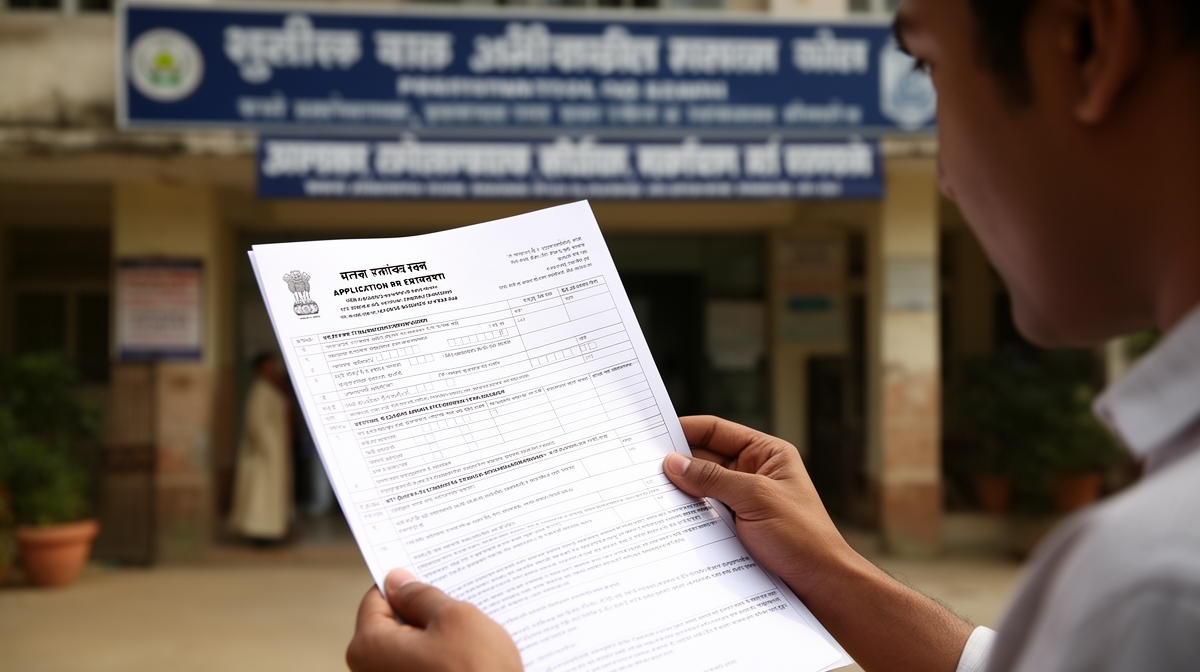

The Madhya Pradesh High Court has reaffirmed a foundational limit on writ jurisdiction: it cannot be invoked to determine disputed facts or award monetary compensation in medical negligence claims. This ruling clarifies the boundary between constitutional remedies and civil litigation, offering critical guidance to practitioners navigating healthcare-related grievances.
Background & Facts
The Dispute
The petitioner, Smt. Somwati Jatav, alleged that a sterilization operation performed on her by a government medical facility failed, resulting in an unintended pregnancy. She contended that this failure constituted medical negligence and sought compensation of ₹20,00,000 under Article 226 of the Constitution.
Procedural History
- The petitioner filed a writ petition directly before the High Court at Gwalior, bypassing lower civil forums.
- No medical records, expert opinions, or clinical reports were submitted to substantiate the claim of negligence.
- The petitioner relied solely on the fact of conception post-sterilization as proof of negligence.
Relief Sought
The petitioner sought: (1) declaration that the sterilization procedure was negligently performed; (2) issuance of a direction to the State to pay ₹20,00,000 as compensation; and (3) any other relief deemed appropriate by the Court.
The Legal Issue
The central question was whether a writ petition under Article 226 can be used to adjudicate disputed questions of fact in a medical negligence case and to award monetary compensation without a full trial in a civil court.
Arguments Presented
For the Petitioner
The petitioner’s counsel argued that the failure of a sterilization procedure, a well-established surgical intervention, inherently indicates negligence. She contended that the State, as a public entity, owed a duty of care and that the Court, in exercise of its extraordinary jurisdiction, could grant relief to prevent injustice.
For the Respondent/State
The State countered that the petitioner had not adduced any medical evidence to establish deviation from standard medical practice. It emphasized that the mere occurrence of an adverse outcome does not equate to negligence, and that determination of fault, causation, and quantum of damages requires a full evidentiary trial under civil procedure.
The Court's Analysis
The Court began by acknowledging the gravity of the petitioner’s grievance but stressed that constitutional remedies are not substitutes for civil litigation. It observed that medical negligence is a complex factual issue requiring expert testimony, clinical records, and cross-examination - all absent in the present petition.
"Nothing has been placed on record to show that as per medical literature, there is a zero percent chances of failure of sterilization operation. Except by saying that sterilization operation has failed, nothing has been placed on record to show the medical negligence. No opinion of the expert has been placed on record."
The Court relied on its own Division Bench precedent in W.P. No.32164/2025, which held that writ jurisdiction under Article 226 cannot be used to quantify damages or determine disputed facts. The Court reiterated that such matters fall squarely within the domain of civil courts, which are equipped to receive evidence, examine witnesses, and apply the preponderance of evidence standard.
It further noted that while the State may be liable for negligence, the petitioner’s remedy lies in filing a civil suit under the Law of Torts, not in invoking the extraordinary writ jurisdiction of the High Court.
The Verdict
The petitioner’s writ petition was dismissed for non-admission. The Court held that writ jurisdiction under Article 226 cannot be invoked to adjudicate disputed facts or award compensation in medical negligence cases. The petitioner was expressly granted liberty to file a civil suit for damages.
What This Means For Similar Cases
Writ Petitions Cannot Replace Civil Trials
- Practitioners must advise clients that claims involving factual disputes - especially medical negligence - must be pursued in civil courts, not through writ petitions.
- Filing a writ petition for compensation without supporting evidence risks dismissal and delays justice.
Expert Evidence Is Non-Negotiable
- In any medical negligence claim, whether civil or criminal, expert testimony is indispensable to establish breach of standard of care.
- Courts will not infer negligence from outcome alone; the standard of care and causal link must be proven.
Liberty to File Civil Suit Is Not Merely Procedural
- The Court’s grant of liberty to file a civil suit is a binding procedural directive, not a formality.
- Practitioners should immediately advise clients to initiate civil proceedings within the limitation period to avoid extinguishment of remedy.