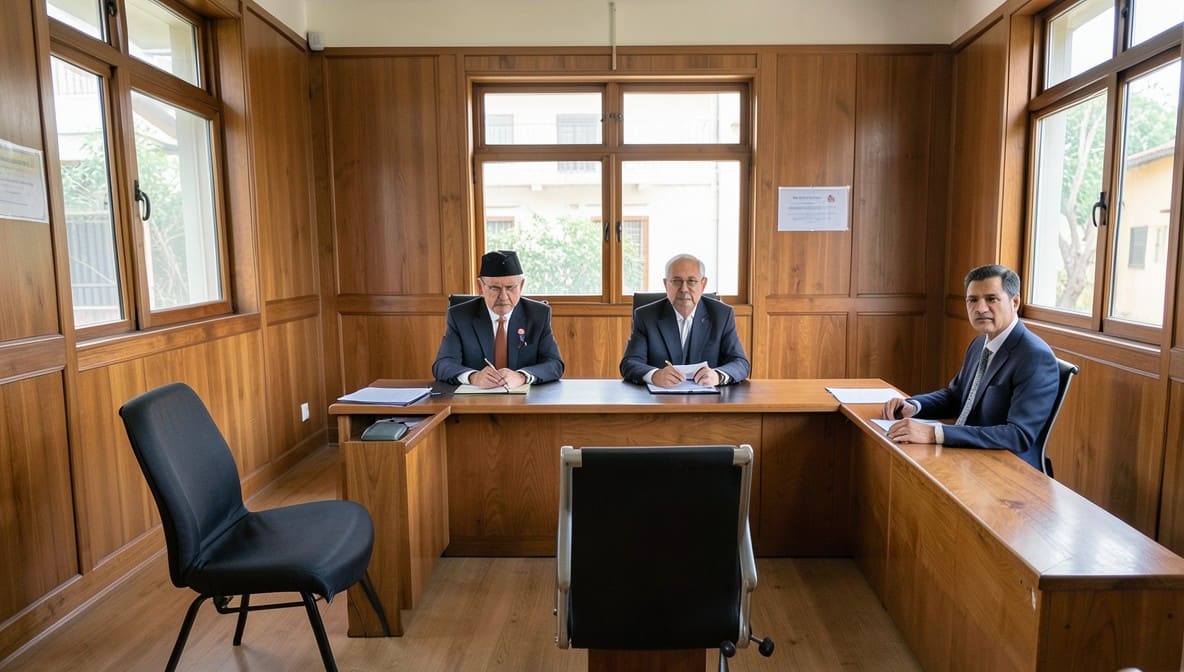
The Central Administrative Tribunal's judgment in K.K. Sasidharan v. BSNL clarifies the limited scope of Women's Complaint Committees under workplace grievance frameworks, emphasizing that such bodies cannot function as disciplinary authorities or initiate punitive action without clear jurisdiction. The ruling reinforces foundational principles of natural justice and procedural fairness in administrative actions against public sector employees.
Background & Facts
The Dispute
The applicant, a retired Telecom Mechanic with BSNL, challenged three administrative actions: an enquiry report by the Women's Complaint Committee (WCC), a memorandum of charges under BSNL Conduct Rules, and an order rejecting his representation. The core dispute arose from allegations made by a colleague, Smt. Jolly Alphonsa, who accused him of using vulgar language, spitting, and making defamatory remarks about her and her husband. These allegations were not framed as sexual harassment but as personal animosity.
Procedural History
- January 2013: Smt. Jolly Alphonsa filed a complaint against the applicant alleging abusive behavior.
- April 2013: WCC, chaired by Smt. Sheela Devi PV, submitted Annexure-A1 report recommending cancellation of the applicant’s quarter allotment.
- May 2013: Assistant General Manager cancelled the quarter allotment (Annexure-A4); applicant appealed (Annexure-A5).
- 2014: Applicant obtained a copy of Annexure-A1 only after filing RTI and approaching the Central Information Commission (Annexure-A7).
- July 2016: Annexure-A2, a memorandum of charges under BSNL Conduct Rules, was issued by the Deputy General Manager (Smt. Sheela Devi, now in a different role).
- July 2016: Applicant vacated the quarter and filed O.A.180/2016 before CAT.
- November 2016: Applicant retired; disciplinary proceedings concluded with a 2% pension cut for one year, later lifted.
Relief Sought
The applicant sought quashing of Annexures-A1, A2, and A14 on grounds of lack of jurisdiction, violation of natural justice, personal bias, and procedural illegality. He also sought restoration of all consequential benefits.
The Legal Issue
The central question was whether a Women's Complaint Committee, constituted under the Visakha guidelines, has the authority to investigate non-sexual harassment complaints and recommend disciplinary action under service rules, and whether the same officer can validly issue a charge memo after preparing an initial enquiry report.
Arguments Presented
For the Petitioner
The applicant’s counsel argued that Annexure-A1 was ultra vires because: (1) the complaint did not meet the definition of sexual harassment under Section 2(n) of the POSH Act, which was not in force at the time; (2) the WCC lacked statutory power to initiate disciplinary proceedings; (3) the report was never served, violating Article 14 and 21; (4) Smt. Sheela Devi, who authored Annexure-A1, later issued Annexure-A2, violating the principle of nemo debet esse judex in propria causa; and (5) Annexure-A14 was non-speaking and arbitrary.
For the Respondent
The respondents contended that Annexure-A1 was merely a recommendation based on local inspection revealing unauthorized construction in the quarter, not a disciplinary finding. They argued that Annexure-A2 was issued independently due to the applicant’s continued occupation of the quarter despite directives, and that Smt. Sheela Devi acted in two distinct capacities - as WCC Chairperson and later as DGM. They also claimed the O.A. was barred by limitation and had become infructuous after retirement and completion of punishment.
The Court's Analysis
The Tribunal undertook a rigorous analysis of jurisdiction, timing, and procedural fairness. It first noted that the alleged incidents occurred in early 2013, while the POSH Act came into force only on 9 December 2013. Therefore, the Visakha guidelines governed the WCC’s mandate, not the Act. The Court observed that the complaint in Annexure-A8 contained no allegation of sexual harassment as defined under Visakha, which requires unwelcome conduct of a sexual nature.
"It is clear that the applicant had been troubling her, even depicting her as a whore and describing her husband as a pimp. Whatever it may be, Annexure-A8 does not show that the 4th respondent had raised allegations of sexual harassment against the applicant."
The Tribunal held that while the WCC could investigate workplace misconduct, its role was advisory, not punitive. The recommendation to cancel quarter allotment was based on observed unauthorized construction - a matter within the committee’s domain of fact-finding. The Court emphasized that the WCC’s function was not to determine guilt under service rules but to report findings.
Regarding bias, the Court distinguished between the WCC’s investigative role and the DGM’s disciplinary authority. It held that Smt. Sheela Devi’s transition from WCC Chairperson to DGM did not create bias, as the two roles were temporally and functionally distinct. The charge memo was issued due to persistent non-compliance with eviction orders, not because of the WCC report.
The Court also rejected the limitation argument, accepting that the applicant was not served Annexure-A1 until 2014 via RTI, thereby making the filing of O.A. in 2016 timely. However, it declined to quash the documents, noting that the disciplinary process had concluded, the punishment had expired, and no continuing harm remained.
The Verdict
The applicant’s petition was dismissed. The Court held that while the WCC’s report was procedurally flawed in terms of non-service, it did not exceed jurisdiction as it addressed factual observations about unauthorized construction. The charge memo was independently valid, and the disciplinary outcome had been finalised. No relief was granted.
What This Means For Similar Cases
WCC Reports Cannot Substitute Disciplinary Proceedings
- Practitioners must distinguish between WCC recommendations and formal disciplinary charges.
- Service authorities cannot rely on WCC reports to initiate punishment unless the report explicitly identifies a violation under service rules.
- Any disciplinary action must be based on a separate, properly constituted inquiry under applicable conduct rules.
Natural Justice Requires Service of Reports
- Failure to serve an investigative report, even if non-punitive, violates Article 14 and 21.
- Employees must be given opportunity to respond to allegations before any adverse action.
- RTI can be used to establish non-service, which may extend limitation periods for challenging administrative orders.
Dual Roles Do Not Automatically Constitute Bias
- An officer may serve in multiple capacities if roles are temporally and functionally distinct.
- The burden lies on the employee to demonstrate actual prejudice, not mere suspicion.
- Merely because the same person authored a report and later issued a charge memo does not invalidate the latter if the contexts differ.