The Tripura High Court has delivered a landmark ruling affirming that inquiries into sexual harassment complaints under the POSH Act must strictly adhere to principles of natural justice and statutory procedures, and that the inquiry committee must be composed of officers senior to the accused to ensure impartiality. This judgment clarifies that a mere "fact-finding" exercise is legally insufficient and that compliance with the Central Civil Services Classification, Control and Appeal Rules is mandatory when the respondent is a government servant.
Background & Facts
The Dispute
The appellant, Smt. Rekha Das, a Scientist (Level 10) with the Indian Council of Agricultural Research (ICAR), filed a complaint on 05.12.2018 under the Sexual Harassment of Women at Workplace (Prevention, Prohibition & Redressal) Act, 2013 (POSH Act) against Dr. Basant Kumar Kandpal, Joint Director and her reporting officer at the ICAR Research Complex for NEH Region, Tripura Centre. She alleged inappropriate conduct amounting to sexual harassment during her tenure at the Tripura office.
Key Facts
- The appellant was appointed as a Scientist on 10.10.2014 and joined the Tripura Centre on 23.02.2015.
- Dr. Basant Kumar Kandpal (Respondent No. 7) was the Joint Director and Head of the office, with authority over Annual Performance Appraisal Reports (APARs) of all subordinate staff.
- At the time of the complaint, no Internal Complaints Committee (ICC) existed at the Tripura Centre; the matter was referred to the Institute Complaints Committee (ICC) at the Meghalaya Regional Office.
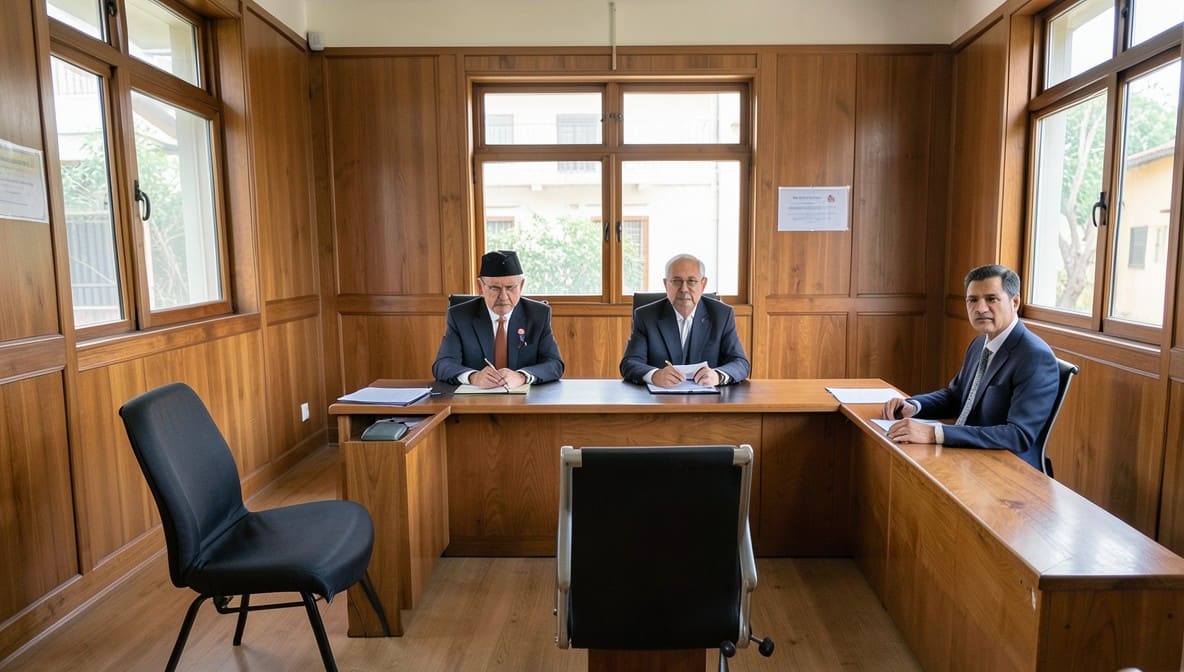
- The ICC, constituted on 29.12.2018, comprised five members, all of whom were subordinate in rank to Dr. Kandpal.
- The ICC submitted its report on 09.04.2019, concluding that both parties exhibited poor conduct but made no specific finding on sexual harassment.
- The appellant was not provided with full witness depositions, nor was she permitted to cross-examine witnesses presented by the respondent.
- The appellant filed multiple representations between 19.07.2019 and 27.12.2019 seeking disposal of her appeal and transfer of the respondent.
- The Appellate Authority (Respondent No. 2) dismissed her appeal by order dated 30.07.2021, upholding the ICC report.
- The appellant challenged this in W.P.(C) No. 483 of 2022, which was dismissed by the Single Judge on 20.12.2023 on the ground that the ICC report was only a "preliminary fact-finding" exercise.
Procedural History
- 05.12.2018: Complaint filed under POSH Act against Dr. Basant Kumar Kandpal.
- 29.12.2018: Institute Complaints Committee notified to conduct inquiry.
- 09.04.2019: ICC submitted report without cross-examination or full disclosure of evidence.
- 19.07.2019: Appellant filed appeal under Section 18 of the POSH Act before the Secretary, ICAR (Respondent No. 2).
- 21.08.2019: Representation sent to Director General, ICAR, seeking status update.
- 09.09.2019: Representation requesting transfer of respondent during inquiry.
- 27.12.2019: Email reminder to Appellate Authority.
- 2020: W.P.(C) No. 307 of 2020 filed, withdrawn on 24.02.2021 with liberty to refile.
- 2021: W.P.(C) No. 243/2021 filed for expeditious disposal; dismissed on 17.05.2021.
- 07.09.2021: Writ Appeal No. 183/2021 allowed by Division Bench; directed Appellate Authority to decide appeal within two months.
- 12.11.2021: Representation filed to comply with WA No. 183/2021.
- 30.07.2021: Appellate Authority dismissed appeal.
- 27.11.2021: Copy of order communicated to appellant.
- 20.12.2023: Single Judge dismissed W.P.(C) No. 483/2022.
- 07.04.2026: Writ Appeal No. 18/2024 heard.
- 07.05.2026: Judgment delivered.
The Parties' Positions
Appellant’s Position:
- The ICC report was procedurally flawed: no cross-examination, no disclosure of witness statements, no application of CCS (CCA) Rules.
- The ICC members were all subordinates of the accused, creating a real likelihood of bias.
- The Appellate Authority failed to address her specific allegation that the respondent controlled APARs, thereby coercing witnesses.
- The inquiry was not a "preliminary" exercise but a full inquiry under Section 11 of the POSH Act.
Respondents’ Position:
- The ICC report was only a "preliminary fact-finding" and not a formal inquiry under Section 11.
- Cross-examination and full disclosure were not required at this stage.
- The matter was a service dispute and should have been raised before the Central Administrative Tribunal.
- No bias existed as the committee acted in good faith.
Relief Sought
The appellant sought:
- Setting aside of the ICC report dated 09.04.2019.
- Setting aside of the Appellate Authority’s order dated 30.07.2021.
- Setting aside of the Single Judge’s judgment dated 20.12.2023.
- Constitution of a new ICC with members senior to the accused.
- Conduct of a fresh inquiry under Section 11 of the POSH Act read with Rule 14 of CCS (CCA) Rules, 1965.
- Opportunity for fresh evidence, cross-examination, and disclosure of documents.
The Legal Issue
The central questions were: (1) Whether a complaint under the POSH Act must be adjudicated exclusively by the Central Administrative Tribunal, and (2) Whether an inquiry conducted by a committee composed entirely of subordinates of the accused, without cross-examination or disclosure of evidence, complies with Section 11 of the POSH Act and Rule 14 of the CCS (CCA) Rules, 1965.
Arguments Presented
For the Appellant
The appellant’s counsel relied on Aureliano Fernandes v. State of Goa (2024) 1 SCC 632, arguing that the ICC is not a fact-finding body but the statutory inquiry authority under Section 11 of the POSH Act. They emphasized that Rule 14 of CCS (CCA) Rules, 1965, read with Rule 3-C, mandates that the ICC must follow the procedure for major penalties, including cross-examination and disclosure. They cited Badrinath v. Govt. of T.N. and Krishnadatt Awasthy v. State of M.P. to establish the "real likelihood of bias" test, arguing that subordinates cannot fairly inquire into a superior who controls their career progression through APARs. They further contended that the Appellate Authority’s failure to address the APAR coercion allegation rendered its order legally unsustainable.
For the Respondent
The respondents argued that the ICC report was merely a preliminary assessment under the Act, and a formal inquiry under CCS (CCA) Rules would follow only if a prima facie case was found. They relied on the Single Judge’s view that cross-examination is not required at the preliminary stage. They also contended that the appellant’s remedy lay before the CAT under Section 14 of the Administrative Tribunals Act, 1985, and that the Writ Petition was not maintainable. They denied any bias, asserting that the committee acted impartially.
The Court's Analysis
The Court began by reaffirming its earlier decision in W.A. No. 183/2021, holding that disputes arising under the POSH Act are not "service matters" within the meaning of Section 3(q) of the Administrative Tribunals Act, 1985. The Court emphasized that the Act’s primary purpose is to provide swift redress to women facing harassment, not merely to impose departmental penalties. The Court held that the Writ Petition was maintainable, and the Single Judge erred in dismissing it on jurisdictional grounds.
The Court then turned to the core procedural violation. It held that Section 11 of the POSH Act requires an inquiry to be conducted "in accordance with the service rules applicable to the respondent." Since the respondent was a government servant, the applicable rules were the CCS (CCA) Rules, 1965. Rule 14 of these Rules mandates a full inquiry with opportunity to be heard, cross-examination, and disclosure of evidence. The Court rejected the respondents’ argument that the ICC report was only a "preliminary fact-finding" exercise, citing Aureliano Fernandes to hold that such a characterization is legally untenable and defeats the purpose of the Act.
"The error committed on the part of the EC... was that the First Committee... was only a ‘fact-finding Committee’ and that a full-fledged inquiry was still required to be conducted subsequently... In all this back and forth, it was the procedure prescribed under Rule 14... that came to be sacrificed at the altar of expeditious disposal, which can neither be justified nor countenanced."
The Court further held that the composition of the ICC violated the principle of natural justice. All members were subordinates of the accused, who controlled their APARs and career progression. Citing Badrinath and Govt. of T.N. v. Munuswamy Mudaliar, the Court applied the "real likelihood of bias" test, concluding that a reasonable person would apprehend bias in such a structure. The Court also noted the Office Memorandum dated 07.01.1971 and 21.12.2022, which explicitly state that inquiry officers must be senior to the accused to command confidence.
The Court further found that the Appellate Authority failed to address the appellant’s specific allegation that witnesses were intimidated due to the respondent’s control over APARs. The Single Judge’s reliance on the fact that two witnesses supported the appellant was misplaced, as those witnesses explicitly stated they were unaware of the complaint, while all respondent’s witnesses supported his denial.
The Verdict
The Writ Appeal was allowed. The Court set aside the ICC report dated 09.04.2019, the Appellate Authority’s order dated 30.07.2021, and the Single Judge’s judgment dated 20.12.2023. The respondents were directed to constitute a new Internal Complaints Committee within four weeks, consisting of members senior to Dr. Basant Kumar Kandpal, as required under Section 4 of the POSH Act. The new committee must conduct a fresh inquiry under Rule 14 of the CCS (CCA) Rules, 1965, within six months of its constitution. The parties shall be permitted to lead fresh evidence, cross-examine witnesses, and exchange all documents. The inquiry shall be completed and a reasoned order communicated to the appellant within six months.
What This Means For Similar Cases
Inquiry Committees Must Be Senior to the Accused
- Practitioners must now challenge any inquiry committee where members are subordinate to the accused, regardless of whether bias is proven.
- The "real likelihood of bias" test applies automatically when the accused holds supervisory authority over committee members, especially in matters involving performance appraisals.
- Employers must ensure that ICCs are constituted with officers senior to the respondent, as mandated by DoPT guidelines.
POSH Act Inquiries Are Not Preliminary
- The notion of a "preliminary fact-finding" inquiry under the POSH Act is legally invalid.
- Every inquiry under Section 11 is a full statutory inquiry requiring compliance with service rules, cross-examination, and disclosure.
- Employers cannot delay formal proceedings by labeling initial inquiries as "preliminary"; failure to follow procedure renders the entire process void.
APAR Control Constitutes Coercion
- Where the accused controls APARs or career progression of potential witnesses, failure to transfer them during inquiry violates Section 12 of the POSH Act.
- Courts will infer coercion where witnesses supporting the accused are subordinates, and those supporting the complainant are silent or disclaim knowledge.
- Employers must proactively invoke Section 12 to transfer the accused or complainant to ensure credible testimony.