The Patna High Court set aside a criminal complaint under Section 138 of the Negotiable Instruments Act because the corporate drawer was not named as an accused, reinforcing that vicarious liability under Section 141 hinges on the company’s prosecution and that the Court’s inherent powers under Section 482 CrPC can be exercised even after trial proceedings have begun.
Background & Facts
The Dispute
The petitioner, Naveen Kumar (also recorded as Naween Kumar), Managing Director of Sona Infracon Pvt. Ltd., was accused of dishonouring a cheque issued to the complainant, Vijay Shankar Ojha, in a business transaction involving the supply of stone chips.
Key Facts
- Business relationship: Between petitioner and complainant from 27 January 2021 to 22 February 2021, the complainant transferred a total of Rs 94,00,000 (₹52 lakhs + ₹32 lakhs + ₹10 lakhs) to the petitioner’s accounts for stone-chip supplies.
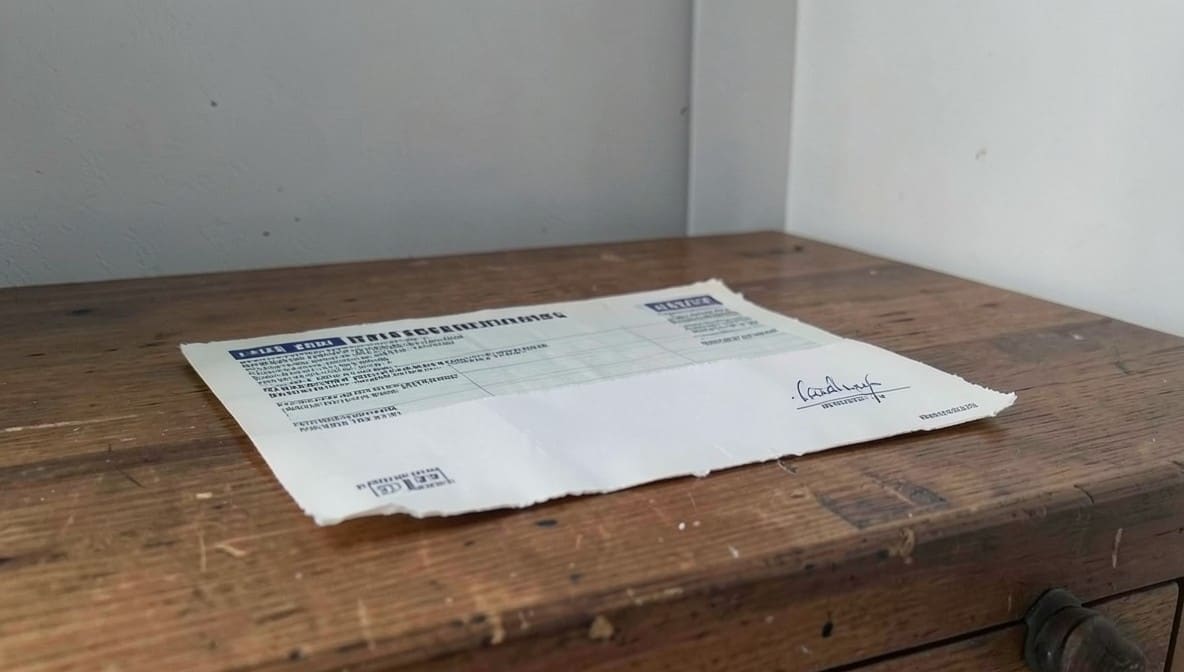
- Cheque issued: On 10 January 2022, petitioner issued Cheque No. 714728 for Rs 40,00,000 with a clear endorsement stating: “This cheque is only for security reason. Not for payment. Payment will be done and cheque refunded.”
- Presentation and bounce: The cheque was presented on 10 January 2022 and again on 24 January 2022; both times it was returned unpaid. The petitioner claimed the cheque was lost and lodged a complaint with the bank.
- Legal notice: A notice dated 01 February 2022 was sent to the petitioner, which went unanswered.
- Interim compensation order: On 01 February 2024, the Judicial Magistrate directed the petitioner to pay 20 % of the dishonoured cheque amount as interim compensation within six months under Section 143-A of the NI Act.
- Cognizance order: On 16 August 2022, the same Magistrate took cognizance of an offence under Section 138 NI Act and issued summons.
Procedural History
- 27 Jan 2021 - 22 Feb 2021: Payments totalling Rs 94 lakhs made by complainant.
- 10 Jan 2022: Cheque presented and bounced.
- 24 Jan 2022: Cheque presented again and bounced.
- 01 Feb 2022: Legal notice served on petitioner.
- 16 Aug 2022: Judicial Magistrate took cognizance under Section 138 NI Act (complaint No. 360/2022).
- 01 Feb 2024: Order directing interim compensation of 20 % of dishonoured amount.
- Cr. Misc. No. 63509 of 2024: Petition filed seeking quash of the interim-compensation order.
- Cr. Misc. No. 55533 of 2025: Petition filed seeking quash of the cognizance order dated 16 Aug 2022.
- 31 Aug 2026: Patna High Court delivered the present judgment.
Relief Sought
The petitioner sought quashing of (i) the order dated 16 Aug 2022 taking cognizance under Section 138 NI Act, and (ii) the interim-compensation order dated 01 Feb 2024, on the ground that the company, Sona Infracon Pvt. Ltd., was not impleaded as an accused.
The Legal Issue
Whether a complaint under Section 138 of the Negotiable Instruments Act, 1881 is maintainable when the corporate drawer of the cheque is not named as an accused, and whether the High Court may invoke its inherent jurisdiction under Section 482 of the Criminal Procedure Code to quash such a complaint despite the trial having progressed.
Arguments Presented
For the Petitioner
- The petitioner contended that vicarious liability under Section 141 NI Act can arise only if the company itself is prosecuted; the absence of the company as an accused makes the complaint fatally defective.
- Relied on Bijoy Kumar Moni v. Paresh Manna (2026) 5 SCC 380 and Himanshu v. B. Shivamurthy (2019) 3 SCC 797, which held that the company must be arraigned for the director’s liability to attach.
- Cited Aneeta Hada v. Godfather Travels & Tours (P) Ltd. (2012) 5 SCC 661, emphasizing that “commission of offence by the company is an express condition precedent to attract the vicarious liability of others.”
- Asserted that the cheque was issued solely as security, not as discharge of a debt, and that the amount had already been paid, negating any liability under Section 138.
For the Respondent
- The State argued that a prima facie case under Section 138 was established: the cheque was presented, dishonoured, and the petitioner, as Managing Director and signatory, was therefore liable.
- The respondent relied on Sripati Singh (supra) (2022) 18 SCC 614, stating that a security cheque can still be presented and, if dishonoured, attracts the provisions of the NI Act.
- Emphasised that the petitioner was individually named as an accused and that the company’s non-impleading does not bar prosecution of the director.
The Court's Analysis
The Court began by interpreting the plain language of Section 138 which requires the drawer of the cheque to be the person who has committed the offence. It observed that a company, being a juristic person, is the true drawer when the cheque is drawn on its account. Consequently, Section 141 can attach liability to directors only after the company itself is held liable.
"Applying the doctrine of strict construction, we are of the considered opinion that commission of offence by the company is an express condition precedent to attract the vicarious liability of others. Thus, the words ‘as well as the company’ appearing in the section make it absolutely unmistakably clear that when the company can be prosecuted, then only the persons mentioned in the other categories could be vicariously liable for the offence subject to the averments in the petition and proof thereof."
The Court distinguished the respondent’s reliance on Sripati Singh by noting that the latter dealt with a cheque issued as security where the underlying debt remained unpaid; here the petitioner had already paid Rs 1,77,20,000 to the complainant, eliminating any existing liability.
Further, the Court examined the scope of Section 482 CrPC, citing Kamlesh Kumar v. State of Bihar (2014) 2 SCC 424 and other precedents, to affirm that the High Court’s inherent jurisdiction is not confined to the pre-FIR stage. It can be exercised even after the trial has commenced, where the complaint suffers from a fatal defect that renders the proceeding an abuse of process.
The Court also rejected the argument that the director’s individual accusation sufficed, holding that the corporate entity is the primary offender under the NI Act. Without the company being named, the complaint cannot stand, and any subsequent orders flowing from that cognizance - including the interim-compensation order - must be set aside.
The Verdict
The Patna High Court quashed the order dated 16 August 2022 that had taken cognizance of an offence under Section 138 NI Act, and also set aside the interim-compensation order dated 01 February 2024 directing 20 % payment of the dishonoured cheque amount. Both applications - Cr. Misc. No. 55533 of 2025 and Cr. Misc. No. 63509 of 2024 - were allowed. No monetary relief was awarded, and the proceedings against the petitioner were terminated.
What This Means For Similar Cases
Company Must Be Named as an Accused
- A complaint under Section 138 NI Act is untenable unless the corporate drawer is impleaded; directors cannot be held vicariously liable in its absence.
- Practitioners must ensure that the charge-sheet names the company when the cheque is drawn on its account.
Section 482 Can Be Invoked Post-Trial Commencement
- The High Court may exercise its inherent powers to quash proceedings even after evidence has been recorded, provided the complaint is fundamentally defective.
- Lawyers should be prepared to raise Section 482 challenges at any stage when procedural fatal flaws are identified.
Security Cheques Do Not Immunise Against Section 138
- Declaring a cheque as “security” does not automatically exempt the drawer from liability if the underlying debt remains unpaid at the time of presentation.
- Evidence of full payment must be adduced; otherwise, the cheque can be presented and the offence under Section 138 will attract.
Practical takeaways:
- Verify that the corporate entity is a party to the criminal complaint.
- Anticipate Section 482 challenges when the complaint lacks a crucial party.
- Document any settlement or payment to pre-empt claims that a security cheque was still enforceable.