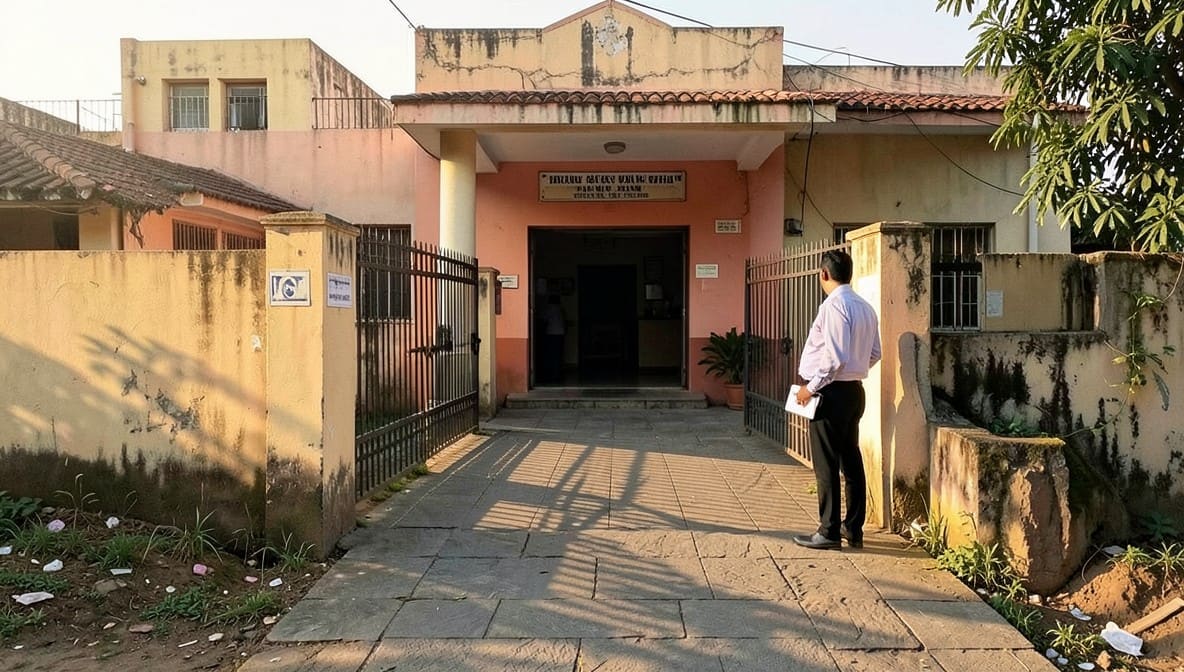
In a significant ruling on vicarious liability under the Prevention of Corruption Act, 1988, the Karnataka High Court granted anticipatory bail to a police constable accused of facilitating a bribe transaction. The judgment underscores that mere receipt of money on behalf of a superior officer does not automatically attract criminal liability under Section 7(a) of the PC Act unless there is proof of knowledge that the amount was a bribe.
Background & Facts
The Dispute
The petitioner, a civil police constable at Kyathasandra Police Station, Tumakuru, was implicated in a bribery case registered by the Karnataka Lokayukta Police. The case arose from a complaint by Nagesh.S.K., who alleged that Chethan Kumar (Police Sub-Inspector and accused no.1) demanded Rs. 5 lakhs to release a seized car. The complainant paid Rs. 40,000 as part payment to Safdhar Ali Khan, the manager of a hotel, who was instructed by the petitioner to receive the amount.
Key Facts
- 30.01.2026: Complaint filed by Nagesh.S.K. against Chethan Kumar (PSI, Tumakuru Rural Police Station) for demanding a bribe of Rs. 5 lakhs to release a seized car
- Crime No. 1/2026: Registered by Lokayukta Police, Tumakuru, under Section 7(a) of the Prevention of Corruption (Amendment) Act, 2018
- Role of Petitioner: The petitioner, a civil police constable at Kyathasandra Police Station, allegedly instructed Safdhar Ali Khan to receive Rs. 40,000 from the complainant
- Investigation Findings: Safdhar Ali Khan stated that he received the amount as instructed by the petitioner, but there was no evidence that the petitioner knew the amount was a bribe
- Criminal Antecedents: The petitioner had no prior criminal record
Procedural History
- Crl. Misc. No. 768/2026: Petitioner filed for anticipatory bail before the jurisdictional Sessions Court, which was rejected on 03.06.2026
- Crl.P No. 8091/2026: Present petition filed under Section 482 of the Bharatiya Nagarik Suraksha Sanhita (BNSS), 2023, seeking anticipatory bail before the Karnataka High Court
Relief Sought
The petitioner sought anticipatory bail in Crime No. 1/2026, arguing that he had no knowledge that the amount received by Safdhar Ali Khan was a bribe and that he was merely following instructions from his superior officer.
The Legal Issue
The central question was whether a subordinate officer, who merely facilitates the receipt of money on instructions from a superior, can be held vicariously liable under Section 7(a) of the Prevention of Corruption Act, 1988 without proof of knowledge that the amount was a bribe.
Arguments Presented
For the Petitioner
- The petitioner, a civil police constable, had no knowledge that the amount received by Safdhar Ali Khan was a bribe
- He was merely following instructions from his superior officer (accused no.1)
- The petitioner had no criminal antecedents and was willing to cooperate with the investigation
- The Sessions Court had erred in rejecting his anticipatory bail application without considering the lack of evidence against him
For the Respondent
- The petitioner, by instructing Safdhar Ali Khan to receive the amount, facilitated the bribe transaction and was thus complicit
- The petitioner did not cooperate with the investigation and instead approached the Sessions Court for anticipatory bail
- There was a prima facie case against the petitioner, as he was involved in the receipt of the bribe amount
The Court's Analysis
The Court examined the material on record and observed that the demand for Rs. 5 lakhs was made solely by accused no.1 (Chethan Kumar), and the complainant had approached the Lokayukta Police only against him. The petitioner was implicated based on the statement of Safdhar Ali Khan, who stated that he received Rs. 40,000 as instructed by the petitioner. However, there was no evidence to suggest that the petitioner knew the amount was a bribe.
The Court relied on the principle that vicarious liability under criminal law requires mens rea, and mere facilitation of an act does not attract criminal liability unless there is proof of knowledge or intent. The Court noted:
"The material on record does not reveal that petitioner had the knowledge that the aforesaid amount which was to be handed over by the first informant to Safdhar Ali Khan was the bribe amount that was demanded by accused no.1. Chances of petitioner instructing the aforesaid Safdhar Ali Khan to receive money as instructed by his higher officer who is accused no.1 in the present case, cannot be ruled out."
The Court further emphasized that the petitioner had no criminal antecedents and had undertaken to cooperate with the investigation. Under these circumstances, the Court held that the petitioner’s prayer for anticipatory bail was justified.
The Verdict
The petition was allowed, and the petitioner was granted anticipatory bail subject to the following conditions:
- The petitioner shall appear before the Investigating Officer within 15 days from the date of receipt of the copy of this order and execute a personal bond for Rs. 1,00,000 with two sureties for the like sum
- The petitioner shall regularly appear before the Trial Court unless exempted for valid reasons
- The petitioner shall not tamper with prosecution witnesses and shall cooperate with the police investigation
- The petitioner shall not involve himself in similar offences in the future
What This Means For Similar Cases
Vicarious Liability Requires Proof of Knowledge
- The judgment reinforces that vicarious liability under the Prevention of Corruption Act cannot be imposed merely based on hierarchical instructions. There must be proof of knowledge that the act facilitated was illegal
- Subordinate officers cannot be held criminally liable for acts done under the instructions of superiors unless there is evidence of mens rea
Anticipatory Bail in Corruption Cases
- Courts may grant anticipatory bail in corruption cases where the accused has no criminal antecedents and is willing to cooperate with the investigation
- The judgment sets a precedent that mere facilitation of a transaction without knowledge of its illegal nature does not attract criminal liability under Section 7(a) of the PC Act
Cooperation with Investigation is Key
- The Court noted the petitioner’s willingness to cooperate with the investigation as a significant factor in granting anticipatory bail
- Accused persons who do not cooperate with the investigation may face stricter scrutiny in bail applications