The Madras High Court has clarified that the lawful owner of a seized vehicle is entitled to interim custody under the Bharatiya Nagarik Suraksha Sanhita, 2023, provided stringent conditions are met to safeguard the interests of investigation and confiscation proceedings. This ruling reinforces the principle that prolonged police custody of property without judicial oversight violates statutory mandates and practical equity.
Background & Facts
The Dispute
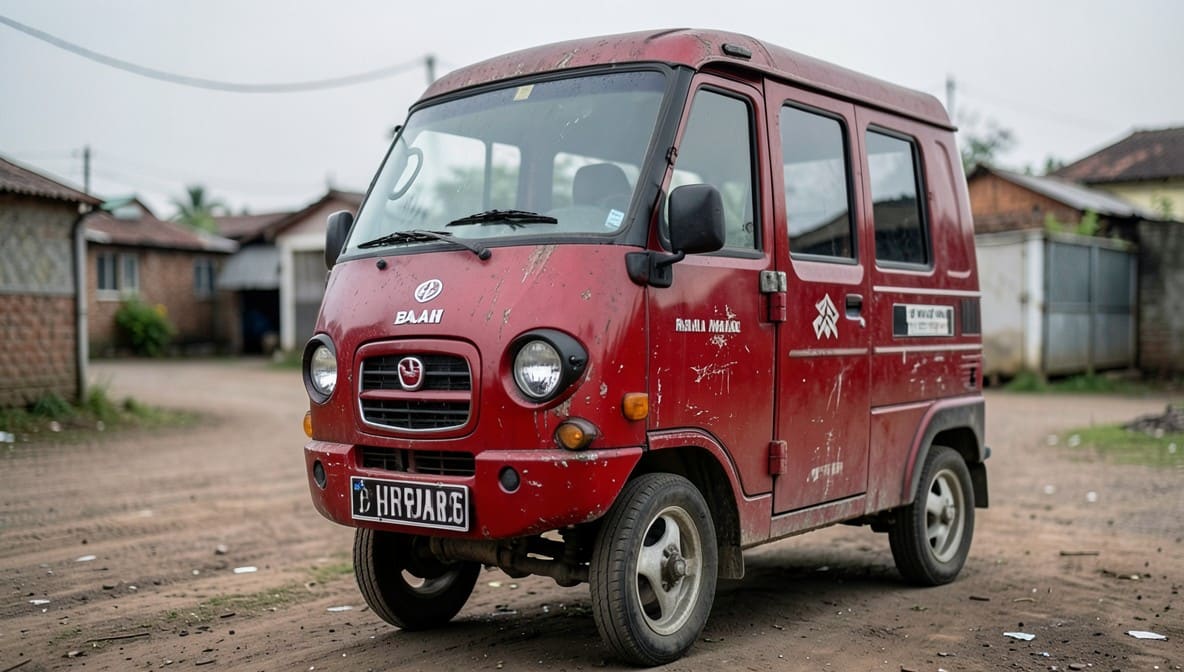
The petitioner, Gummidipudi Chengamma, is the registered owner of a Bajaj Maxima Auto Rickshaw bearing Registration No. AP 39 UC 1556. The vehicle was seized by the CSCID Police Station, Thiruvallur District, on 18.03.2026, following the registration of Crime No. 120 of 2026 under Section 6(4) of the Tamil Nadu State Control (Rice Distribution Control) Order, 1982 read with Section 7(1)(a)(II) of the Essential Commodities Act, 1955. The allegation was that the petitioner illegally transported 900 kgs of Public Distribution System (PDS) rice.
Key Facts
- The petitioner is the registered owner of the vehicle, as confirmed by the Registration Certificate produced before the Court
- The vehicle was seized on 18.03.2026 and remained in police custody without any judicial order for interim custody
- On 08.04.2026, the Judicial Magistrate-I, Thiruvallur, returned the petitioner’s application under Sections 497 and 503 of the Bharatiya Nagarik Suraksha Sanhita, 2023 (BNSS), seeking interim custody
- No evidence was presented to suggest the vehicle was used in any other illegal activity beyond the alleged transport of PDS rice
- The petitioner has no prior criminal record and has consistently cooperated with authorities
Procedural History
- 18.03.2026: Vehicle seized by CSCID Police, Thiruvallur District, in connection with Crime No. 120 of 2026
- 08.04.2026: Judicial Magistrate-I, Thiruvallur, returned the petition under BNSS Sections 497 and 503 seeking interim custody
- 27.05.2026: Criminal Revision Petition filed under Section 397 read with Section 401 of CrPC before the Madras High Court
Relief Sought
The petitioner sought the setting aside of the Magistrate’s order dated 08.04.2026 and the release of the vehicle under interim custody, subject to appropriate conditions to ensure its availability for trial and confiscation proceedings.
The Legal Issue
The central question was whether Section 497 of the Bharatiya Nagarik Suraksha Sanhita, 2023 permits a Criminal Court to grant interim custody of a seized vehicle to its lawful owner pending trial, and if so, what conditions may be imposed to balance ownership rights with investigative integrity.
Arguments Presented
For the Petitioner
Learned Counsel for the petitioner relied on Section 497 of BNSS, which empowers the Court to make orders for the proper custody of property produced before it during inquiry or trial. He emphasized that the petitioner is the registered owner, as evidenced by the RC book, and that prolonged detention of the vehicle in an open yard would lead to depreciation and potential scrapping. He cited Sunderbhai Ambalal Desai v. State of Gujarat to argue that Magistrates must act promptly to prevent unnecessary loss of property value. He offered to comply with any conditions imposed by the Court.
For the Respondent
The Government Advocate did not oppose the release outright but insisted that the vehicle must remain available for confiscation proceedings. He agreed that release could be permitted subject to conditions ensuring the vehicle’s preservation and availability for court proceedings, and that the petitioner must cooperate fully with the investigation.
The Court's Analysis
The Court examined Section 497 of BNSS, which explicitly authorizes a Criminal Court to make orders for the proper custody of property produced before it during inquiry or trial. The Court noted that the provision includes property used in the commission of an offence, and that the Court must act expeditiously to prevent decay or depreciation.
"The Hon'ble Supreme Court in the case of Sunderbhai Ambalal Desai vs State of Gujarat... held that it is of no use to keep such seized vehicles at the police stations for a long period. It is for the Magistrate to pass appropriate orders immediately by taking appropriate bond and guarantee as well as security for return of the said vehicles..."
The Court further observed that mere pendency of confiscation proceedings before the Collector does not bar interim release, citing Jai Prakash v. State of U.P. and Kamaljeet Singh v. State of U.P. The Court took judicial notice that leaving the vehicle exposed in an open yard would result in irreversible damage due to weather, reducing its value to scrap.
The Court held that the petitioner’s ownership was established beyond doubt and that the interests of justice required the vehicle’s release under strict conditions to ensure its availability for trial and potential confiscation.
The Verdict
The petitioner succeeded. The Madras High Court set aside the order dated 08.04.2026 of the Judicial Magistrate-I, Thiruvallur. The seized Bajaj Maxima Auto Rickshaw, Registration No. AP 39 UC 1556, is directed to be released to the petitioner subject to: (i) execution of a personal bond of Rs. 25,000 with two sureties of like amount; (ii) video and photographic documentation of the vehicle; (iii) undertaking not to sell or transfer ownership until trial concludes; (iv) undertaking to surrender the vehicle within one week of court direction; (v) undertaking not to use the vehicle for illegal purposes; (vi) participation in police inquiry; (vii) surrender of the original RC Book to the District Munsif cum Judicial Magistrate, Bhoothapandy; and (viii) future applications for RC Book return to be filed before the Judicial Magistrate-I, Thiruvallur. The petitioner must co-operate in all confiscation proceedings.
What This Means For Similar Cases
Interim Custody Is a Right, Not a Privilege
- Practitioners must now routinely invoke Section 497 BNSS to seek interim custody of seized vehicles or property in cases involving non-violent economic offences
- Ownership documentation (RC, title deeds, invoices) is sufficient to establish prima facie entitlement
- Courts are obligated to act within 14 days of property production, as mandated by Section 497(2)
Conditions Must Be Tailored, Not Standardized
- Bond amounts should reflect the property’s market value and risk of non-appearance
- Surrender undertakings must specify clear timelines (e.g., "within one week")
- Photographic and videographic documentation is mandatory and forms part of evidentiary record under Section 497(3)
Confiscation Proceedings Do Not Override Interim Release
- Pendency of confiscation before a Collector or Revenue Authority is not a legal bar to interim release
- Courts must distinguish between ownership rights and future confiscation outcomes
- Petitioners must be made to give binding undertakings to surrender the property if confiscation is ultimately ordered