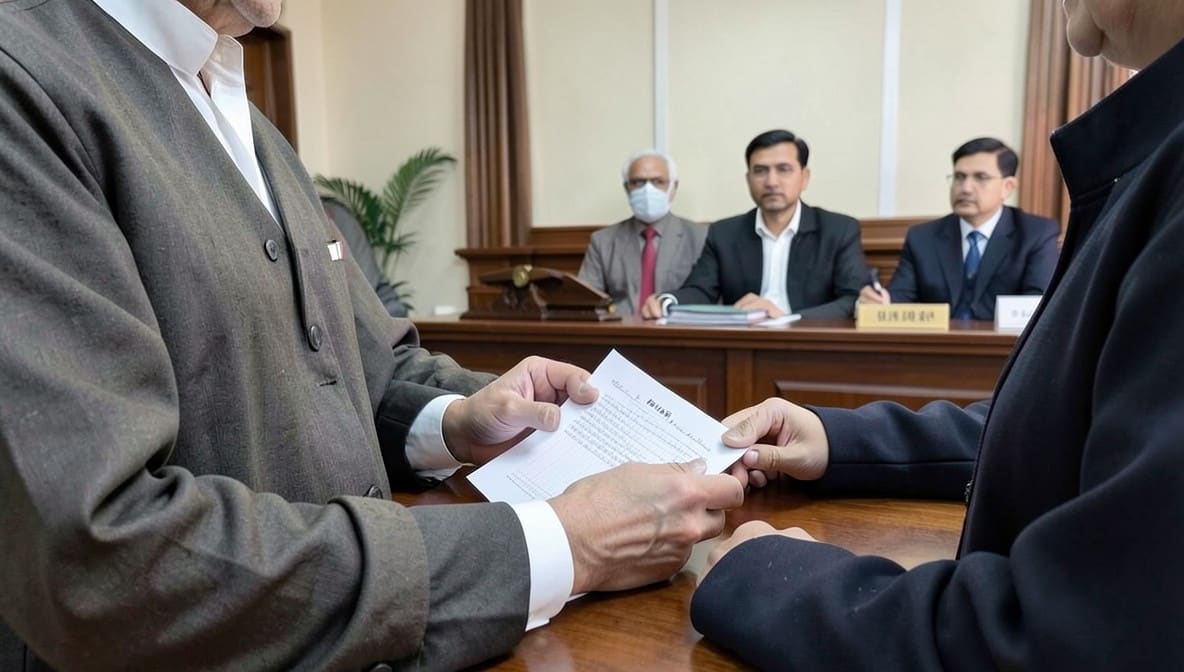
The Supreme Court has reaffirmed that procedural rigour is non-negotiable when invoking extraordinary preventive statutes like the Uttar Pradesh Gangsters and Anti-Social Activities (Prevention) Act, 1986. The quashing of an FIR predicated on a defective Gang Chart underscores that statutory mandates designed to safeguard liberty cannot be circumvented by procedural shortcuts, even in cases involving serious allegations.
Background & Facts
The Dispute
The appellant, Gabbar Singh alias Devendra Pratap Singh alias Rajesh Singh, was named in FIR No. 0125 of 2022, registered on 28.05.2022 at Police Station Kotwali Nagar, District Bahraich, under Section 3(1) of the Uttar Pradesh Gangsters and Anti-Social Activities (Prevention) Act, 1986 (the Act of 1986). The FIR was based solely on a document termed the "Gang Chart" - an official record identifying individuals as members of a criminal gang engaged in land grabbing, extortion, cheating, forgery, criminal intimidation, and other offences. The appellant challenged the validity of the FIR before the High Court, contending that the Gang Chart did not comply with the procedural requirements under the Uttar Pradesh Gangsters and Anti-Social Activities (Prevention) Rules, 2021 (the Rules of 2021). The High Court declined to quash the FIR, holding that a prima facie case existed against the appellant.
Key Facts
- The Gang Chart was submitted as Annexure P1 with the FIR dated 28.05.2022.
- The certified copy of the Gang Chart received from the court showed no signatures of any authority, including the Nodal Officer (Station House Officer), Additional Superintendent of Police, Superintendent of Police, or District Magistrate.
- The appellant produced Exhibit P4, which contained signatures of the Nodal Officer and Additional Superintendent of Police dated 20.05.2022, and signatures of the Superintendent of Police and District Magistrate dated 26.05.2022 and 28.05.2022 respectively.
- The Rules of 2021 require express written recommendations from the Nodal Officer and Additional Superintendent of Police, followed by approval through a joint meeting of the Superintendent of Police and District Magistrate.
- The certified copy of the Gang Chart accompanying the FIR lacked any signatures or written recommendations, rendering it non-compliant with Rule 16(1) and Section 5(3)(d) of the Act and Rules.
- The appellant was in judicial custody at the time of filing the appeal, having been arrested in connection with multiple pending criminal cases.
Procedural History
- 28.05.2022: FIR No. 0125 of 2022 registered at Police Station Kotwali Nagar, Bahraich, based on Gang Chart.
- Before High Court: Petition under Section 482 CrPC filed seeking quashing of FIR.
- Date unspecified (prior to 2023): High Court dismissed petition, holding prima facie case established.
- 28.05.2025: Special Leave Petition filed in Supreme Court (Crl. Appeal @ SLP (Crl) Nos. 17929-17930 of 2025).
- 20.03.2026: Judgment delivered by Supreme Court.
The Parties' Positions
For the Appellant
The appellant’s Senior Counsel contended that the Gang Chart accompanying the FIR was defective on its face. It lacked mandatory signatures and written recommendations as required under Rule 16(1) and Section 5(3)(d) of the Act and Rules. The certified copy produced in court was unsigned, violating the statutory mandate that the Gang Chart must reflect compliance at every stage. Reliance was placed on Vinod Bihari Lal v. State of Uttar Pradesh (2025 SCC Online SC 1216), which had previously held that failure to conduct a joint meeting of the Superintendent of Police and District Magistrate invalidated proceedings under the Act.
For the Respondent
The State contended that the Gang Chart in Exhibit P4 demonstrated full compliance: signatures were present, dates were recorded, and the Nodal Officer had forwarded the document to the Additional Superintendent of Police. It was argued that the certified copy received by the court was merely a reproduction and did not reflect the original document’s integrity. The State further asserted that the appellant’s criminal history, as reflected in the Gang Chart, justified the initiation of proceedings under the Act.
Relief Sought
The appellant sought quashing of FIR No. 0125 of 2022 on the ground of procedural non-compliance with the Act and Rules of 2021. No alternative relief was sought; the sole prayer was for the FIR to be set aside.
The Legal Issue
The central question was whether an FIR registered under the Uttar Pradesh Gangsters and Anti-Social Activities (Prevention) Act, 1986, based on a Gang Chart that lacks mandatory signatures and written recommendations as prescribed under the Rules of 2021, is legally sustainable.
Arguments Presented
For the Appellant
The appellant’s counsel argued that the Act of 1986 is a draconian statute that permits the state to label an individual a "gangster" without a conviction, triggering severe restrictions on liberty. The Rules of 2021 were framed to act as a procedural safeguard against arbitrary invocation of the Act. The certified copy of the Gang Chart, which forms the sole basis of the FIR, must reflect compliance with every statutory step. The absence of signatures from the Nodal Officer, Additional Superintendent of Police, Superintendent of Police, and District Magistrate rendered the Gang Chart invalid. The Court in Vinod Bihari Lal had already held that failure to hold a joint meeting under Section 5(3)(d) is fatal. The State’s reliance on the signed original (Exhibit P4) was irrelevant because the FIR was registered on the unsigned certified copy, which is the only document before the court.
For the Respondent
The State argued that the Gang Chart was properly prepared and signed by all required authorities, as evidenced by Exhibit P4. It contended that the certified copy submitted with the FIR was merely a duplicate and that the original document, which contained all signatures, was in the possession of the investigating agency. The State further argued that the procedural lapse, if any, was technical and did not prejudice the appellant’s rights, especially given the gravity of the allegations and his criminal history.
The Court's Analysis
The Court conducted a meticulous review of the statutory framework under Section 5 of the Act of 1986 and the Rules of 2021. It emphasized that the Act permits the state to initiate proceedings based on mere association with a gang, without requiring proof of any specific offence. This places a heavy burden on procedural compliance to prevent abuse.
"The prescription also is that there should be express recommendation by the Additional Superintendent of Police, the satisfaction of which has to be arrived at by both the Superintendent of Police and the District Magistrate by affixing their signatures to that document after a joint meeting."
The Court noted that the certified copy of the Gang Chart accompanying the FIR was entirely devoid of signatures. Even if the original document (Exhibit P4) was properly signed, the law requires that the document on which the FIR is based must itself reflect compliance. The Court rejected the State’s argument that forwarding the Gang Chart to the court was a statutory requirement, stating: "There is no prescription in the Rules for forwarding the Gang Chart to the Court, before it assumes the status of a Gang Chart under the Act and Rules as prescribed therein."
The Court further held that the absence of a joint meeting, as mandated under Section 5(3)(d), was not merely a procedural irregularity but a substantive violation. The Court cited Vinod Bihari Lal to reinforce that such deviations cannot be condoned, especially when liberty is at stake.
"We fall back upon the principle that when a particular thing is to be done, it should be done in the manner stipulated; here statutorily prescribed, or not at all. Especially when at stake is the liberty of an individual, precious to all and possible of breach only in accordance with law."
The Court explicitly clarified that its decision was not a comment on the truth of the allegations against the appellant, nor did it prevent the State from initiating fresh proceedings if the statutory procedure is followed.
The Verdict
The appeals were allowed. The Supreme Court set aside the High Court’s order dated prior to 2023 and quashed FIR No. 0125 of 2022 registered at Police Station Kotwali Nagar, District Bahraich, on the ground that the Gang Chart accompanying the FIR failed to comply with the mandatory procedural requirements under the Act of 1986 and the Rules of 2021. The Court made it clear that the quashing was solely on procedural grounds and did not affect the validity of any other pending criminal proceedings against the appellant. All pending applications were disposed of.
What This Means For Similar Cases
Procedural Compliance Is Non-Negotiable
- Practitioners must verify that every signature and recommendation under the Act of 1986 and Rules of 2021 is present on the certified copy of the Gang Chart submitted with the FIR.
- A signed original document held by the police is irrelevant if the certified copy filed with the court is defective.
- Any FIR based on a non-compliant Gang Chart is liable to be quashed under Section 482 CrPC.
The Certified Copy Is the Governing Document
- Courts must examine the document actually presented to initiate proceedings - not the original held by the investigating agency.
- The certified copy must reflect all statutory steps: recommendation by SHO and ASP, approval by SSP/SP and DM, and evidence of a joint meeting.
- Failure to include any of these elements on the certified copy renders the entire proceeding void ab initio.
Precautionary Measures for Prosecution
- Prosecutors must ensure that the Gang Chart is signed and certified at every stage before filing the FIR.
- Police stations must maintain a chain of custody for the Gang Chart, with each signature and date clearly visible on the version submitted to court.
- Defence counsel should routinely challenge the authenticity and completeness of Gang Charts in all cases under the Act of 1986.