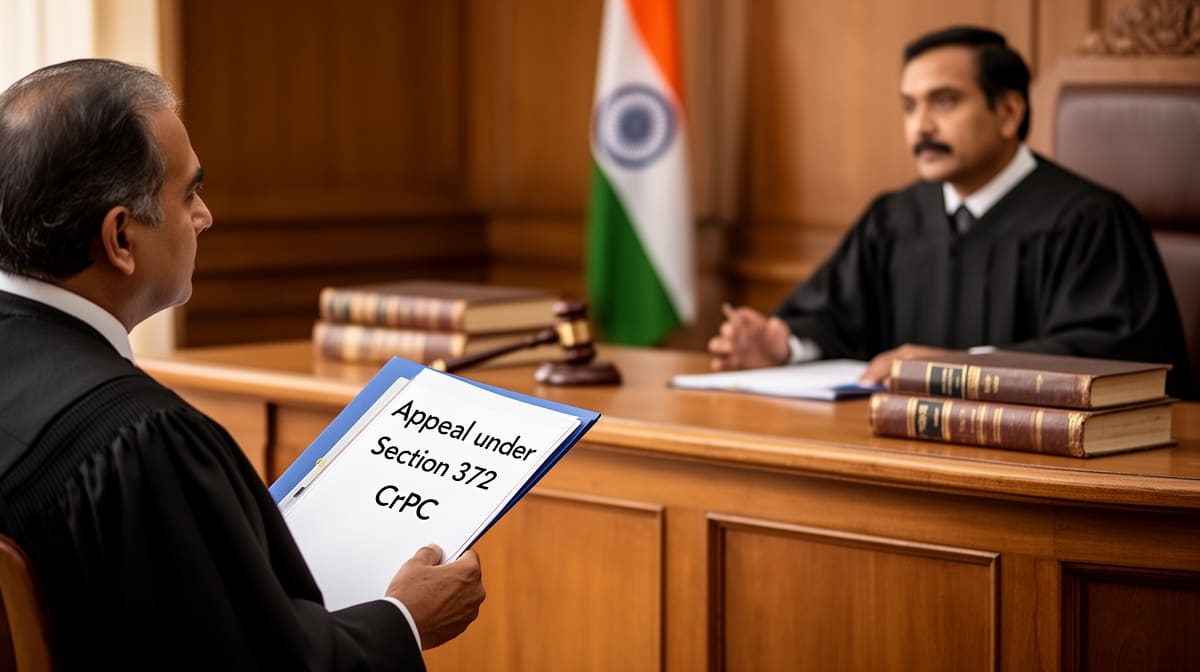
The Punjab and Haryana High Court has clarified that no second appeal lies against an order dismissing an appeal under Section 25(6) of the Unlawful Activities (Prevention) Act, 1967. While dismissing the present appeal, the Court emphasized that the absence of a statutory remedy does not leave an aggrieved party without recourse - instead, the proper avenue is a criminal revision petition under Section 442 of the Bharatiya Nagarik Suraksha Sanhita, 2023.
Background & Facts
The Dispute
The appellant, Ranjit Kaur, challenged an order dated 25.08.2023 passed by the Ministry of Home Affairs, which upheld the National Investigation Agency’s (NIA) action to attach property allegedly linked to unlawful activities under the UAPA. The appellant filed an appeal under Section 25(6) of the UAPA before the Sessions Court, SAS Nagar, which dismissed the appeal on 09.05.2025. Aggrieved by this dismissal, she filed the present second appeal before the High Court.
Key Facts
- The property in question is a residential house, the acquisition of which is disputed between the parties
- The NIA alleged that funds for the purchase were derived from activities permitted under the National Security Act (NSA)
- The appellant contends the house was purchased using her own salary earned prior to any allegations being made in the FIR
- No specific FIR or charge sheet details regarding the property were cited in the judgment
- The appellant’s appeal under Section 25(6) UAPA was dismissed by the Sessions Court on 09.05.2025
Procedural History
- 25.08.2023: Order passed by Ministry of Home Affairs upholding NIA’s attachment order
- 09.05.2025: Appeal filed by appellant under Section 25(6) UAPA dismissed by Sessions Court, SAS Nagar (CIS No. CRA/110/2024)
- 16.03.2026: Second appeal filed before the Punjab and Haryana High Court (CRA-D-841-2025) heard and decided
- 05.03.2026: Preliminary hearing held on maintainability of second appeal
The Parties' Positions
For the Appellant
- Argued that a person cannot be left without a remedy after being aggrieved by a final order under UAPA
- Contended that the dismissal of the first appeal under Section 25(6) UAPA left her without recourse, necessitating the present appeal
For the Respondent (NIA)
- Submitted that no provision under UAPA or NIA Act permits a second appeal
- Argued that the appeal before the Sessions Court was itself an extraordinary remedy, and a further appeal is not contemplated by statute
- Also raised that the original order may have been interlocutory, but conceded this objection was not raised before the Sessions Court
Relief Sought
The appellant sought quashing of the Sessions Court’s order dated 09.05.2025 and restoration of her appeal under Section 25(6) UAPA. She also sought directions to release the attached property.
The Legal Issue
Is a second appeal maintainable before the High Court against the dismissal of an appeal under Section 25(6) of the Unlawful Activities (Prevention) Act, 1967?
Arguments Presented
For the Appellant
The appellant’s counsel argued that denying any remedy after dismissal of the first appeal would violate the principle of access to justice and Article 21 of the Constitution. He relied on judicial precedents holding that procedural bars cannot override substantive rights, especially in cases involving deprivation of property. He contended that the absence of an explicit provision for second appeal should not be construed as a bar to all remedies.
For the Respondent
The Special Public Prosecutor for the NIA submitted that the UAPA is a special statute with a closed appellate structure. Section 25(6) provides for one appeal to the Sessions Court, and no further appeal is contemplated. He cited the NIA Act, 2008, which does not provide for second appeals, and emphasized that the legislature deliberately omitted such a provision to ensure swift adjudication in terror-related cases. He further argued that the appellant’s remedy lay in revision, not appeal.
The Court's Analysis
The Court declined to examine the merits of the attachment order or the factual dispute over the property’s funding. Instead, it confined its analysis to the narrow question of maintainability. The Court observed that the UAPA and the NIA Act are special enactments with exhaustive procedural codes. Section 25(6) of the UAPA provides for a single appeal to the Sessions Court, and no provision exists for a second appeal to the High Court.
"No second appeal is provided under the law, but it does not mean that the aggrieved party was left remedy less."
The Court held that while the legislature did not contemplate a second appeal, it did not intend to leave aggrieved persons without any recourse. The Court drew a parallel between Section 401 of the CrPC and its successor, Section 442 of the Bharatiya Nagarik Suraksha Sanhita, 2023, which empowers High Courts to exercise revisional jurisdiction over orders passed by subordinate courts in criminal matters. The Court clarified that the dismissal of the appeal under Section 25(6) UAPA is a criminal order, and therefore, revision under Section 442 BNSS is the appropriate remedy.
The Court further noted that the respondent had not objected to the maintainability of the first appeal before the Sessions Court, and therefore could not now raise technical objections. However, this did not validate the second appeal, which remained statutorily impermissible.
The Court emphasized that the doctrine of necessity cannot override explicit statutory limitations, but it can guide the identification of the correct alternative remedy.
The Verdict
The present second appeal is dismissed. The appellant is granted liberty to file a criminal revision petition under Section 442 of the Bharatiya Nagarik Suraksha Sanhita, 2023, within the period of limitation, which shall commence from the day following the date of this judgment. The time during which the present appeal was pending before this Court shall not be counted for the purpose of limitation.
What This Means For Similar Cases
Revision Is the Only Remedy After UAPA Appeal Dismissal
- Practitioners must immediately shift strategy from filing second appeals to filing criminal revision petitions under Section 442 BNSS when an appeal under Section 25(6) UAPA is dismissed
- The revision petition must be filed within 90 days from the date of this judgment, not from the date of the Sessions Court order
- Any delay in filing revision must be explained with reference to the pendency of the dismissed appeal
Statutory Exhaustion Applies Strictly in Special Laws
- Special statutes like UAPA, NIA Act, and PMLA have closed appellate structures - courts will not imply remedies not expressly provided
- Arguments based on ‘access to justice’ or ‘no remedy’ will succeed only if they lead to the identification of a statutorily recognized alternative, such as revision
- Courts will not entertain appeals under general provisions like Section 100 CPC or Section 19 of the NIA Act when a specific statutory remedy exists
Limitation Tolling Is a Procedural Safeguard
- The Court’s explicit direction to exclude the pendency period from limitation is a significant procedural safeguard for litigants caught in jurisdictional limbo
- This precedent will apply to all similar cases under special statutes where appellate hierarchy is limited
- Practitioners must now plead limitation tolling explicitly in revision petitions, citing this judgment as authority