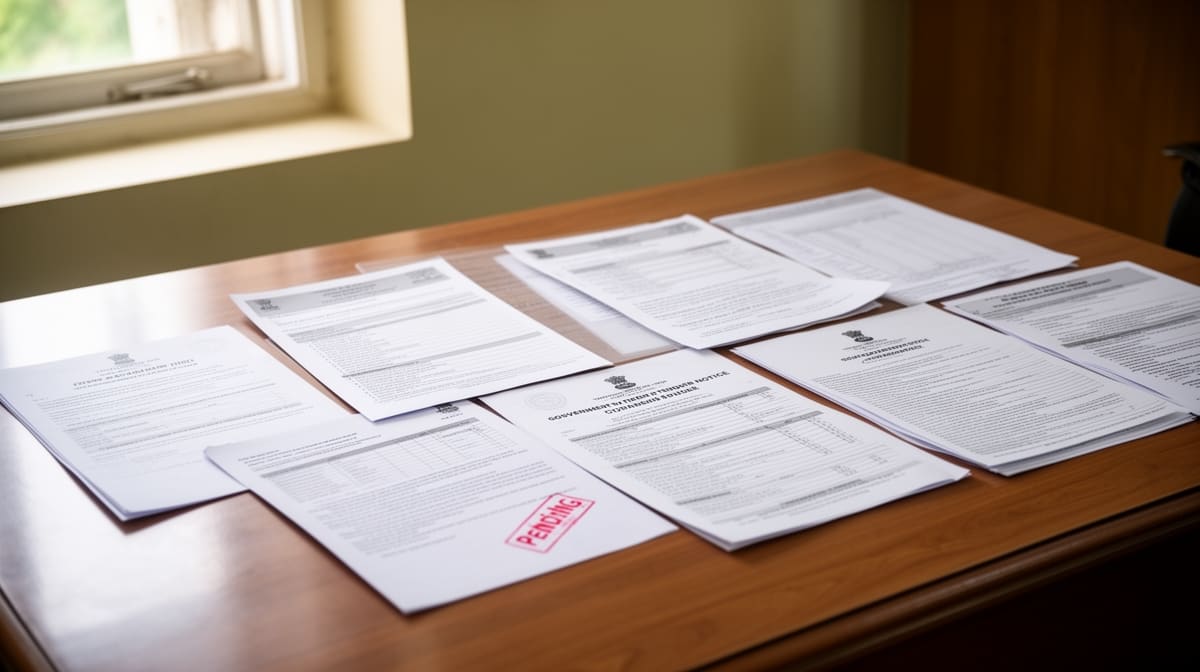
The Madhya Pradesh High Court has underscored the importance of strict adherence to tender conditions, particularly in blacklisting procedures. In a significant interim order, the Court stayed a blacklisting order against Unicure India Limited, holding that the authorities failed to follow the prescribed procedure of testing a second sample before imposing penalties. This ruling reinforces the principle that procedural fairness is non-negotiable in government procurement, even in cases of alleged quality deficiencies.
Background & Facts
The Dispute
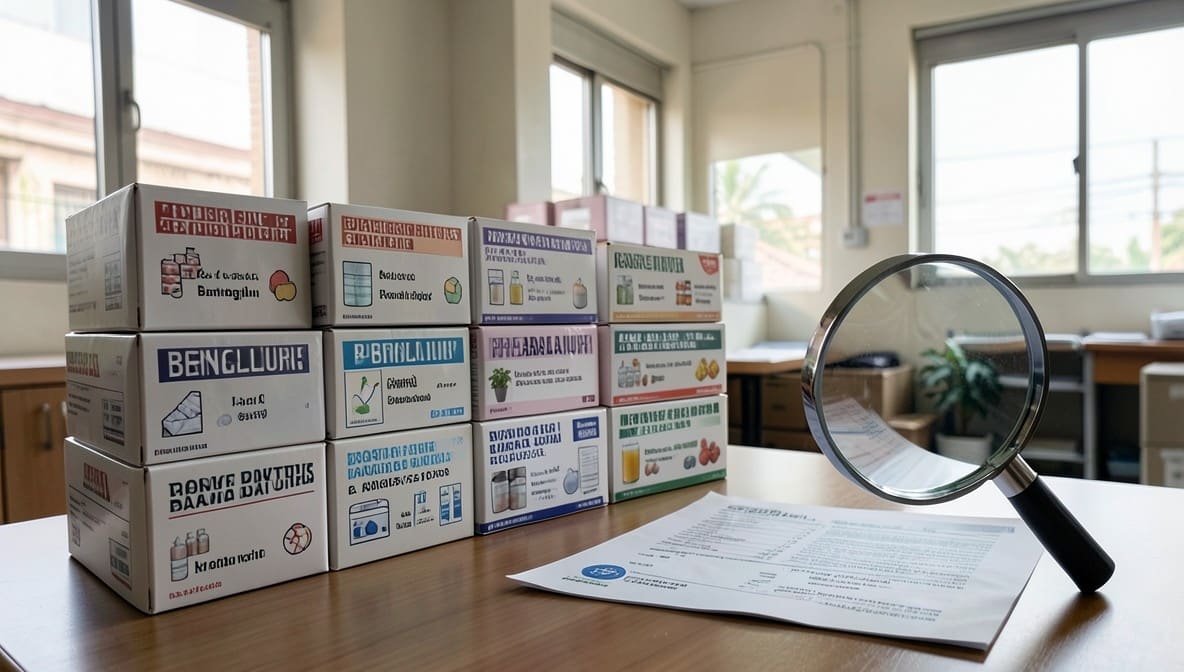
The petitioner, Unicure India Limited, participated in a tender process floated by the State of Madhya Pradesh for the supply of pharmaceutical products. The tender document, specifically Clause 6 of Annexure-IX, outlined the procedure to be followed in case a sample failed quality tests. The clause mandated that if the first sample failed, a second sample from the same batch must be drawn and sent to another laboratory for confirmation. Only upon confirmation of the second test result could the firm be blacklisted.
Key Facts
- The petitioner supplied pharmaceutical products under the tender.
- A sample from the petitioner’s batch failed the initial quality test.
- The authorities issued a blacklisting order without drawing a second sample or sending it to another laboratory for confirmation, as required by Clause 6 of Annexure-IX.
- The petitioner challenged the blacklisting order before the Madhya Pradesh High Court.
Procedural History
- Date of Tender Agreement: Not explicitly mentioned, but the dispute arose during the execution of the tender.
- Date of First Quality Test Failure: Not explicitly mentioned, but the blacklisting order was based on this report.
- Date of Blacklisting Order: Not explicitly mentioned, but the impugned order was issued prior to the filing of the writ petition.
- 10.06.2026: Writ Petition (WP No. 19813 of 2026) filed before the Madhya Pradesh High Court at Jabalpur.
- 10.06.2026: The Court issued notice to the respondents and stayed the operation of the blacklisting order.
The Parties' Positions
For the Petitioner
- The petitioner argued that the blacklisting order was illegal as it violated Clause 6 of Annexure-IX of the tender document.
- It was contended that the authorities failed to follow the mandatory procedure of testing a second sample before blacklisting the petitioner.
- Reliance was placed on the recent Supreme Court judgment in M/s JPEE Drugs (J.P. Drugs) v. State of Madhya Pradesh and others (dated 26.05.2026), which dealt with identical circumstances.
For the Respondents
- The State, represented by the Deputy Advocate General, did not contest the petitioner’s factual submissions.
- Respondent No. 2 (presumably the procuring authority) fairly admitted that the second sample was not drawn or tested, as required by the tender clause.
Relief Sought
The petitioner sought the following reliefs:
- Quashing of the blacklisting order issued by the respondents.
- Stay on the operation of the blacklisting order pending final disposal of the writ petition.
The Legal Issue
The central question before the Court was whether a blacklisting order could be sustained when the authorities failed to comply with the mandatory procedural requirements prescribed in the tender document, specifically the requirement to test a second sample before blacklisting.
Arguments Presented
For the Petitioner
- The petitioner argued that Clause 6 of Annexure-IX was a mandatory condition of the tender, and its non-compliance rendered the blacklisting order illegal.
- It was submitted that the authorities acted arbitrarily by relying solely on the first test report without following the prescribed procedure.
- The petitioner cited M/s JPEE Drugs v. State of Madhya Pradesh, where the Supreme Court held that blacklisting without following tender conditions is unsustainable.
For the Respondent/State
- The State did not contest the petitioner’s submissions regarding the non-compliance with Clause 6.
- Respondent No. 2 admitted that the second sample was not tested, thereby conceding the procedural lapse.
The Court's Analysis
The Court observed that the tender document explicitly provided for a two-step testing procedure before blacklisting a supplier. Clause 6 of Annexure-IX required that if the first sample failed, a second sample must be drawn from the same batch and tested by another laboratory. Only if the second test confirmed the failure could the firm be blacklisted. The Court noted that the authorities had bypassed this mandatory step, rendering the blacklisting order procedurally flawed.
The Court relied on the principle that government contracts must be executed in strict compliance with their terms, and any deviation, especially in matters affecting the rights of parties, cannot be condoned. The ruling aligns with the Supreme Court’s decision in M/s JPEE Drugs, which emphasized that procedural fairness is a cornerstone of government procurement.
"Under these circumstances, Clause 6 of Annexure-IX of the tender document is not followed and the order impugned is based upon the test report of the first sample only."
The Court further held that the admission by Respondent No. 2 regarding the non-compliance with the tender clause was sufficient to warrant an interim stay on the blacklisting order.
The Verdict
The Madhya Pradesh High Court stayed the operation of the blacklisting order against Unicure India Limited until the next date of hearing. The matter was directed to be listed after four weeks for further consideration. The Court did not quantify any monetary relief at this stage but emphasized the procedural lapse as the basis for its interim order.
What This Means For Similar Cases
Procedural Compliance Is Non-Negotiable
- Government authorities must strictly adhere to tender conditions, especially when such conditions relate to blacklisting or penal action.
- Failure to follow prescribed procedures can render administrative orders illegal, even if the underlying allegations (e.g., quality failure) are substantiated.
- Practitioners should scrutinize tender documents for mandatory clauses and ensure that authorities comply with them before imposing penalties.
Blacklisting Orders Are Subject to Judicial Review
- Blacklisting orders are not immune from judicial scrutiny, particularly when they are issued in violation of contractual or procedural safeguards.
- Courts are likely to intervene if the authorities act arbitrarily or bypass mandatory steps, as seen in this case and M/s JPEE Drugs.
- Suppliers facing blacklisting should immediately challenge such orders if procedural lapses are evident.
Precedential Value of M/s JPEE Drugs
- The reliance on M/s JPEE Drugs underscores the binding nature of Supreme Court rulings on identical factual matrices.
- Lower courts are likely to follow this precedent, reinforcing the need for strict compliance with tender conditions before blacklisting.
- Practitioners can cite this judgment to argue against procedural shortcuts in procurement disputes.