Topic

jurisdictional defect

A jurisdictional defect in Indian law occurs when a court or authority acts without legal power to hear a case, such as issuing orders against non-existent entities or violating mandatory procedural requirements under statutes like the Income Tax Act or Arbitration Act.

33 articlesLatest June 2026
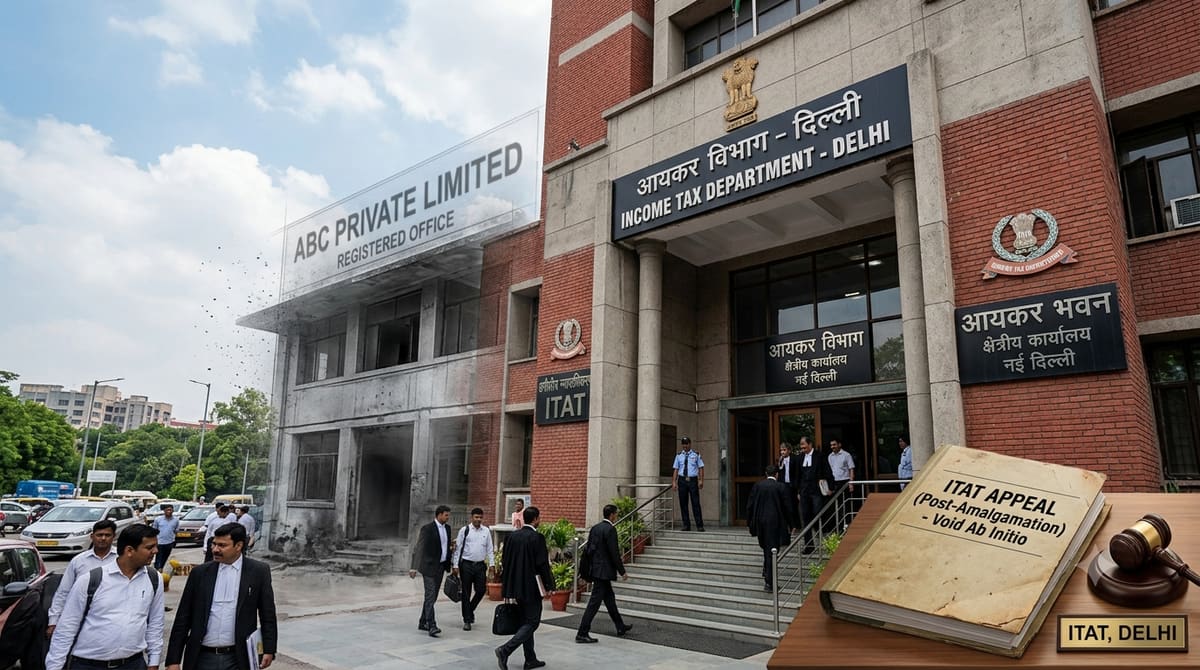
Section 147 Income Tax Act | Assessment Against Non-Existent Entity Void Ab Initio: ITAT Delhi Quashes Reassessment Post-Amalgamation
Case Law Analysis
|Income Tax Appellate Tribunal

Section 147 Income Tax Act | Assessment Against Non-Existent Entity Void Ab Initio: ITAT Delhi Quashes Reassessment Post-Amalgamation

ITAT Delhi rules that tax assessments under Section 147 against a merged entity are legally unsustainable, as proceedings cannot be initiated against a non-existent legal person. The ruling reinforces that jurisdictional defects render such assessments void, impacting tax authorities' powers in post-amalgamation scenarios.


CBDT Instruction 1/2011 | Assessment by AO Exceeding Pecuniary Limits Void Ab Initio: ITAT Kolkata
Case Law Analysis
|Income Tax Appellate Tribunal

CBDT Instruction 1/2011 | Assessment by AO Exceeding Pecuniary Limits Void Ab Initio: ITAT Kolkata

ITAT Kolkata holds that any income tax assessment framed by an Assessing Officer beyond their prescribed pecuniary jurisdiction under CBDT Instruction 1/2011 is null and void from the outset, regardless of substantive correctness. This reinforces that jurisdictional compliance is a mandatory precondition for validity, affecting all assessees and tax authorities navigating delegated powers under the Income Tax Act.

Section 151A IT Act | Faceless Assessment Invalid If Notification Issued After Order Framing : ITAT Kolkata
Case Law Analysis
|Income Tax Appellate Tribunal

Section 151A IT Act | Faceless Assessment Invalid If Notification Issued After Order Framing : ITAT Kolkata

The ITAT Kolkata has ruled that a faceless assessment under Section 151A is jurisdictionally void if the statutory notification empowering the National Faceless Assessment Centre was issued only after the assessment order was framed. This sets a critical precedent: procedural compliance with notification timelines is not optional but foundational to the validity of faceless assessments, affecting all taxpayers subject to centralized scrutiny under the Income Tax Act.

Section 143(2) IT Act | Non-Issuance of Notice Vitiates Reassessment; Section 292BB Cannot Cure Jurisdictional Defect : ITAT Kolkata
Case Law Analysis
|Income Tax Appellate Tribunal

Section 143(2) IT Act | Non-Issuance of Notice Vitiates Reassessment; Section 292BB Cannot Cure Jurisdictional Defect : ITAT Kolkata

The ITAT Kolkata has ruled that failure to issue a Section 143(2) notice at all renders reassessment proceedings null and void, and the curative provision under Section 292BB does not apply to complete non-issuance - only defective service. This clarifies a critical jurisdictional safeguard for assessees, reinforcing that procedural compliance is non-negotiable in tax reassessments.

Section 148 IT Act | Reassessment Notice Issued After 01.04.2021 for A.Y. 2015-16 Barred by Limitation Under Rajeev Bansal : ITAT Delhi
Case Law Analysis
|Income Tax Appellate Tribunal

Section 148 IT Act | Reassessment Notice Issued After 01.04.2021 for A.Y. 2015-16 Barred by Limitation Under Rajeev Bansal : ITAT Delhi

ITAT Delhi has ruled that reassessment notices issued under Section 148 after 1 April 2021 for assessment years prior to 2017-18 are time-barred if the original assessment was never completed under Section 143(3), reinforcing that the amended limitation period applies retroactively to protect taxpayers from stale reassessments. This decision impacts thousands of pending cases where notices were issued based on old procedural norms.

Section 143(2) Income Tax Act | Assessment Void if AO Lacks Pecuniary Jurisdiction Under CBDT Instruction No. 1/2011: ITAT Delhi
Case Law Analysis
|Income Tax Appellate Tribunal

Section 143(2) Income Tax Act | Assessment Void if AO Lacks Pecuniary Jurisdiction Under CBDT Instruction No. 1/2011: ITAT Delhi

ITAT Delhi has ruled that an income tax assessment under Section 143(3) is legally invalid if the notice under Section 143(2) was issued by an Assessing Officer without proper pecuniary jurisdiction, as mandated by CBDT Instruction No. 1/2011. This sets a critical precedent for taxpayers and tax officers alike - jurisdictional compliance is not procedural but jurisdictional, and defects here cannot be cured by subsequent actions.

Section 148 IT Act | Reassessment Notice Beyond Limitation Period Void Ab Initio : ITAT Ahmedabad Quashes AY 2015-16 Notice Post-01.04.2021
Case Law Analysis
|Income Tax Appellate Tribunal

Section 148 IT Act | Reassessment Notice Beyond Limitation Period Void Ab Initio : ITAT Ahmedabad Quashes AY 2015-16 Notice Post-01.04.2021

ITAT Ahmedabad rules that reassessment notices under Section 148 of the Income Tax Act issued after 01.04.2021 for AY 2015-16 are time-barred and void ab initio, reinforcing the Supreme Court's Rajeev Bansal precedent. The decision shields taxpayers from belated scrutiny and underscores strict adherence to limitation periods in tax reassessment proceedings.

Section 148 IT Act | Dispatch Before 01.04.2021 Mandatory to Sustain Old Regime Reassessment: ITAT Delhi
Case Law Analysis
|Income Tax Appellate Tribunal

Section 148 IT Act | Dispatch Before 01.04.2021 Mandatory to Sustain Old Regime Reassessment: ITAT Delhi

ITAT Delhi quashes reassessment proceedings where the Section 148 notice was generated on the ITBA portal before 31.03.2021 but dispatched post-deadline, reinforcing that mere portal generation is insufficient without actual dispatch. The ruling sets a critical precedent for procedural compliance in reassessment cases under the pre-2021 regime, impacting taxpayers and revenue authorities alike.

Section 153C IT Act | Seized Material Must Be Correlated to Specific Assessment Year to Validate Assessment: ITAT Delhi
Case Law Analysis
|Income Tax Appellate Tribunal

Section 153C IT Act | Seized Material Must Be Correlated to Specific Assessment Year to Validate Assessment: ITAT Delhi

ITAT Delhi rules that assessments under Section 153C of the Income Tax Act are void ab initio if seized materials are not explicitly linked to a specific assessment year. The Tribunal relied on the Bombay HC precedent in CIT Vs. Sinhgad Technical Education Society, affirming that jurisdictional defects cannot be cured by generic satisfaction notes. This ruling reinforces strict compliance requirements for search-and-seizure proceedings, impacting tax authorities and assessees alike.

Section 151(2) Income Tax Act | Principal Chief Commissioner Approval Mandatory for Reassessment Beyond Three Years : ITAT Bangalore Quashes Invalid Notice
Case Law Analysis
|Income Tax Appellate Tribunal

Section 151(2) Income Tax Act | Principal Chief Commissioner Approval Mandatory for Reassessment Beyond Three Years : ITAT Bangalore Quashes Invalid Notice

ITAT Bangalore nullified a reassessment order for failure to obtain mandatory approval from the Principal Chief Commissioner under Section 151(2) for notices issued beyond three years. The ruling reinforces strict procedural compliance in income tax reassessment proceedings, impacting taxpayers and revenue authorities alike.

Section 12(5) Arbitration Act | Unilateral Arbitrator Appointment Void Ab Initio; Limitation Excluded for Fresh Proceedings : Bombay HC
Case Law Analysis
|Bombay High Court

Section 12(5) Arbitration Act | Unilateral Arbitrator Appointment Void Ab Initio; Limitation Excluded for Fresh Proceedings : Bombay HC

The Bombay High Court has declared all arbitral awards void where arbitrators were unilaterally appointed, affirming the Supreme Court’s position in Bhadra International. Crucially, it permits parties to initiate fresh arbitration by excluding the entire period of the invalid proceeding from the limitation period, offering a rare procedural lifeline to claimants caught in defective appointments.

Section 90 Waqf Act, 1995 | Failure to Join Wakf Board Renders Decree Non Est in Law: Madras HC
Case Law Analysis
|Madras High Court

Section 90 Waqf Act, 1995 | Failure to Join Wakf Board Renders Decree Non Est in Law: Madras HC

The Madras High Court has ruled that any decree passed without joining the Wakf Board as a mandatory party under Section 90 of the Waqf Act, 1995 is legally void ab initio - regardless of the suit’s merits or elapsed time. This sets a binding precedent for all property disputes involving waqf properties, requiring strict compliance with statutory joinder to avoid nullification of judgments.

Section 127 Income-tax Act | Assessment Void Ab Initio Without Valid Transfer Order : ITAT Delhi
Case Law Analysis
|Income Tax Appellate Tribunal

Section 127 Income-tax Act | Assessment Void Ab Initio Without Valid Transfer Order : ITAT Delhi

The ITAT Delhi has ruled that any income tax assessment conducted by an officer lacking a valid Section 127 transfer order is void from the outset, regardless of the assessee’s delay in challenging it or the merits of the case. This reinforces that jurisdictional compliance is non-negotiable in tax proceedings, affecting all assesses subject to inter-office transfers.