
Topic

Employees' Provident Fund Act

3 articlesLatest September 2026
Section 7A EPF Assessment Quashed; IBC Moratorium Bars Continuation and Extinguishes Pre-Resolution Claims under Sec 31(6) | Bombay HC
Case Law Analysis
|Bombay High Court

Section 7A EPF Assessment Quashed; IBC Moratorium Bars Continuation and Extinguishes Pre-Resolution Claims under Sec 31(6) | Bombay HC

An EPF assessment order issued during the CIRP was set aside because the IBC moratorium prevents continuation of such inquiries and the amendment to Section 31(6) extinguishes claims filed before resolution. The ruling limits employees’ provident-fund claims against insolvent companies and guides resolution professionals.

Section 14 EPF Act | Criminal Prosecution Survives Stay on Recovery; Non-Payment Triggers Liability Irrespective of Civil Stay : Punjab & Haryana HC
Case Law Analysis
|Punjab and Haryana High Court

Section 14 EPF Act | Criminal Prosecution Survives Stay on Recovery; Non-Payment Triggers Liability Irrespective of Civil Stay : Punjab & Haryana HC

The Punjab & Haryana High Court ruled that default in EPF contributions under Section 14 of the EPF Act automatically triggers criminal liability, even if recovery proceedings are stayed. The stay only halts civil enforcement, not criminal prosecution, exposing employers to legal action regardless of financial disputes or interim relief.

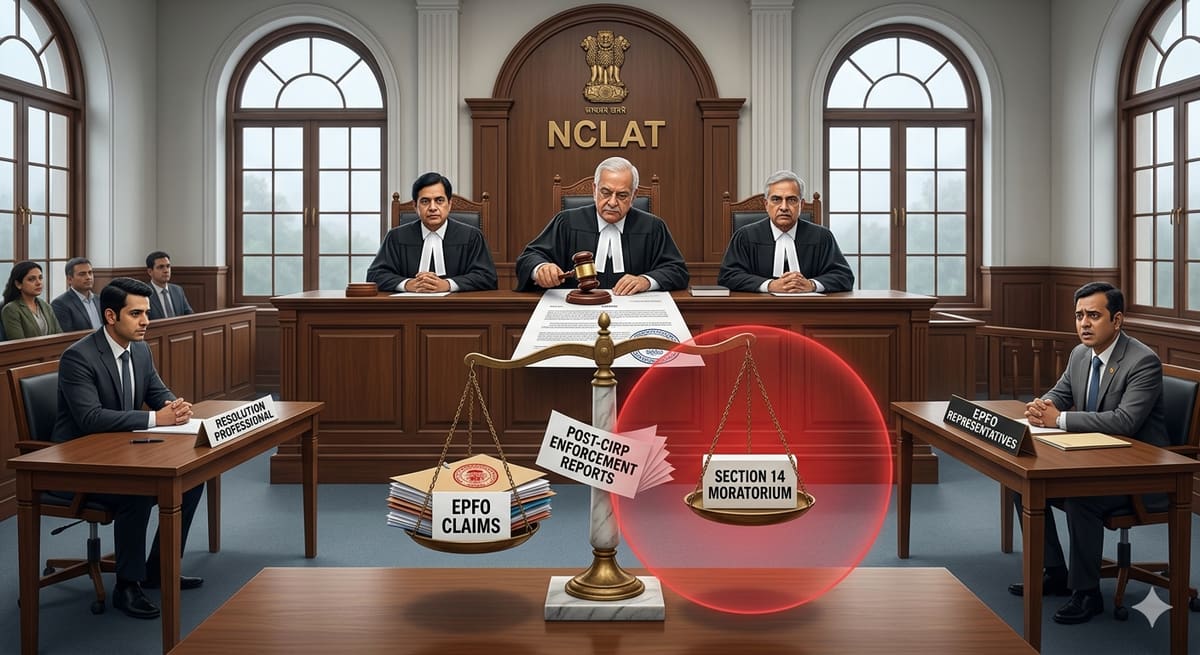
Section 14 IBC Moratorium Bars EPFO Claims Based on Post-CIRP Enforcement Reports : NCLAT
Case Law Analysis
|National Company Law Appellate Tribunal

Section 14 IBC Moratorium Bars EPFO Claims Based on Post-CIRP Enforcement Reports : NCLAT

NCLAT rules that EPFO cannot file claims during Corporate Insolvency Resolution Process (CIRP) based on enforcement reports prepared after the moratorium under Section 14 of the Insolvency and Bankruptcy Code (IBC) commences. The decision reinforces that statutory creditors like EPFO must initiate assessment proceedings before CIRP begins to be admissible.