Topic

Corporate Separateness

3 articlesLatest July 2026
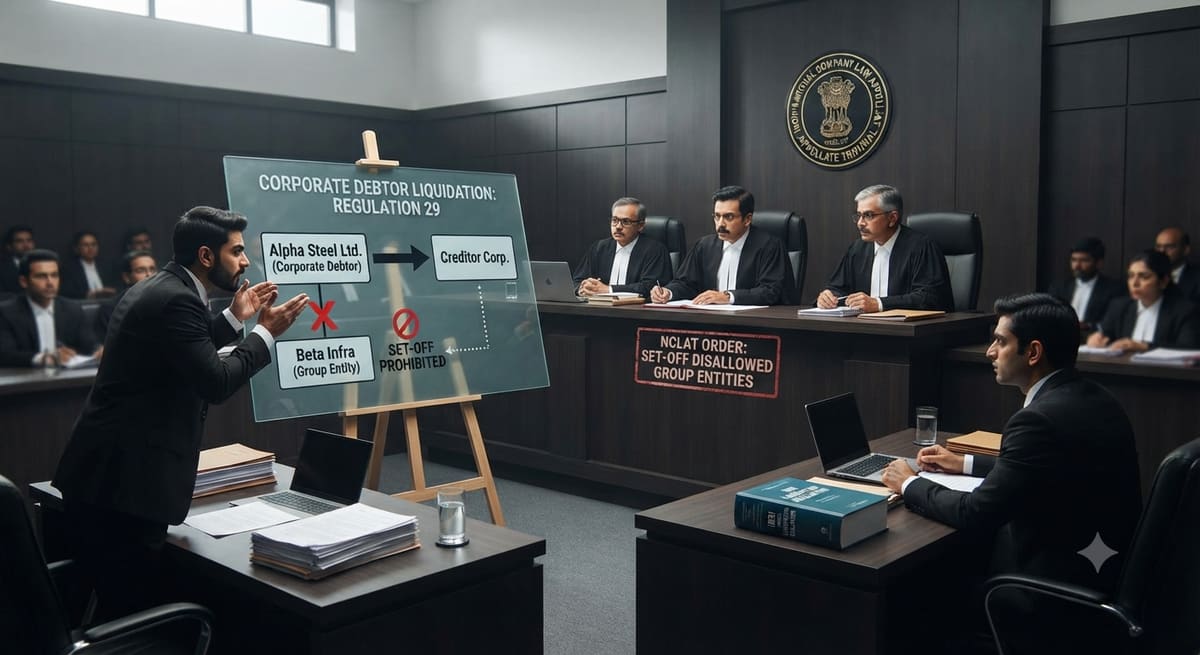
Regulation 29, IBBI Liquidation Regulations | Set-off Permitted Only Between Corporate Debtor and Creditor, Not Across Group Entities : NCLAT
Case Law Analysis
|National Company Law Appellate Tribunal

Regulation 29, IBBI Liquidation Regulations | Set-off Permitted Only Between Corporate Debtor and Creditor, Not Across Group Entities : NCLAT

The NCLAT has clarified that Regulation 29 of the IBBI Liquidation Regulations does not permit set-off claims between a corporate debtor and a creditor through affiliated group entities, upholding the doctrine of corporate separateness. This ruling directly impacts how operational creditors and liquidators assess mutual obligations in insolvency proceedings, preventing cross-entity netting that could distort the waterfall of claims under the IBC.


Directors of Parent Company Not Proper Parties in Labour Dispute | Section 10(1)(c) ID Act Protects Corporate Separateness : Kerala HC
Case Law Analysis
|Kerala High Court

Directors of Parent Company Not Proper Parties in Labour Dispute | Section 10(1)(c) ID Act Protects Corporate Separateness : Kerala HC

The Kerala High Court has ruled that directors of Tata Consumer Products Ltd. cannot be named as parties in an industrial dispute between Tata Coffee Ltd. and its employee, affirming that only the actual employer entity is a proper respondent under Section 10(1)(c) of the Industrial Disputes Act. This clarifies a critical boundary in labour litigation, shielding holding companies and their leadership from being dragged into operational disputes of subsidiary entities.