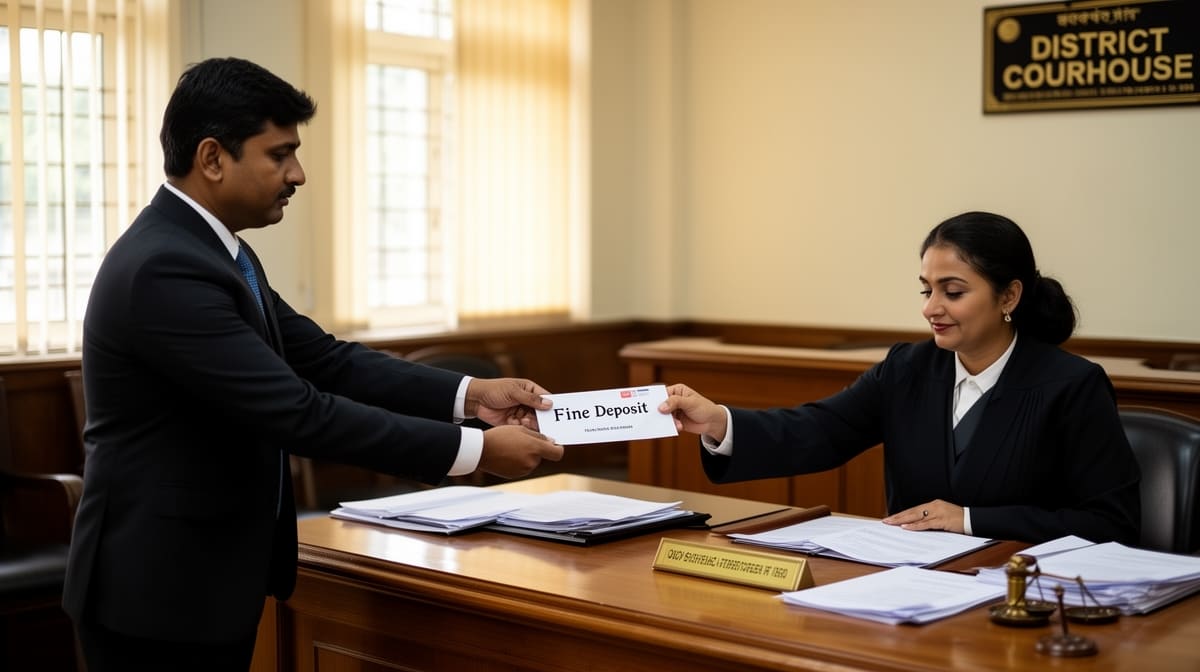
The Bombay High Court's recent order in Yogesh Shivprasad Gore v. Municipal Council Ahmedpur clarifies the judicial approach to suspending sentences under Section 138 of the Negotiable Instruments Act during revision proceedings. The judgment underscores that short-term sentences and prolonged revision hearings may justify bail, even where conviction has been upheld by appellate courts.
Background & Facts
The Dispute
The applicant, Yogesh Shivprasad Gore, was convicted by the Judicial Magistrate First Class, Ahmedpur, in S.C.C. No. 32 of 2011 for an offence under Section 138 of the Negotiable Instruments Act, 1881. The case arose from a dishonoured cheque, leading to criminal proceedings. The trial court sentenced the applicant, a decision later partially upheld by the Additional Sessions Judge, Ahmedpur, in Criminal Appeal No. 04 of 2024.
Procedural History
The case progressed through multiple judicial stages:
- 2011: Complaint filed under Section 138 NI Act before the Judicial Magistrate First Class, Ahmedpur.
- 21 August 2023: Trial court convicted the applicant and imposed a sentence.
- 13 November 2025: First appellate court (Additional Sessions Judge) partly allowed the appeal but maintained the conviction.
- 2026: Applicant filed Criminal Revision Application No. 22 of 2026 before the Bombay High Court, seeking suspension of sentence and bail during pendency.
Relief Sought
The applicant sought suspension of the substantive sentence and bail during the revision proceedings, arguing that:
- The sentence imposed was short-term.
- The fine had already been paid.
- The revision application, filed in 2026, had no immediate prospects of hearing.
The Legal Issue
The central question before the Court was whether a convicted individual under Section 138 NI Act could be granted bail during the pendency of a revision application, particularly when the sentence was short-term and the revision hearing was delayed.
Arguments Presented
For the Applicant
The applicant's counsel contended that:
- The applicant had been on bail throughout the trial and appellate proceedings.
- The fine imposed had already been paid.
- The sentence awarded was only one month, making it a short-term sentence.
- The revision application, filed in 2026, had no immediate prospects of hearing, justifying suspension of sentence and bail.
For the Respondent
The respondent's counsel opposed the application, arguing that:
- Both the trial court and the first appellate court had meticulously appreciated the evidence and recorded the applicant's guilt.
- The conviction should not be suspended merely on the grounds of delayed hearings.
The Court's Analysis
The Court examined the submissions and the operative part of the first appellate court's judgment. It noted that the maximum sentence awarded was one month, and the fine had already been paid. The Court emphasized the following principles:
-
Short-Term Sentences: The Court observed that the sentence imposed was minimal, reducing the risk of the applicant absconding or tampering with evidence.
-
Delayed Revision Hearings: The Court took cognizance of the fact that the revision application was filed in 2026, with no immediate prospects of hearing. This delay was considered a valid ground for suspending the sentence.
-
Bail During Pendency: The Court relied on the principle that bail during the pendency of revision applications is not automatic but may be granted where the sentence is short-term and the hearing is delayed.
"Taking the above submissions into consideration, quantum of sentence and as there are no immediate prospects of hearing the revision, which is of 2026, the sentence awarded is required to be suspended."
The Court did not delve into the merits of the revision application but focused on the equitable relief of bail during its pendency.
The Verdict
The Bombay High Court allowed the criminal application and suspended the substantive sentence imposed on the applicant. The Court directed that the applicant be released on a personal recognizance bond of Rs. 15,000 with one solvent surety in the like amount, subject to the condition that the applicant shall not commit any criminal activity.
What This Means For Similar Cases
Short-Term Sentences Favour Bail During Revision
The judgment establishes that short-term sentences under Section 138 NI Act may tilt the balance in favour of granting bail during revision proceedings. Practitioners should:
- Highlight the duration of the sentence when seeking bail.
- Argue that short-term sentences reduce the risk of absconding or evidence tampering.
Delayed Hearings as a Ground for Suspension
The Court's reliance on the delayed hearing of the revision application signals that prolonged judicial processes may justify suspension of sentence. Lawyers can:
- Emphasize the lack of immediate hearing prospects in revision applications.
- Use this judgment to argue for bail where hearings are delayed due to judicial backlog.
Fine Payment Strengthens Bail Claims
The fact that the fine had already been paid was a critical factor in the Court's decision. Practitioners should:
- Ensure compliance with monetary penalties before seeking bail.
- Use fine payment as a mitigating factor to bolster bail applications.