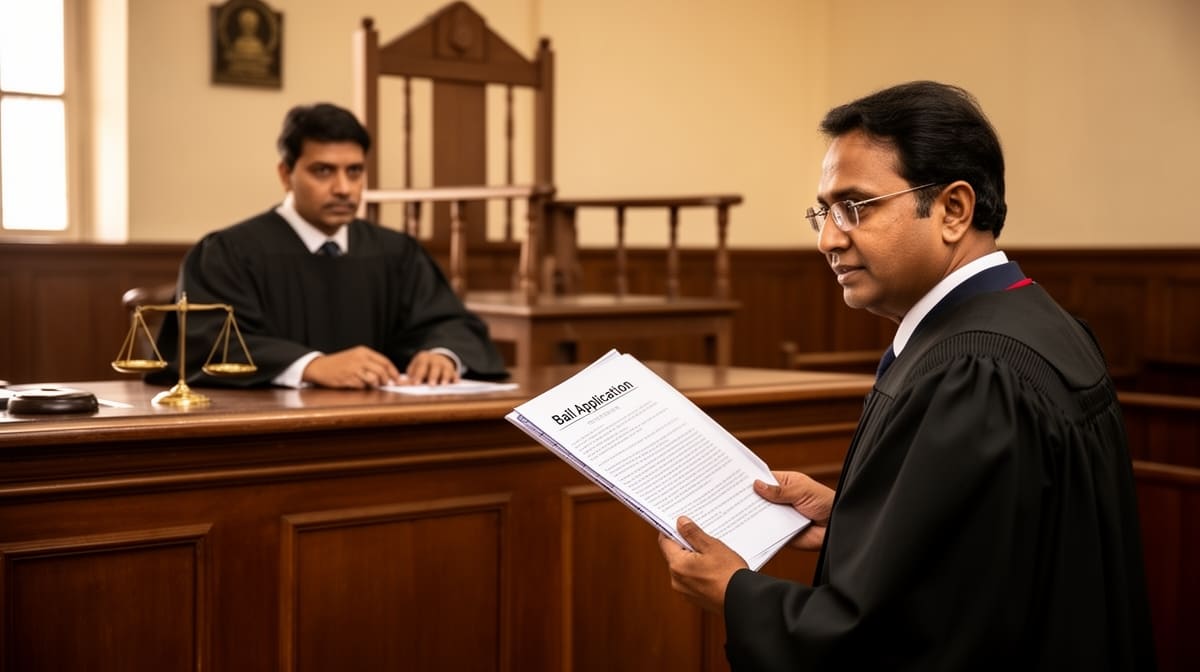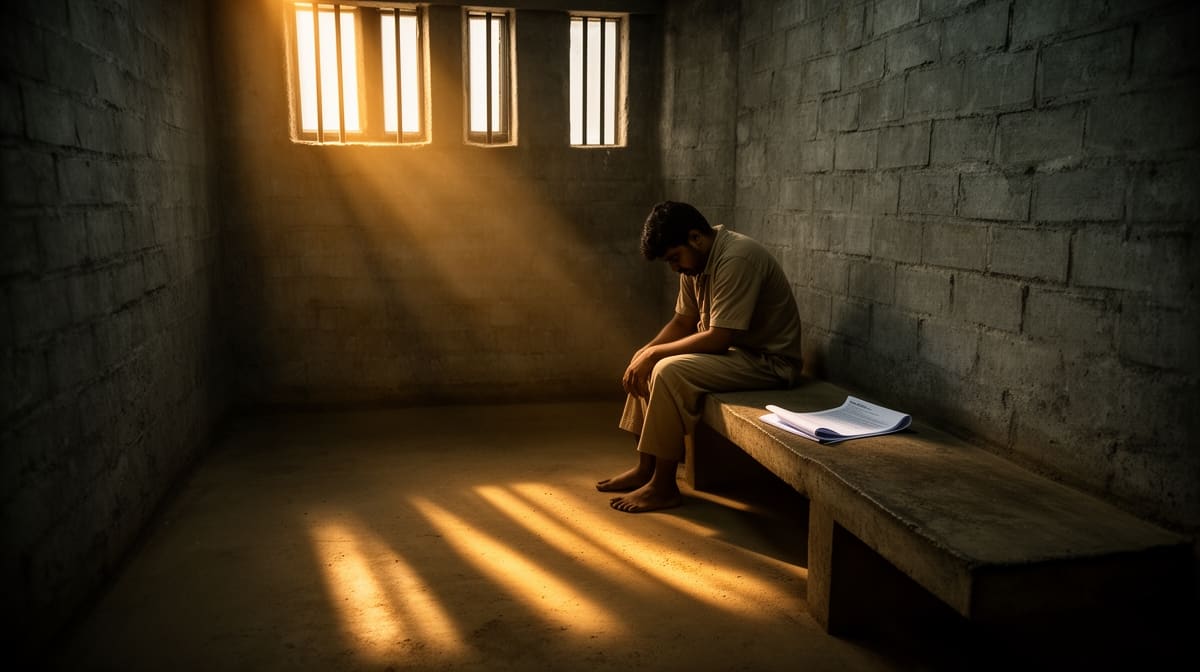
The Madhya Pradesh High Court has reaffirmed that prolonged pre-trial incarceration in narcotics cases, where trial delay is not attributable to the accused, triggers a constitutional imperative under Article 21 that can override the statutory bar to bail under Section 37 of the NDPS Act. This ruling reinforces the principle that procedural justice cannot be sacrificed for punitive presumption.
Background & Facts
The Dispute
Sujana Ram was arrested on 28 April 2023 in connection with Crime No. 04/2023 registered at the Narcotics Cell, Indore, for possession of 80 kg and 250 gm of opium - over thirty times the commercial quantity of 2.5 kg prescribed under the Narcotic Drugs and Psychotropic Substances Act, 1985. He has remained in judicial custody since arrest.
Procedural History
- 28 April 2023: Arrest and custody commenced
- Prior to February 2026: First bail application filed and subsequently withdrawn
- February 2026: Second bail application filed under Section 483 of Bharatiya Nagarik Suraksha Sanhita, 2023 and Section 439 CrPC
- Trial Status: Only one of 22 prosecution witnesses has been fully examined; examination of the second witness is ongoing; trial is expected to extend significantly
Relief Sought
The applicant sought release on bail on the grounds of excessive pre-trial detention and unreasonable delay in trial, neither of which was attributable to him. He relied on Supreme Court precedents where similar delays led to bail grants despite the stringent provisions of the NDPS Act.
The Legal Issue
The central question was whether Section 37(1)(b) of the NDPS Act, which denies bail if there are reasonable grounds to believe the accused is guilty, can be overridden by the fundamental right to liberty under Article 21 of the Constitution when trial delay is prolonged and unexplained.
Arguments Presented
For the Petitioner
Counsel argued that the applicant’s incarceration of over two years, with minimal progress in trial, violates the right to a speedy trial guaranteed under Article 21. He cited Ankur Chaudhary v. State of Madhya Pradesh and Rabi Prakash v. State of Odisha, where the Supreme Court held that Article 21 overrides the statutory embargo under Section 37(1)(b) when trial delays are unaccounted for and the accused has no criminal antecedents. The petitioner emphasized that the prosecution had examined only one of 22 witnesses, indicating systemic delay.
For the Respondent
The State opposed bail, contending that the massive quantity of opium recovered - exceeding commercial limits by over 30 times - established a strong prima facie case under Section 8 of the NDPS Act. It argued that the statutory bar under Section 37(1)(b) was designed precisely to deter large-scale narcotics trafficking and should not be diluted by procedural delays.
The Court's Analysis
The Court declined to evaluate the merits of the prosecution’s case, noting that bail decisions must not prejudge guilt. Instead, it focused on the duration of custody and the pace of trial. The Court observed that the applicant had been detained for over two years without a single witness being fully cross-examined, and the trial remained in its preliminary stages.
"The right to life and personal liberty under Article 21 is not a mere procedural safeguard but a substantive guarantee that cannot be subordinated to statutory restrictions when the State fails to conduct a trial with reasonable expedition."
The Court distinguished the present case from those where bail was denied due to risk of evidence tampering or flight, noting that no such grounds were pleaded. It emphasized that the Supreme Court’s rulings in Ankur Chaudhary and Rabi Prakash were directly on point: where trial delay is systemic and the accused has no prior record, Article 21 prevails over Section 37(1)(b). The Court held that the State’s failure to expedite trial cannot be visited upon the accused through continued incarceration.
The Verdict
The applicant won. The Court held that Article 21 overrides the statutory bar under Section 37(1)(b) of the NDPS Act when pre-trial detention is prolonged due to trial delay not caused by the accused. Sujana Ram was granted bail on a personal bond of Rs. 25,000 with one solvent surety, subject to conditions under Section 437(3) CrPC.
What This Means For Similar Cases
Bail Cannot Be Denied Solely on Quantity of Narcotics
- Practitioners must now argue that quantity alone cannot justify denial of bail when trial delay is substantial
- Courts must conduct a balancing test: duration of custody vs. seriousness of offence
- In NDPS cases, the burden shifts to the State to explain why trial cannot proceed expeditiously
Delay in Trial Triggers Article 21 Protection
- If more than 18 - 24 months have passed and less than 25% of prosecution witnesses are examined, bail applications gain strong constitutional footing
- Courts must record reasons for trial delay; silence or generic assertions will not suffice
- This applies equally to cases under Section 37(1)(b)(i) and (ii) of the NDPS Act
Procedural Compliance Is Non-Negotiable
- Bail orders must explicitly reference Section 437(3) CrPC conditions to ensure enforceability
- Violation of bail conditions must be addressed by the trial court, not the High Court, unless there is a clear abuse of process
- Counsel should file applications for bail under Section 483 BNS as the new procedural anchor, replacing CrPC references where applicable