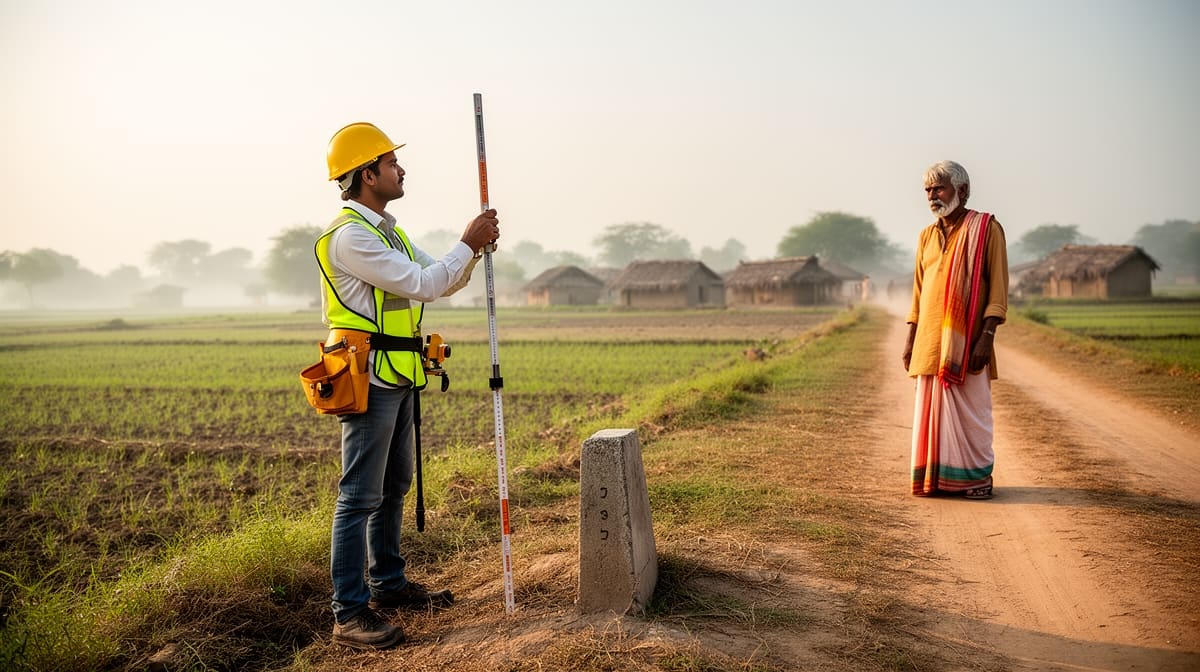
The Madras High Court has reinforced that revenue authorities cannot proceed with land surveys when a title dispute or encroachment claim is pending, emphasizing that procedural fairness under Article 226 requires a hearing before any survey action. This ruling clarifies the limits of administrative action in land matters and affirms the primacy of judicial adjudication over unilateral survey determinations.
Background & Facts
The Dispute
The petitioner, R. Karthivel, is the lawful owner and possessor of land originally listed as Old Survey Number 3/1B, now renumbered as S.F. No. 3/14 in Kombaipatti Village. He subdivided the property into 12 plots, retaining Plot No. 1 (4.22 cents) and selling the remainder. Plot No. 2 (3.48 cents) was sold to the fourth respondent via a registered sale deed dated 24.10.2002. The fourth respondent allegedly constructed a window and sunshade encroaching upon the petitioner’s retained land. The petitioner raised objections to this encroachment and sought civil remedies.
Procedural History
- The fourth respondent filed W.P.(MD) No. 35756 of 2025 seeking a direction for survey of the disputed land.
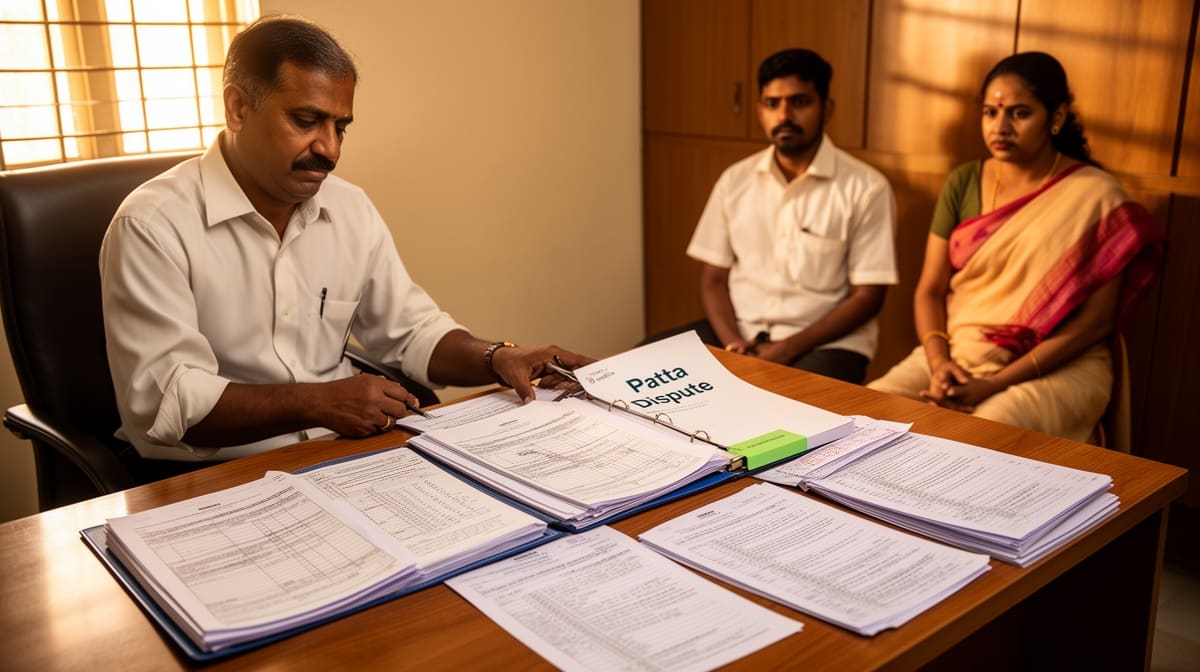
- In response, the petitioner submitted a detailed representation on 18.02.2026, asserting that a survey cannot proceed while a title dispute and encroachment claim remain unresolved.
- The respondents - Thasildar, Head Surveyor, and Firka Surveyor - ignored the objection and proceeded toward survey without any inquiry or hearing.
- The petitioner filed the present writ petition under Article 226 to restrain the survey until the dispute is adjudicated.
Relief Sought
The petitioner sought a writ of mandamus directing the revenue surveyors to consider his objection before initiating any survey, and to afford him a fair opportunity to be heard.
The Legal Issue
The central question was whether revenue survey authorities may proceed with a land survey when a genuine title dispute and alleged encroachment are pending, without first considering objections or affording a hearing to the affected parties.
Arguments Presented
For the Petitioner
The petitioner’s counsel argued that surveying land amid a title dispute violates the principles of natural justice and procedural fairness under Article 14 and Article 21 of the Constitution. Relying on State of U.P. v. Mohd. Noor and K.S. Puttaswamy v. Union of India, the counsel contended that administrative action affecting property rights must be preceded by notice and hearing. The petitioner emphasized that survey results could prejudice future civil litigation and create irreversible factual records.
For the Respondent
The Government Advocate conceded that the petitioner’s objection had not been formally considered and undertook to examine it before proceeding. No substantive legal defense was advanced against the claim of procedural violation; the state acknowledged the procedural lapse.
The Court's Analysis
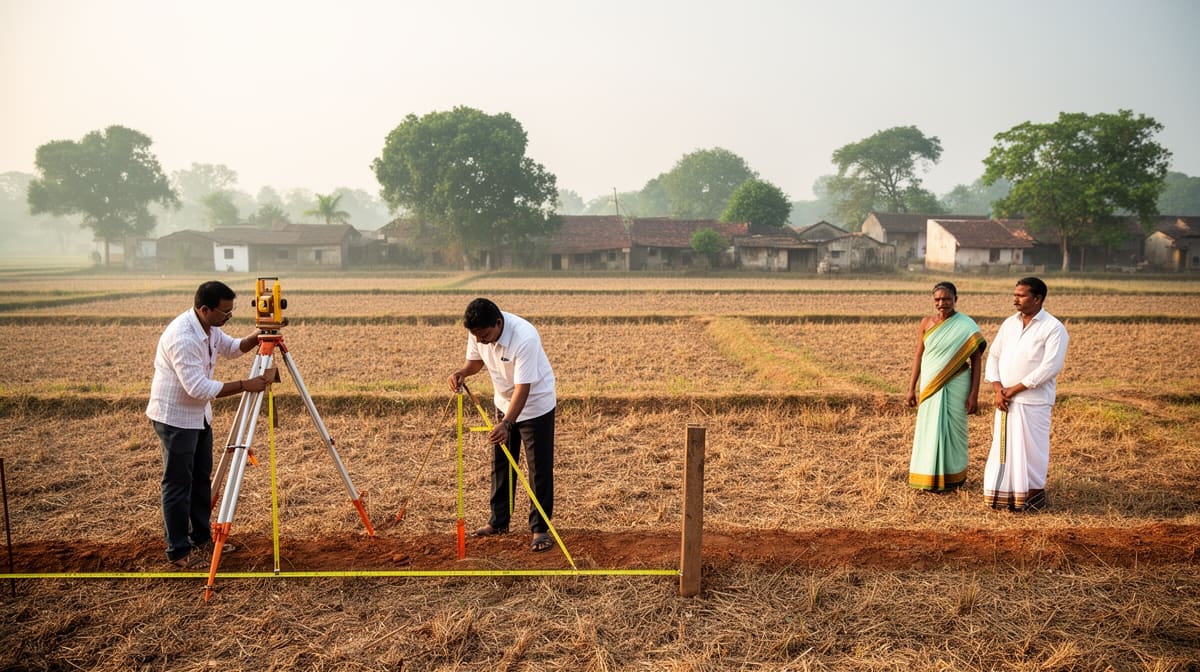
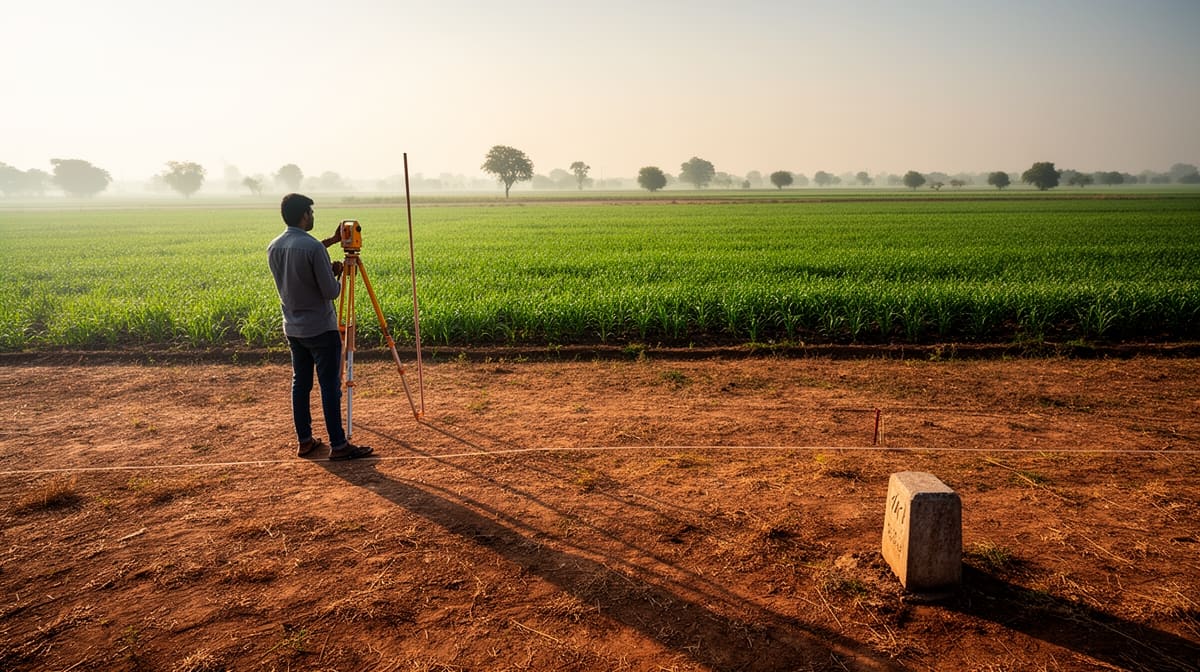
The Court examined the nature of revenue surveys under the Tamil Nadu Survey and Boundaries Act and recognized that while surveyors are tasked with recording physical boundaries, they lack adjudicatory powers over title disputes. The Court held that initiating a survey in the face of a pending title dispute risks creating a de facto determination of rights, which only a civil court may effect.
"The respondents cannot proceed with the survey without considering the petitioner’s objection, which raises a serious issue of title and encroachment requiring adjudication by a competent Civil Court."
The Court emphasized that natural justice is not a mere formality but a constitutional imperative. Even in administrative proceedings, the right to be heard is non-negotiable when rights are at stake. The Court rejected the notion that survey is a purely technical exercise, noting that its outcome may influence litigation outcomes and third-party interests. The respondents’ failure to even acknowledge the objection constituted a breach of procedural due process.
The Verdict
The petitioner succeeded. The Court held that revenue survey authorities must consider objections to surveys where title disputes exist and must afford a hearing before proceeding. The respondents were directed to dispose of the objection within twelve weeks and to hear all affected parties.
What This Means For Similar Cases
Survey Cannot Proceed Without Hearing
- Practitioners must immediately raise objections in writing when survey notices are issued amid title disputes
- Revenue authorities cannot treat objections as mere formalities - they must be recorded, evaluated, and responded to
- Failure to hear parties renders any survey action liable to be quashed under Article 226
Title Disputes Trump Administrative Surveys
- A pending civil suit or credible claim of encroachment is sufficient to halt survey proceedings
- Surveyors are not empowered to resolve ownership claims; their role is limited to recording physical features
- Any survey report issued without addressing objections may be excluded as evidence in civil proceedings
Civil Court Remedy Remains Paramount
- Parties are not barred from pursuing civil remedies even after survey
- The Court explicitly clarified that survey does not preclude litigation
- Practitioners should advise clients to file civil suits promptly to secure injunctions against survey actions