The Bombay High Court has invalidated a Rs. 22.63 crore penalty demand against a newspaper society for delayed construction, holding that a supplementary lease deed explicitly removing the four-year completion deadline supersedes the original lease terms. The judgment reinforces that contractual ambiguity must be resolved against the drafting authority and that penalties imposed without notice or justification violate natural justice.
Background & Facts
The Dispute
The petitioner, Indian Newspaper Society (INS), a non-profit organization representing the press in India, entered into a lease agreement with the Mumbai Metropolitan Region Development Authority (MMRDA) for Plot No. C-63 in Bandra-Kurla Complex (BKC). The dispute arose when MMRDA demanded substantial additional premium and penalty for alleged delay in completing construction beyond four years, despite having subsequently granted additional built-up area and explicitly removing the time restriction in a supplementary lease deed.
Key Facts
- On 17th November 2005, MMRDA allotted Plot No. C-63 (10,450 sq. mtrs) to INS for an 80-year lease.
- Lease premium of Rs. 88,52,75,000 was paid on 18th February 2008.
- Lease Deed dated 9th April 2008 was executed, permitting a built-up area of 20,830 sq. mtrs at 2.00 FSI.
- Article 2(d) of the Lease Deed required construction to be completed within four years from the date of execution (i.e., by 9th April 2012).
- Article 2(e) provided for extension of time upon payment of additional premium: 25% for up to one year, 35% for one to two years, and 40% for two to three years.
- In 2009, FSI in BKC was enhanced from 2.00 to 4.00.
- On 10th September 2009, MMRDA allotted additional built-up area of 20,830 sq. mtrs to INS, increasing total permissible area to 41,660 sq. mtrs.
- On 22nd April 2013, a Supplementary Lease Deed was executed.
- Article 2(c) of the Supplementary Lease Deed explicitly stated: "There shall be no time limit as contained in the Article 2(d) of the said Deed of Lease for completion of construction of the building by using the said additional built up area."
- The Supplementary Lease Deed further declared the incremental premises as an "integral part of the demised premises."
- INS submitted revised plans on 29th March 2010, approved on 26th August 2011.
- Commencement Certificate for entire building (G+14 floors) was issued on 14th November 2013.
- INS sought extension of time on 6th June 2012, 10th December 2012, and 10th January 2013, citing delays in obtaining height clearance from Airports Authority of India (granted on 2nd August 2012).
- On 30th September 2013, MMRDA granted one-year extension (until 8th April 2013) and demanded additional premium of Rs. 8,85,27,500 at 14% interest.
- INS paid Rs. 13,78,59,150 on 19th September 2014 and Rs. 8.85 crores on 23rd December 2014, both under protest.
- On 22nd August 2014, MMRDA issued a notice threatening lease termination but did not specify the amount due or the breached clause.
- On 12th September 2017, MMRDA issued the impugned Demand Notice (Exhibit-N) demanding recovery of Rs. 22,63,59,150 as penalty and interest.
Procedural History
- 9th April 2008: Lease Deed executed.
- 10th September 2009: Additional built-up area allotted.
- 22nd April 2013: Supplementary Lease Deed executed.
- 6th June 2012: INS first requested extension of time.
- 10th December 2012: Renewed request for extension.
- 10th January 2013: Third request for extension.
- 30th September 2013: MMRDA granted one-year extension and demanded premium.
- 19th September 2014: INS paid Rs. 13,78,59,150 under protest.
- 23rd December 2014: INS paid Rs. 8.85 crores under protest.
- 22nd August 2014: MMRDA issued show cause notice without specifying amount or clause breached.
- 23rd December 2014: MMRDA rejected INS’s explanation and demanded Rs. 15,44,36,039.
- 12th September 2017: Impugned Demand Notice issued.
- 2018: Writ Petition No. 864 of 2018 filed before Bombay High Court.
- 22nd January 2026: Judgment reserved.
- 8th April 2026: Judgment pronounced.
The Parties' Positions
For the Petitioner
- The Supplementary Lease Deed of 22nd April 2013 unambiguously removed the four-year time limit for construction using the additional built-up area.
- The entire building is a composite structure; services like cooling towers, fire lifts, and exhaust systems are common and cannot be completed until the entire G+14 structure is finished.
- MMRDA’s demand for penalty was contrary to the express terms of the Supplementary Lease Deed.
- The demand notice was vague, failed to specify the breached clause, and was issued without prior show cause or opportunity to explain.
- Payment of penalty was made under duress and coercion, and is recoverable under Section 72 of the Indian Contract Act.
- MMRDA’s policy of granting six-year extension only to leases after 26th August 2015 was arbitrary and violative of Article 14.
For the Respondent
- The original Lease Deed’s Article 2(d) imposed a binding four-year deadline.
- The Supplementary Lease Deed only applied to the additional built-up area and did not nullify the original time limit for the initial 20,830 sq. mtrs.
- MMRDA’s policy decision to extend time only post-August 2015 was a legitimate administrative policy.
- The Writ Petition raises disputed questions of fact and is barred by the doctrine of alternative remedy under Section 44 of the MMRDA Act.
- The Petitioner suppressed the full Commencement Certificate dated 14th November 2013.
- The Petitioner approached the Court with unclean hands due to delay and laches.
Relief Sought
The Petitioner sought:
- Quashing of the Demand Notice dated 12th September 2017.
- Declaration that the penalty demand is illegal and void.
- Refund of Rs. 22,63,59,150 paid under protest.
- Interest on the refund amount at 14% per annum.
- Costs of litigation.
The Legal Issue
The central question was whether the Supplementary Lease Deed dated 22nd April 2013, which explicitly removed the four-year time limit for construction using the additional built-up area, rendered the penalty demand under the original Lease Deed’s Article 2(d) legally unsustainable, and whether the Respondent’s refusal to extend the same time benefit to pre-2015 lessees violated Article 14 of the Constitution.
Arguments Presented
For the Petitioner
The Petitioner relied on the plain language of Article 2(c) of the Supplementary Lease Deed, which stated that "there shall be no time limit" for construction using the additional built-up area. It argued that the entire building is a single, integrated structure, making it impossible to complete the original portion without the full G+14 construction. It cited Raghuleela Builders Pvt. Ltd. v. MMRDA (2019) as binding precedent, where the same court had held that such penalty demands were arbitrary and discriminatory. It invoked the doctrine of contra proferentem, asserting that ambiguity in a contract drafted by MMRDA must be construed against it. It further relied on Section 72 of the Indian Contract Act and Fatima Khatoon Chowdhry v. Mahmoed Jan Chowdhury to argue that payments made under duress are recoverable.
For the Respondent
The Respondent contended that the original Lease Deed’s Article 2(d) remained enforceable for the initial 20,830 sq. mtrs, and the Supplementary Deed only modified terms for the additional area. It argued that the policy decision to grant six-year extensions only to leases executed after 26th August 2015 was a legitimate administrative classification. It relied on Section 44 of the MMRDA Act to assert an alternative remedy and claimed suppression of material facts due to non-disclosure of the full Commencement Certificate. It further argued that the Writ Petition was barred by delay and laches.
The Court's Analysis
The Court began by rejecting the Respondent’s preliminary objections. It held that the Writ Petition was maintainable because the dispute involved interpretation of contractual terms and allegations of arbitrariness by a state instrumentality, invoking Article 14. It further held that Section 44 of the MMRDA Act applied only to recovery of land revenue arrears, not to disputes over contractual penalties.
The Court then turned to the core contractual interpretation issue. It emphasized that contracts must be read as a whole, and the intention of the parties must be derived from the language used, not subsequent conduct. It reproduced Articles 2(d) and 2(c) of the original and supplementary leases respectively, noting the explicit and unambiguous language in Article 2(c) of the Supplementary Deed: "There shall be no time limit as contained in the Article 2(d) of the said Deed of Lease for completion of construction of the building by using the said additional built up area."
"The unambiguous expressions used in Article 2(c) of the Supplementary Lease Deed had clearly displaced the time restriction imposed under Article 2(d) of the Lease Deed dated 9th April, 2008 for completing the construction as long as the construction is carried out by using the additional BUA."
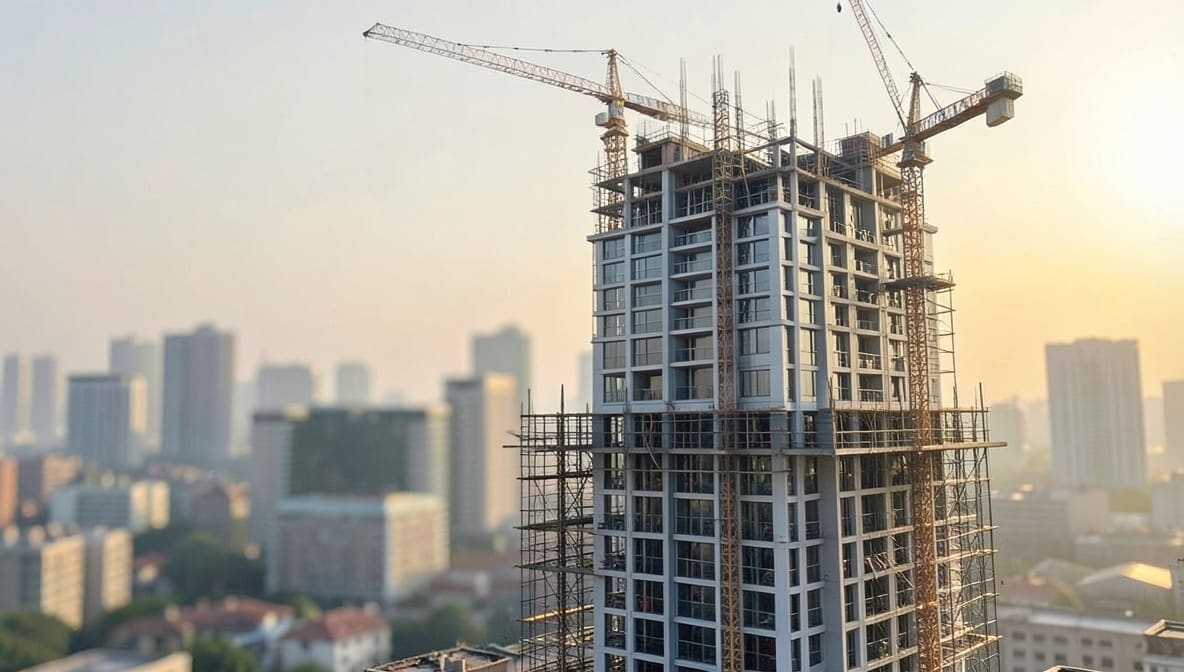
The Court held that the entire building was a composite structure, and the additional built-up area was not a separate entity but an integral part of the demised premises. Therefore, enforcing the four-year deadline for the original portion while allowing unlimited time for the additional portion was legally incoherent and practically impossible.
The Court further held that MMRDA, as the drafter of the contract, bore the burden of removing ambiguity. Since it chose to insert a clear time-limit removal clause in the Supplementary Deed, it could not later argue that the original clause remained operative. The principle of contra proferentem applied: any ambiguity must be resolved against the drafter.
The Court also found that MMRDA’s policy of granting six-year extensions only to leases executed after 26th August 2015 was arbitrary and discriminatory. It noted that the same external factors - delays in environmental clearances, height clearances, and municipal approvals - affected all lessees equally, regardless of lease date. The classification had no rational nexus to the object sought to be achieved, violating Article 14.
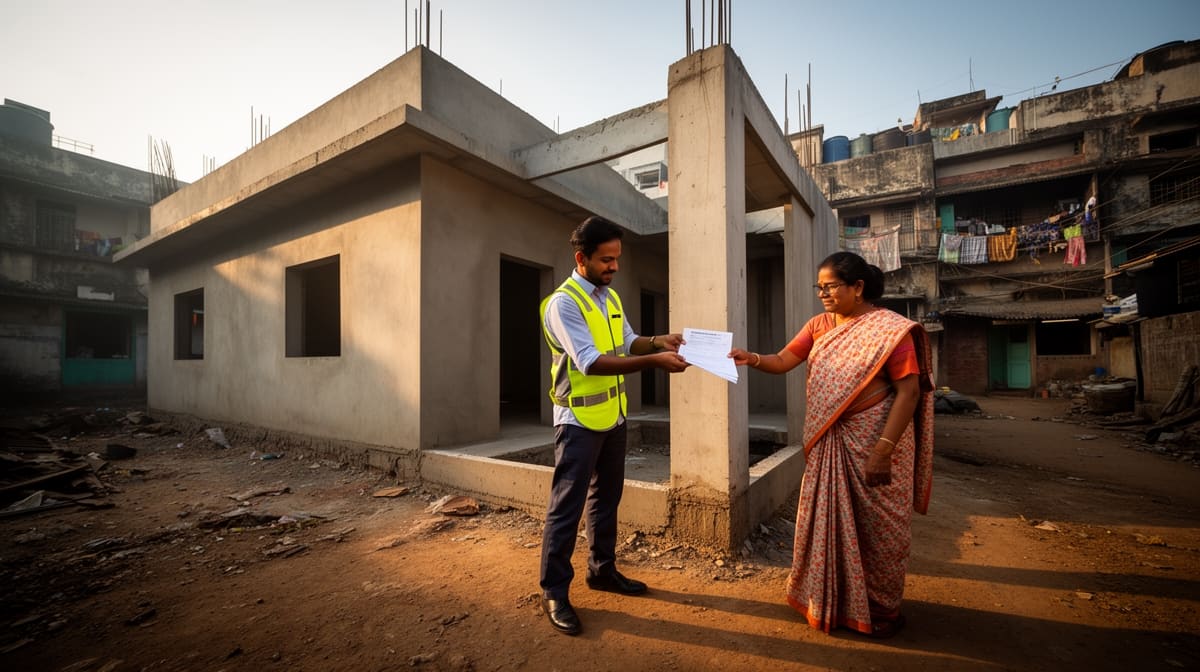
The Court further held that the Demand Notice dated 12th September 2017 was legally defective for failing to specify the breached clause or the exact amount due, violating the principles of natural justice. The payment of Rs. 22.63 crore was made under duress, as MMRDA threatened to terminate the lease and revoke the Commencement Certificate. Citing Section 72 of the Indian Contract Act and Ram Kishen Singh v. Dooli Chand, the Court held that such payments are recoverable.
The Verdict
The Petitioner succeeded. The Court set aside the Demand Notice dated 12th September 2017 and declared the penalty demand illegal. The Respondent was directed to refund the entire amount of Rs. 22,63,59,150 paid by the Petitioner under protest, within 90 days from receipt of a certified copy of this order. If the refund is not made within this period, the amount shall carry interest at 14% per annum, calculated from the date of this order until actual payment. Parties were directed to bear their own costs.
What This Means For Similar Cases
Contractual Ambiguity Must Be Resolved Against the Drafter
- Practitioners must argue that any ambiguity in lease or development agreements drafted by public authorities must be construed against them under contra proferentem.
- Where a supplementary agreement modifies or removes a time-bound obligation, the original clause cannot be resurrected unless expressly preserved.
Penalty Demands Require Specificity and Fair Procedure
- Any demand notice seeking penalty must clearly identify the breached clause, specify the amount due, and provide an opportunity to explain.
- Failure to issue a show cause notice before imposing financial penalties violates natural justice and renders the demand void.
Administrative Policies Must Be Non-Discriminatory
-
Public authorities cannot grant benefits to new lessees while denying identical benefits to similarly situated existing lessees without a rational, objective basis.
-
Classification based solely on the date of lease execution, without distinguishing material circumstances, is arbitrary and violates Article 14.
-
Always verify whether a supplementary agreement has modified or replaced prior time-bound obligations.
-
Challenge penalty notices that lack specificity or fail to provide a hearing.
-
Argue for refund of payments made under duress using Section 72 of the Indian Contract Act and relevant precedents.