The Bombay High Court has recognized that the failure to supply uniquely designed packaging materials, integral to a company’s core production process, can constitute irreparable harm warranting urgent judicial intervention - particularly when aligned with seasonal commercial exigencies. This interim order underscores the judiciary’s willingness to enforce contractual obligations in commercial contexts where substitution is functionally impossible.
Background & Facts
The Dispute
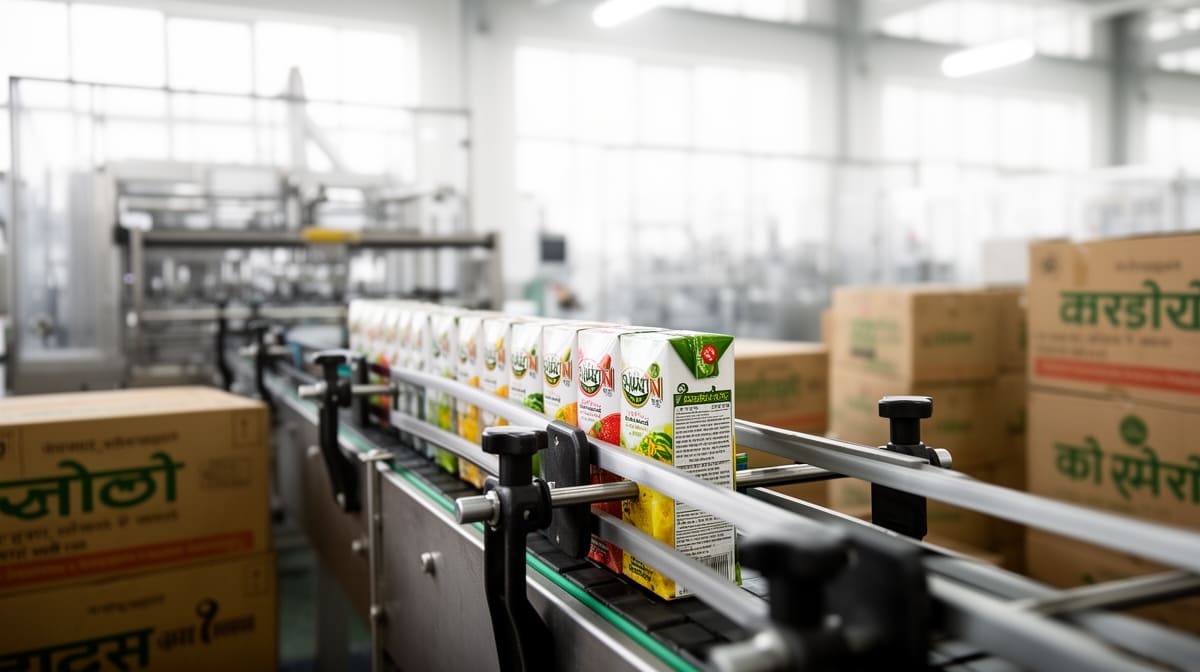
Parle Agro Private Limited, a leading beverage manufacturer, filed a commercial suit seeking specific performance of three contracts with SIG Combibloc Ltd. for the supply of custom-designed carton packaging sleeves used exclusively for its flagship product, Frooti. These sleeves are not generic but engineered to fit only the SIG packaging machines installed by the defendants at Parle’s franchisee premises. No alternative supplier can produce sleeves compatible with this proprietary system.
Procedural History
- The suit was filed in the Commercial Court of the Bombay High Court on 2026.
- Parle Agro sought urgent interim relief due to imminent stock-out during peak summer demand (February - June).
- No prior interim orders or lower court proceedings existed; this was the first judicial intervention.
Relief Sought
Parle Agro sought immediate direction to the defendants to supply the required packaging sleeves, or in the alternative, an injunction restraining them from further delay or breach. The plaintiff emphasized that failure to supply would result in irreversible market loss, brand erosion, and financial damage during the critical sales window.
The Legal Issue
The central question was whether the unique, non-substitutable nature of the packaging material, coupled with the timing of the breach during peak commercial season, justifies the grant of interim specific performance under Section 20 of the Specific Relief Act, 1963, despite the absence of a final adjudication on breach.
Arguments Presented
For the Petitioner
Senior Advocate Veerendra Tulzapurkar argued that the packaging sleeves were not merely goods but essential components of a proprietary production system. He cited correspondence showing Parle had provided rolling forecasts months in advance, yet the defendants repeatedly delayed delivery without justification. He relied on S. R. Batliboi & Co. v. S. R. Batliboi to assert that where performance is unique and substitution impossible, courts must act swiftly to prevent irreparable harm.
For the Respondent
The defendants did not appear or file any written submissions. No counter-arguments were presented before the Court.
The Court's Analysis
Justice Milind N. JadHAV examined the nature of the contractual obligation and the practical consequences of non-performance. The Court noted that the sleeves were not off-the-shelf items but bespoke components designed exclusively for SIG machines installed by the defendants themselves. This created a de facto monopoly in supply, making substitution commercially and technically unviable.
"The plaintiff cannot manufacture or pack its product without these sleeves, and no other supplier can replicate them. The timing of the breach coincides precisely with the peak sales season, rendering any delay economically catastrophic."
The Court applied the doctrine of irreparable harm under Section 20 of the Specific Relief Act, distinguishing this from ordinary breach of contract cases where monetary compensation suffices. Here, loss of market share, consumer loyalty, and seasonal revenue could not be quantified or restored post-facto. The Court also noted the plaintiff’s proactive conduct - providing advance forecasts and maintaining communication - undermined any claim of contributory delay.
The Verdict
The plaintiff prevailed. The Court held that the unique, non-substitutable nature of the packaging material, combined with the timing of the breach during peak commercial season, constituted irreparable harm justifying interim specific performance. Notice was issued to the defendants, and they were directed to appear and explain their position within one week.
What This Means For Similar Cases
Unique Components Trigger Urgent Relief
- Practitioners must document and emphasize the non-substitutability of goods in commercial contracts, especially where proprietary machinery or systems are involved.
- Evidence of advance forecasting and good-faith communication strengthens claims of irreparable harm.
- Courts are more likely to grant interim specific performance where substitution is technically or commercially impossible.
Seasonal Commercial Cycles Matter
- In industries with defined peak seasons (e.g., beverages, agriculture, festive goods), timing of breach is a decisive factor.
- Affidavits should include sales projections, historical data, and market analysis to quantify the impact of delay.
- Delay beyond seasonal windows may render monetary damages inadequate, shifting the burden to defendants to justify non-performance.
Procedural Compliance Is Critical
- Plaintiffs must file amended pleadings promptly and seek pre-hearing amendments where necessary.
- Service of amended plaint and court orders must be documented with tangible proof - failure may invalidate interim relief.
- Defendants who fail to appear risk adverse inferences and summary orders.