The Punjab & Haryana High Court has affirmed that unauthorized alteration of existing drainage infrastructure, particularly when it directly impacts adjacent property and creates public health risks, constitutes a valid ground for permanent and mandatory injunction. The Court’s decision underscores the primacy of existing lawful arrangements and the duty of public authorities to justify deviations with evidence.
Background & Facts
The Dispute
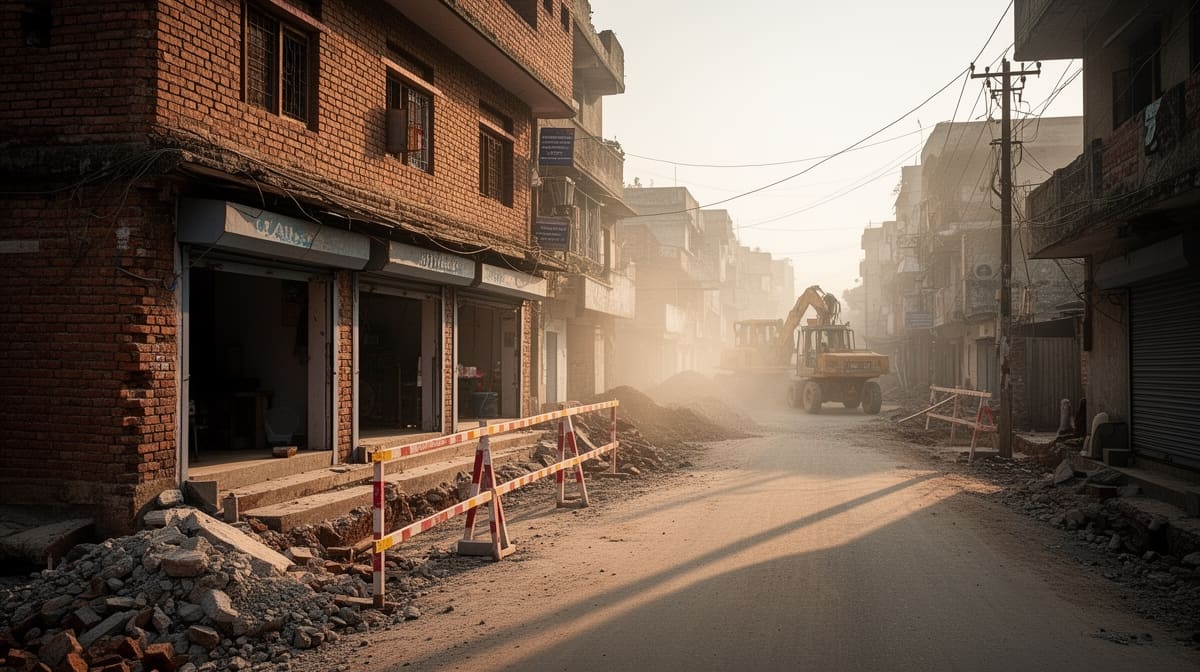
The plaintiffs, owners of shops in a commercial area in Tosham, Haryana, filed a suit seeking permanent and mandatory injunction against the defendants - State of Haryana and public works officials - after the Public Works Department (PWD) commenced construction of a new concrete drain (pucca nala) directly in front of their shops. The plaintiffs alleged that an existing open drain already existed in the same alignment, and the new drain was deliberately repositioned to abut the front walls of their shops, causing nuisance, water stagnation, and risk of infection. The defendants claimed the new drain was necessary for proper drainage and epidemic prevention.
Key Facts
- The existing drain predated the new construction and had a curve just in front of shop no. 7.
- The new drain was constructed at a distance of 7 inches from shops no. 1 to 7, and 9 feet from shops no. 8 to 19.
- The Trial Court found that the defendants failed to produce the sanctioned plan or measurement book to justify the new alignment.
- The plaintiffs submitted Exhibit P-9, a Site Plan showing both the old and new drain alignments.
- The Trial Court ordered removal of the new drain and reconstruction along the old alignment, with costs recoverable from the then Sub-Divisional Engineer and Junior Engineer.
- The Appellate Court reversed the Trial Court’s decree and dismissed the suit.
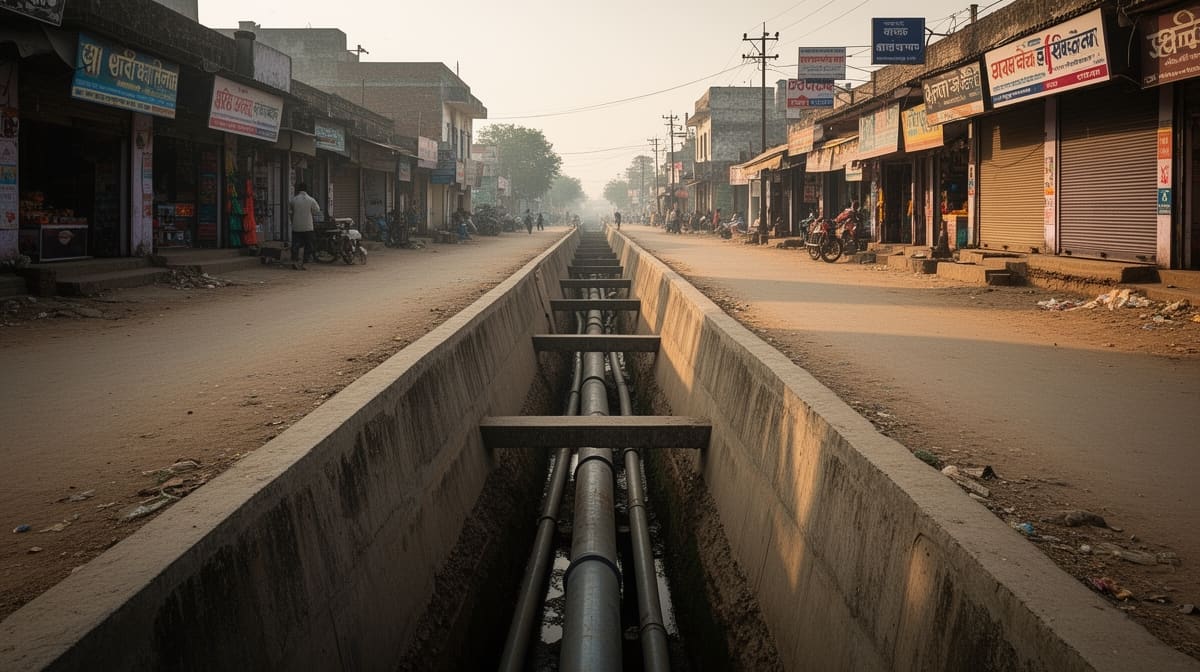
- During the pendency of the second appeal, the State installed underground pipelines within the old nala, rendering it straight and no longer curved.
- On 11.03.2026, in a connected revision, the Court noted that this action appeared to vindicate the plaintiffs’ grievance.
- On 12.03.2026, State Counsel admitted before the High Court that pipes had been laid in the old nala and that the drain now runs straight.
Procedural History
- Date of construction of new drain: Not explicitly stated, but occurred prior to filing of suit.
- Date of filing of suit: Not specified in judgment, but prior to Trial Court order.
- Trial Court order: Issued with findings dated in the judgment (no exact date provided).
- Filing of First Appeal: After Trial Court decree, before the Appellate Court.
- Appellate Court order: Dismissed the suit (date not specified).
- Filing of Second Appeal (RSA No.2610 of 2025): Filed before the High Court.
- 11.03.2026: Connected revision (CR No.5404 of 2025) heard; State admitted installation of pipes in old nala.
- 12.03.2026: Final hearing before High Court; State Counsel confirmed straight alignment of drain via underground pipes.
Relief Sought
The appellants sought restoration of the Trial Court’s decree granting permanent and mandatory injunction, removal of the newly constructed drain, reconstruction along the old alignment, and costs. They also sought to have Exhibit P-9 incorporated into the decree.
The Legal Issue
The central question was whether a public authority’s unilateral alteration of an existing drainage system, which directly abuts private property and creates a nuisance, can be restrained by injunction absent justification through sanctioned plans or evidence of necessity.
Arguments Presented
For the Appellants
Counsel relied on the Trial Court’s findings that the defendants failed to produce any sanctioned plan or measurement records to justify the new drain alignment. He emphasized that the repositioning of the drain to abut the shop walls was arbitrary and caused continuous nuisance. He submitted that Exhibit P-9, the Site Plan, conclusively demonstrated the deviation from the existing infrastructure and that the subsequent installation of pipes in the old nala validated the plaintiffs’ original grievance.
For the Respondents
The State initially defended the new drain as necessary for public health and sanitation. However, during the hearing before the High Court, State Counsel withdrew this defense and admitted that pipes had been installed in the old nala, effectively neutralizing the plaintiffs’ complaint. Counsel for the State raised a new contention that the plaintiffs had encroached upon public land, but conceded that this issue was not part of the current litigation.
The Court's Analysis
The Court declined to adjudicate the issue of encroachment, noting it was not part of the original suit or the grounds of appeal. Instead, it focused on the admitted factual development: the State had, during litigation, altered the drainage system by installing pipes within the original nala, thereby rendering it straight and eliminating the very nuisance the plaintiffs had challenged.
"The aforesaid statement satisfies the counsel for the appellants/plaintiffs."
The Court recognized that the State’s action - installing pipes in the old nala - constituted a de facto compliance with the plaintiffs’ original demand. The Court further observed that the Site Plan (Exhibit P-9), which had been submitted by the plaintiffs and accepted by the Trial Court, accurately depicted the lawful alignment of the drainage system. In the interest of clarity and finality, the Court directed that this exhibit be made part of the decree.
The Court emphasized that judicial remedies must respond to evolving realities. Where a respondent’s own conduct during litigation resolves the core grievance, the Court may dispose of the matter by incorporating the admitted facts into the decree, rather than remanding or reversing.
The Verdict
The appeal was disposed of in favor of the appellants. The High Court ordered that Exhibit P-9, the Site Plan depicting the original drain alignment, be made part of the decree. The State’s admission that the drain now runs straight via underground pipes was accepted as sufficient compliance. All pending applications were dismissed. No monetary relief was awarded, as the injunctive relief had been effectively granted through the State’s own action.
What This Means For Similar Cases
Existing Infrastructure Cannot Be Arbitrarily Displaced
- Public works departments must justify deviations from existing drainage or utility alignments with sanctioned plans and technical documentation.
- Absent such evidence, courts may infer arbitrariness and grant injunctions to preserve lawful existing conditions.
Judicial Disposal Through Admission Is Valid
- When a respondent admits during litigation that its actions have resolved the plaintiff’s grievance, courts may dispose of the matter by incorporating the admission into the decree.
- This avoids unnecessary remands and promotes judicial efficiency without compromising rights.
Site Plans as Conclusive Evidence
-
Site plans submitted by plaintiffs and accepted by lower courts carry evidentiary weight.
-
Courts may formally incorporate such exhibits into decrees to ensure enforceability and clarity.
-
Practitioners should always submit and preserve site plans, photographs, and survey records in nuisance or encroachment suits.
-
Injunction cases involving public infrastructure should track post-filing developments; admissions during appeal can be decisive.
-
Always seek to have documentary evidence formally made part of the decree to prevent future disputes over compliance.