A landmark ruling from the Bombay High Court has reaffirmed that parties to a civil suit possess the sovereign right to determine the terms of their dispute resolution, and once a consent decree is executed and filed, it becomes binding without judicial inquiry into its substantive merits. This decision reinforces the principle of party autonomy in civil litigation and sets a clear boundary on the court’s role in approving settlements.
Background & Facts
The Dispute
East West Freight Carriers Ltd. (EWFCL), the plaintiff, initiated a civil suit against Relliance Constructions Co. and its associated party, alleging breach of contractual obligations related to freight services and non-payment of dues. The dispute arose from a long-term logistics agreement that allegedly broke down due to delayed payments and disputed service invoices.
Procedural History
- 2025: Suit No. 352 of 2025 filed in the Original Civil Jurisdiction of the Bombay High Court
- 2025: Interim Application (L) No. 25521 of 2025 filed seeking injunction and interim relief
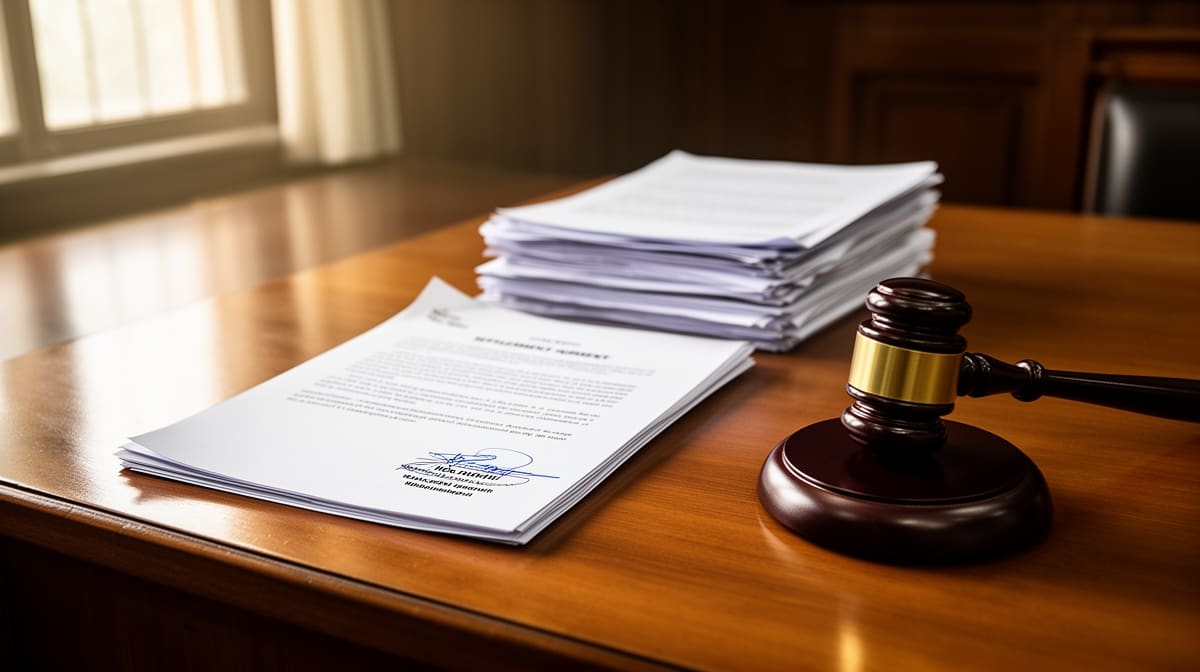
- February 17, 2026: Parties appeared before Justice Milind N. Jadhwat and filed executed Consent Terms spanning 25 pages
- Same day: Consent Terms were formally recorded, signed by all parties and their advocates, and marked 'X' for identification
Relief Sought
The plaintiff sought recovery of outstanding dues, interest, and damages. The defendants contested liability on grounds of alleged service deficiencies. Rather than proceed to trial, the parties opted for a comprehensive settlement, resulting in the Consent Terms.
The Legal Issue
The central question was whether a court must examine the fairness, adequacy, or legal sufficiency of terms in a consent decree before recording it as an order, or whether the court’s role is limited to verifying execution and voluntariness.
Arguments Presented
For the Petitioner
The plaintiff’s counsel submitted that the Consent Terms were the product of prolonged negotiations, conducted in good faith, and reflected a mutual compromise. They emphasized that the terms were detailed, signed by authorized representatives, and voluntarily executed without coercion. Reliance was placed on S. N. Srinivasan v. M. S. Ramaswamy to argue that courts must respect party autonomy in settlement.
For the Respondent
The defendants’ advocates did not contest the validity of the Consent Terms. They affirmed that the terms were negotiated with full legal advice, and that no party was under duress. They urged the court to accept the terms as a final resolution, citing K. S. Puttaswamy v. Union of India to underscore the right to privacy and contractual freedom.
The Court's Analysis
The Court observed that the parties had engaged in extensive negotiations and arrived at a detailed, written settlement. The Consent Terms were signed by the authorized representatives of all parties and their respective advocates, and were presented in open court with full acknowledgment of execution.
"The Court’s function in recording a consent decree is not to act as an arbiter of commercial wisdom or to second-guess the wisdom of the bargain struck by the parties. It is to ensure that the agreement is voluntary, unambiguous, and properly executed."
The Court held that judicial scrutiny of the substantive fairness of settlement terms is neither mandated nor desirable under Order XXIII Rule 3 of the Code of Civil Procedure. The provision permits a court to record a consent decree if it is satisfied that the agreement was made voluntarily and in good faith. The Court found no evidence of fraud, coercion, or misrepresentation.
The Court further clarified that while it retains inherent power to set aside a consent decree on grounds of illegality or public policy, such power must be exercised sparingly and not as a routine review of commercial terms. The 25-page document, though complex, contained no illegal or unconscionable clauses.
The Verdict
The plaintiff prevailed. The Court held that a consent decree based on voluntarily executed, detailed settlement terms is binding and enforceable without judicial evaluation of its substantive fairness. The suit was decreed in terms of the Consent Terms, and all pending applications were disposed of with no order as to costs.
What This Means For Similar Cases
Consent Decrees Are Final Unless Invalidated for Fraud or Illegality
- Practitioners must ensure that settlement terms are documented in writing, signed by authorized persons, and filed with clear evidence of voluntary execution
- Courts will not intervene merely because terms appear commercially disadvantageous to one party
- Challenges to consent decrees post-recording must now meet the high threshold of proving fraud, undue influence, or illegality
Documentation Is Non-Negotiable
- Oral assurances or vague understandings will not suffice; detailed written agreements are mandatory
- All parties must be represented by counsel during execution to rebut claims of coercion
- Scanned copies and digital signatures are acceptable if properly authenticated in court
Judicial Restraint in Settlement Approval
- Lawyers should advise clients that courts will not renegotiate terms, even if they seem one-sided
- This ruling strengthens the credibility of mediation and out-of-court settlements in commercial disputes
- It reduces litigation backlog by encouraging consensual resolution without judicial overreach