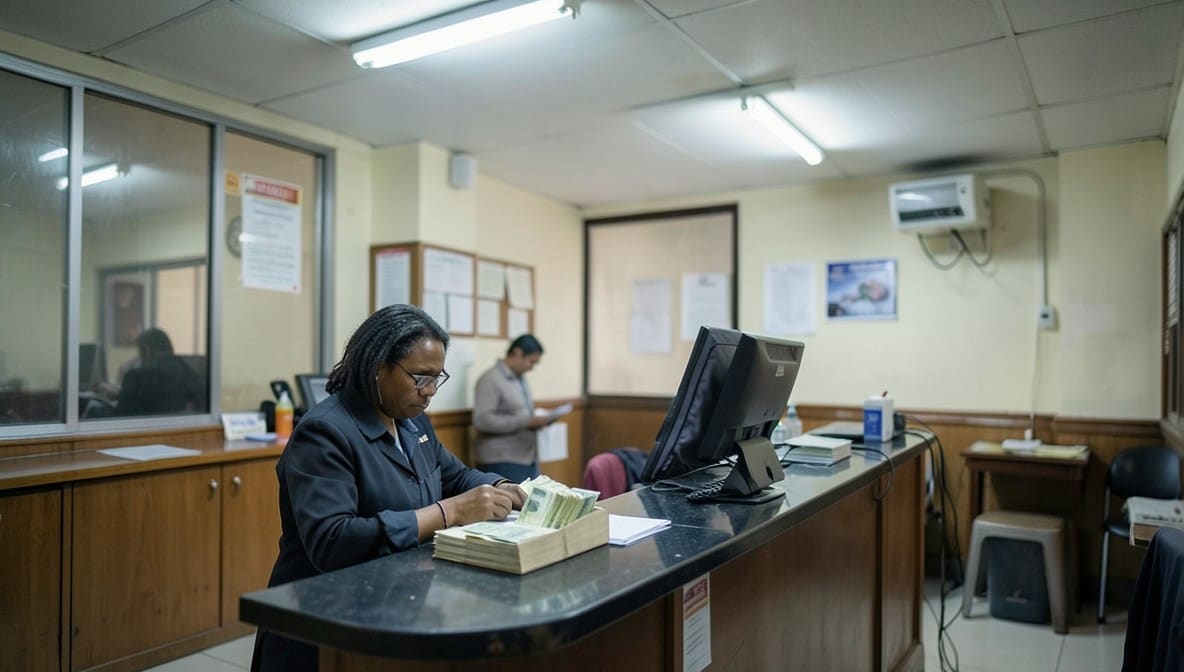
The Madras High Court has reaffirmed that bank officers who repeatedly sanction loans in violation of established norms, even without proof of personal enrichment, commit serious misconduct warranting dismissal. This judgment clarifies that procedural breaches in microfinance operations, particularly when they result in systemic financial risk, are not mere errors of judgment but breaches of institutional discipline.
Background & Facts
The Dispute
The respondent, S. Selva Muthu Pandiyan, served as Branch Manager of the Kallidaikurchi Branch of Pandyan Grama Bank (now Tamil Nadu Grama Bank). He was accused of gross misconduct in the administration of Self Help Group (SHG) loan schemes, which are designed to empower rural women through microfinance. The Bank alleged that he systematically violated lending norms by sanctioning multiple loans to the same family members, concealing overdue accounts, and engaging unauthorized intermediaries, resulting in substantial non-performing assets (NPAs).
Key Facts
- The respondent joined the Bank as a Supervisor in 1987, was promoted to Officer in 1991, and to Senior Manager in 2000.
- He was placed under suspension in 2000, and a charge sheet was issued on 15.12.2007 under Sections 16, 17, 19, 42, and 38 of the Pandyan Grama Bank (Officers and Employees) Service Regulations, 2001.
- Five charges were framed:
- Charge No.1: Sanctioning a Rs.1,50,000 loan to PGB Malarmugam 58 (SHG No.129) despite an outstanding balance of Rs.66,665 from a prior loan, and engaging his cousin Sattanathan as an unauthorized middleman.
- Charge No.2: Sanctioning multiple loans to Self Help Groups linked to Mrs. Seethalakshmi and her daughter Shenbaga Devi, violating the one-member-per-family rule.
- Charge No.3: Demanding illegal gratification under the guise of processing fees and gift purchases.
- Charge No.4: Using Sattanathan and Saravanan as middlemen to facilitate loan disbursement and embezzlement.
- Charge No.5: Sanctioning dairy and JLG loans to individuals and allowing appraiser Manickam to misuse proceeds.
- The Bank produced 69 documents (Exs. ME1 to ME69) and examined 50 witnesses.
- The respondent filed 23 documents (Exs. DE1 to DE23) but did not examine any witnesses to substantiate his denials.
- The Enquiry Officer submitted findings on 30.01.2010, concluding all charges were proved.
- The respondent submitted further representations, which were rejected.
- Disciplinary authority imposed dismissal by order dated 12.09.2011.
- Appeal filed on 27.10.2011 was dismissed by Appellate Authority on 06.03.2012.
- Writ Petition (W.P.(MD) No.8319 of 2012) was filed challenging the dismissal.
- Single Judge delivered order on 20.02.2023, setting aside dismissal and directing 30% backwages and continuity of service.
Procedural History
- 1987: Respondent joined as Supervisor
- 1991: Promoted to Officer
- 2000: Promoted to Senior Manager; placed under suspension
- 15.12.2007: Charge sheet issued
- 05.02.2008: Respondent submitted reply
- 30.01.2010: Enquiry Officer’s report submitted
- 12.09.2011: Disciplinary Authority imposed dismissal
- 27.10.2011: Appeal filed before Appellate Authority
- 06.03.2012: Appellate Authority dismissed appeal
- 20.02.2023: Single Judge allowed writ petition, set aside dismissal
- 02.03.2026: Writ Appeal reserved
- 17.04.2026: Judgment pronounced
The Parties' Positions
For the Appellants (Bank)
- The respondent violated multiple norms under the SHG Handbook, including: one-member-per-family rule, mandatory verification of repayment history, and prohibition of intermediaries.
- He falsely certified that SHG accounts were in order when they were overdue.
- He sanctioned loans to multiple accounts linked to the same family, creating artificial group structures.
- He failed to initiate recovery proceedings despite 51 SHG accounts becoming NPAs by September 2007.
- The charges were proved by documentary evidence and examination of official witnesses.
- The non-examination of SHG members does not invalidate the findings where documentary evidence is conclusive.
- Relied on Disciplinary Authority-cum-Regional Manager v. Nikunja Bihari Patnaik to argue that acting beyond authority is misconduct per se.
For the Respondent (Employee)
- Denied all allegations of personal gain or misappropriation.
- Claimed SHG members denied any involvement of Sattanathan or Saravanan.
- Submitted unexamined written depositions from SHG members denying misconduct.
- Argued that a substantial portion of loans was recovered.
- Contended that the enquiry violated natural justice by not examining all witnesses.
- Asserted that the punishment of dismissal was disproportionate.
Relief Sought
The Bank sought: (1) Setting aside the Single Judge’s order dated 20.02.2023; (2) Upholding the dismissal order dated 12.09.2011; (3) Recovery of any backwages paid pursuant to the impugned order. The respondent sought reinstatement with full benefits, or alternatively, continuation of service and full backwages.
The Legal Issue
The central question was whether sanctioning loans in violation of prescribed SHG norms, even without proof of personal gain, constitutes misconduct under Service Regulations, and whether the non-examination of certain witnesses invalidates disciplinary findings when documentary evidence is conclusive.
Arguments Presented
For the Appellant
The Bank argued that the respondent’s conduct constituted a breach of Regulation 17 (compliance with lawful orders) and Regulation 19 (duty to act in the Bank’s interest). It relied on Nikunja Bihari Patnaik to establish that acting beyond delegated authority is misconduct per se, irrespective of intent or profit. The Bank emphasized that the 69 documents and 50 witnesses established a pattern of systemic negligence and procedural violations. It contended that the Single Judge erred in re-appreciating evidence and placing undue reliance on unexamined, contradictory depositions.
For the Respondent
The respondent argued that the charges were not proved due to lack of direct evidence of misappropriation. He claimed the SHG members had retracted their statements and that the Bank failed to prove his personal benefit. He contended that the enquiry was defective for not examining all 50 witnesses and that the punishment of dismissal was excessive given that some loans were eventually recovered.
The Court's Analysis
The Court conducted a meticulous review of the documentary evidence and the procedural record. It found that the respondent’s actions were not isolated errors but a sustained pattern of violation of SHG norms. The Court noted that the SHG Handbook explicitly required: (a) one member per family; (b) verification of repayment history; (c) no intermediaries; and (d) group meetings for disbursement.
"The delinquent officer, despite having full knowledge of the applicable rules and regulations, sanctioned loan amounts to the same individual and his family members, which is in clear violation of the prescribed norms. He further proceeded to sanction additional loans without taking any steps to recover the earlier sanctioned loans."
The Court rejected the respondent’s reliance on unexamined written statements from SHG members, holding that such statements, without corroboration through witness examination, have no evidentiary value. It emphasized that the burden of proof lies on the employee to establish the authenticity of exculpatory documents.
The Court distinguished Nikunja Bihari Patnaik as directly applicable: the respondent’s conduct mirrored the reckless authorization of loans beyond authority, which the Supreme Court held constitutes misconduct even without proof of ulterior motive. The Court held:
"The very act of acting beyond authority... is by itself a breach of discipline... No further proof of loss is really necessary..."
The Court also rejected the argument that recovery of some loans negated misconduct, noting that Rs.17,11,578 remained outstanding, with only Rs.8,86,445 adjusted under guidelines. The failure to monitor group activities, verify records, or initiate recovery proceedings demonstrated gross negligence.
The Court clarified that the non-examination of all witnesses does not vitiate an enquiry if the evidence presented is sufficient to prove the charges. The 69 documents and testimony of official witnesses were deemed conclusive.
The Verdict
The writ appeal was allowed. The order dated 20.02.2023 passed by the Single Judge was set aside. The dismissal order dated 12.09.2011 was upheld. Any backwages paid to the respondent pursuant to the impugned order are liable to be recovered. No costs were awarded. The respondent’s claim for continuity of service and pension benefits was rejected.
What This Means For Similar Cases
Acting Beyond Authority Is Misconduct Per Se
- Practitioners must advise public sector banks that sanctioning loans in violation of internal norms, even without personal gain, constitutes misconduct under service regulations.
- The Nikunja Bihari Patnaik precedent now firmly establishes that systemic procedural violations are sufficient grounds for dismissal.
- Internal audit reports and loan ledgers are decisive evidence in disciplinary proceedings.
Documentary Evidence Trumps Unexamined Depositions
- Written statements from third parties, especially those contradicting prior testimony, are inadmissible unless the authors are examined.
- Employees cannot rely on unverified affidavits to rebut documented evidence of default.
- Banks must ensure all exculpatory documents are supported by witness testimony during enquiry.
Recovery of Funds Does Not Exonerate Procedural Violations
- Even if a portion of a loan is recovered, the act of sanctioning loans in violation of norms remains actionable misconduct.
- The focus must be on adherence to procedure, not merely financial outcome.
- NPAs arising from negligence are grounds for disciplinary action, regardless of eventual recovery.