The Central Excise and Service Tax Appellate Tribunal (CESTAT) Chandigarh has delivered a pivotal ruling clarifying that the classification of multimodal logistics services as a bundled service under the Finance Act, 1994 cannot be sustained where services are separately invoiced and voluntarily chosen by customers. This decision reinforces the principle that statutory classification must reflect the actual commercial reality, not artificial aggregation by revenue authorities.
Background & Facts
The Dispute
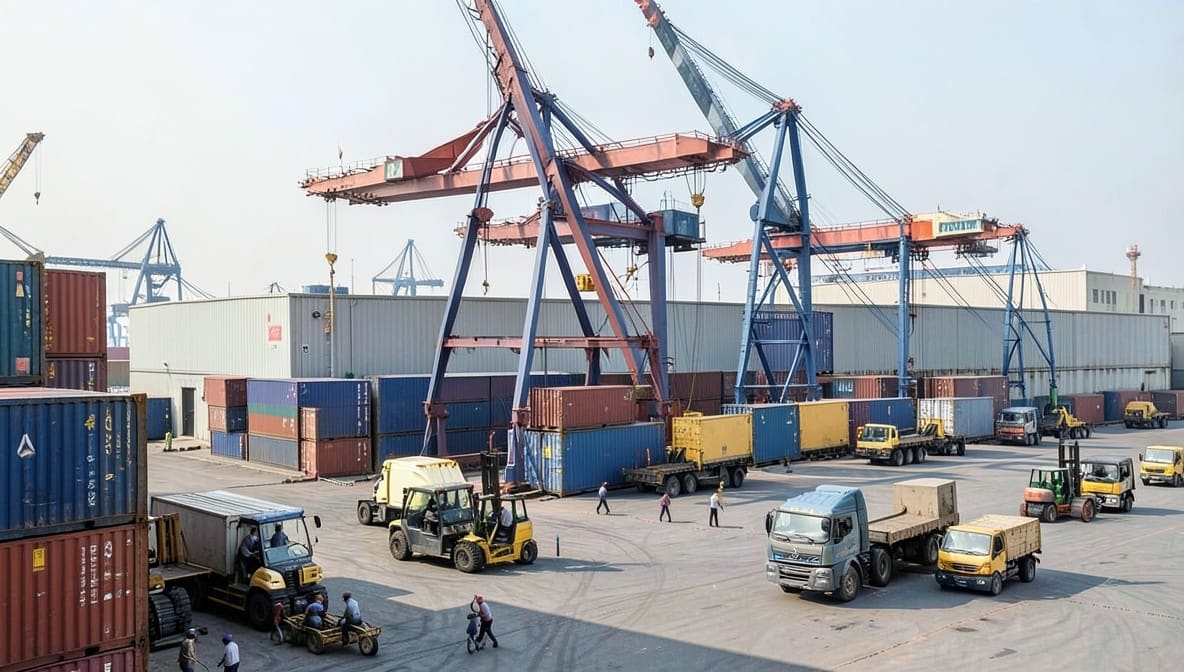
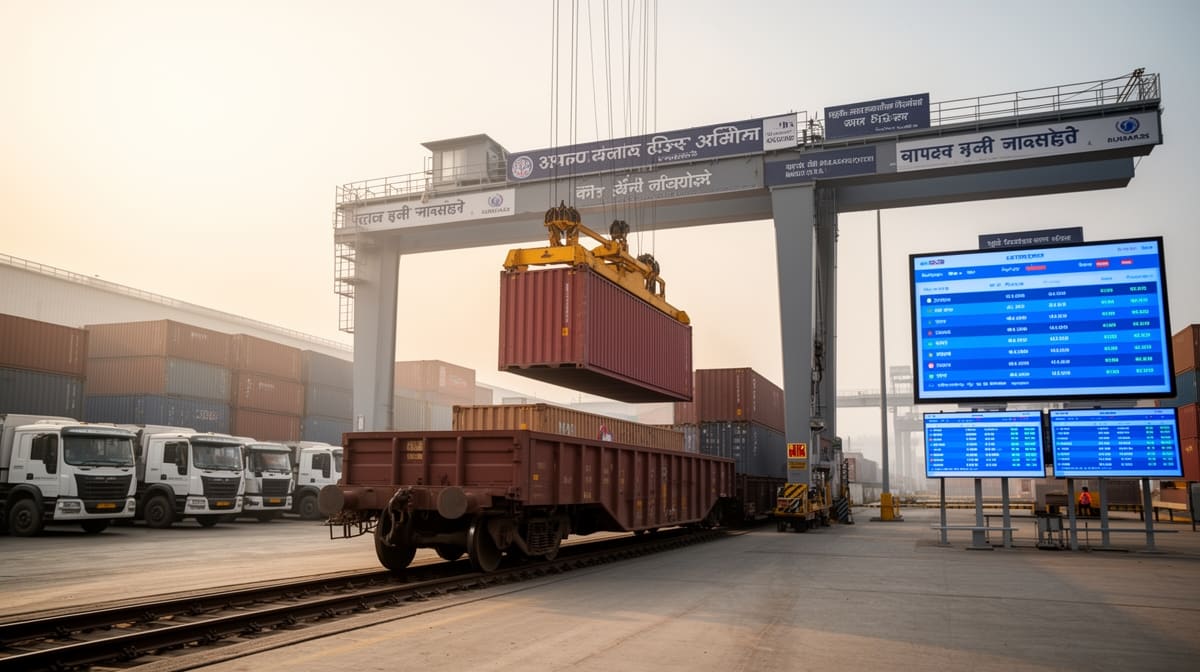
M/s Adani Logistics Ltd., a multimodal logistics provider, offered end-to-end cargo movement services including road transport, rail freight, terminal handling, loading/unloading, and warehousing. The Department alleged that these services, though separately billed, constituted a naturally bundled service under the category of 'Cargo Handling Service' (CHS), and that Adani had artificially bifurcated charges to avail abatements on transportation services and evade full tax liability on CHS.
Procedural History
- 2014 - 2015: Three show cause notices issued covering April 2009 to March 2015, proposing service tax demand of Rs. 40.67 crore plus interest and penalties.
- December 2015: Commissioner of Service Tax, Delhi-IV, dismissed all demands, holding that services were separately identifiable and not bundled.
- 2016: Department filed appeal before CESTAT Chandigarh, challenging the order.
Relief Sought
The Department sought to reclassify the services as a composite 'Cargo Handling Service' under Section 65A (pre-2012) and as a 'bundled service' under Section 66F (post-2012), thereby imposing full service tax on the entire contract value and levying penalties on the company and its finance manager.
The Legal Issue
The central question was whether services of road/rail transportation and terminal handling, when separately quoted in contracts and separately invoiced, constitute a naturally bundled service under Section 65A and Section 66F of the Finance Act, 1994, or whether they remain distinct taxable services.
Arguments Presented
For the Appellant
The Department contended that:
- Adani’s contracts with customers like Maruti Suzuki and Khanna Paper Mills reflected a single composite rate for end-to-end logistics, indicating a bundled service.
- Artificial bifurcation of charges in invoices was designed to exploit abatements under GTA and rail transport categories.
- CBEC Circular No. 186/5/2015 supported treating such services as CHS when multimodal.
- Precedents like Gajananad Agarwal and Gayatri Carriers held that incidental activities to cargo handling are taxable under CHS.
- The essential character of the service was cargo handling, with transportation being ancillary.
For the Respondent
Adani Logistics argued that:
- Each service - road transport, rail freight, terminal handling - was independently identifiable, separately priced, and voluntarily selected by customers.
- Contracts explicitly listed individual rates; invoices mirrored these terms.
- CBEC Circular No. B.11/1/2002-TRU (though withdrawn) affirmed that separate billing excludes transportation from CHS valuation.
- Precedents like R.K. Transport Company, Balmer Lawrie, and United Shippers Ltd. consistently held that transportation is the dominant service.
- Revenue failed to prove suppression or intent to evade tax, making extended period inapplicable.
- Classification must follow the most specific description under Section 65A(2)(a) and Section 66F(2), not bundled service rules.
The Court's Analysis
The Tribunal conducted a meticulous review of over 150 contracts and invoices, rejecting the Department’s reliance on a mere eight sample agreements. It emphasized that the essential character of a service must be determined by the actual terms of the contract and the nature of the transaction, not by revenue’s speculative reconstruction.
"It can be seen from the totality of the contracts and invoices that the respondents and their customers entered into contracts to provide one or more services as per their requirements. There is no condition in any of the contracts that the customers are required to avail all the services."
The Court held that Section 65A(2)(a) (pre-2012) and Section 66F(2) (post-2012) mandate classification under the most specific description. Since transportation by rail and road were clearly defined, separately priced, and constituted the bulk of revenue (e.g., 96% in the Balakrishna Tyres contract), they could not be subsumed under the broader category of CHS.
The Tribunal further noted that Section 66F(3) on bundled services applies only when services are inseparable and offered as a single unit. Here, customers could opt for any combination - e.g., rail only, or terminal handling only - demonstrating independence.
"The main character of the service is transportation of goods by road and/or by Rail... Terminal Handling charges... consist only 3.88% of the total charges."
The Court also rejected the Department’s reliance on withdrawn circulars and distinguished precedents like Gajananad Agarwal, which dealt with mechanical loading - clearly incidental to CHS - not multimodal transport.
Crucially, the Tribunal affirmed that the Department bore the burden of proving the service was bundled or that the essential character was CHS. It failed to discharge this burden with cogent evidence. The acceptance of tax paid under GTA and rail categories by jurisdictional officers further barred re-assessment under the doctrine of finality and double taxation.
The Verdict
The appeal was dismissed. The Court held that separately identifiable and separately invoiced services cannot be classified as a bundled service under the Finance Act, 1994, even when provided under a single contract. The essential character of the service in this case was transportation, not cargo handling, and the Department’s attempt to reclassify was legally unsustainable.
What This Means For Similar Cases
Separate Invoicing Defeats Bundled Service Classification
- Practitioners must document and invoice each logistics component (road, rail, handling, warehousing) with distinct rates.
- Revenue cannot reclassify services as bundled merely because they are offered by one provider; the customer’s choice and contractual clarity are decisive.
- Invoices must reflect actual service selection, not aggregated pricing designed to appear as a single package.
Burden of Proof Rests on Revenue
- Tax authorities must produce concrete evidence of artificial bifurcation or intent to evade - not assumptions based on contract structure.
- Mere presence of a single contract does not imply bundling; the substance of service delivery and billing controls classification.
- Precedents like R.K. Transport Company and United Shippers Ltd. now form binding guidance for multimodal logistics cases.
Extended Period Cannot Be Invoked for Interpretational Disputes
- Where the dispute is over statutory interpretation - not suppression or fraud - the extended period under Section 73(1) is inapplicable.
- Regular filing of ST-3 returns and acceptance of tax paid under other heads (e.g., GTA) preclude reopening assessments.
- Practitioners should preserve audit records and departmental acknowledgments to defend against retrospective demands.