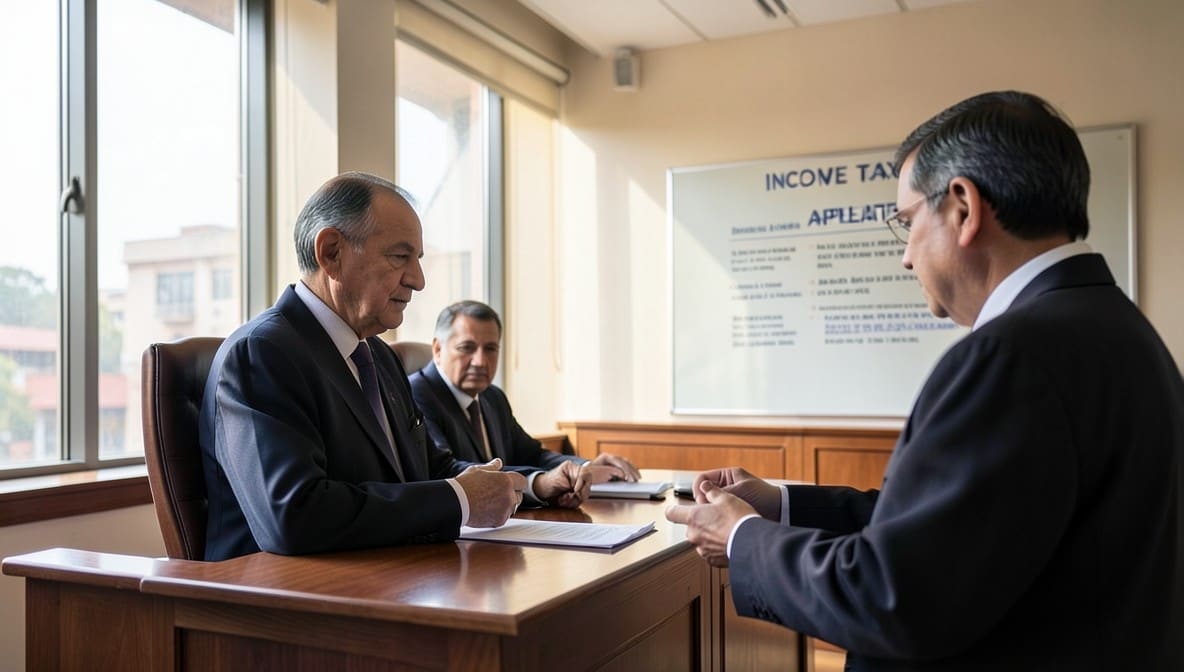
The Income Tax Appellate Tribunal, Delhi, has clarified that receipts such as royalty and sponsorship fees received by a sports federation do not automatically constitute business income merely because they exceed 20% of total receipts, provided they are incidental to the fulfillment of charitable objectives. This ruling reinforces the principle that the nature and purpose of receipts, not their volume, determine taxability under the proviso to Section 2(15) of the Income Tax Act.
Background & Facts
The Dispute
The Wrestling Federation of India (WFI), a society registered under the Societies Registration Act, 1860, and granted exemption under Sections 12A and 80G(5)(vi) of the Income Tax Act, 1961, was assessed for A.Y. 2017-18. The Assessing Officer (AO) disallowed its claim for exemption under Sections 11 and 12, treating royalty income of Rs. 4,03,50,000 and sponsorship fees of Rs. 92,61,459 as business receipts, thereby adding Rs. 4,73,72,198 to its taxable income. The AO relied on the proviso to Section 2(15), inserted by the Finance Act, 2015, which denies charitable status if an entity undertakes commercial activities with aggregate receipts exceeding 20% of total receipts.
Key Facts
- WFI was registered under Section 12A on 27.04.2004 and under Section 80G on 17.09.2008.
- Its primary objective is the promotion of wrestling at national and international levels, including organizing competitions, training programs, and supporting athletes.
- For A.Y. 2017-18, WFI received:
- Royalty income: Rs. 4,03,50,000 (from granting affiliation and recognition rights to state associations)
- Sponsorship fees: Rs. 92,61,459 (from corporate entities supporting events)
- Total receipts: Rs. 20,18,61,459
- Royalty and sponsorship receipts together constituted 24.5% of total receipts.
- WFI submitted that these receipts were not earned for profit but to fund wrestling development, including travel, equipment, and event organization.
- No profit distribution to members or stakeholders was alleged.
- WFI had previously received favorable orders from the CIT(A) and ITAT for A.Y. 2010-11 and 2012-13 on identical facts.
Procedural History
- 05.11.2017: Original return filed declaring Nil income and claiming TDS of Rs. 1,85,229.
- 22.09.2018: Revised return filed declaring Nil income and claiming TDS of Rs. 41,95,229.
- 16.08.2018: Notice under Section 143(2) issued for complete scrutiny.
- 20.11.2019: Notice under Section 142(1) issued seeking explanation on royalty and sponsorship receipts.
- 26.11.2019: WFI submitted reply asserting charitable purpose under Section 2(15) and reliance on precedent.
- 28.12.2019: AO passed assessment order disallowing exemption and adding Rs. 4,73,72,198 as taxable income.
- 08.07.2025: CIT(A) allowed appeal, holding that receipts were incidental to charitable purpose and proviso to Section 2(15) did not apply.
- 30.03.2026: ITAT Delhi heard appeal and cross objection.
The Parties' Positions
For the Assessee (Wrestling Federation of India)
- Argued that its activities are purely charitable under the fifth limb of Section 2(15) - advancement of any other object of general public utility.
- Contended that royalty and sponsorship receipts are not business income because:
- There is no motive to earn profit.
- Funds are entirely utilized for promoting wrestling, including training, travel, and event logistics.
- No commercial transaction exists; affiliation fees are regulatory, not commercial.
- Relied on ITAT’s own prior order in A.Y. 2012-13 (ITA No. 4755/Del/2016) and judicial precedents: CIT v. Angels Educational Trust, Creative Museum Designers, and Dayanand Pushpadevi Charitable Trust.
- Highlighted that AO’s order contradicted prior consistent rulings in its own cases for A.Y. 2018-19 and 2023-24, where exemption was granted.
For the Revenue (Income Tax Officer)
- Argued that the proviso to Section 2(15) is clear: any activity generating receipts exceeding 20% of total receipts, even if incidental, disqualifies charitable status.
- Asserted that royalty and sponsorship are payments for services rendered (affiliation, event recognition), constituting business activity.
- Cited that TDS was deducted on these receipts, indicating their commercial character.
- Claimed that prior favorable orders were not binding and that the AO was entitled to reassess based on current facts.
Relief Sought
- Assessee sought confirmation of CIT(A)’s order allowing exemption under Sections 11 and 12.
- Revenue sought to restore the AO’s addition of Rs. 4,73,72,198 as taxable income.
- Cross objection by assessee sought no further relief beyond affirmation of CIT(A)’s order.
The Legal Issue
The central question was whether receipts from royalty and sponsorship fees received by a sports federation, exceeding 20% of total receipts, automatically constitute business income under the proviso to Section 2(15) of the Income Tax Act, 1961, or whether such receipts may still qualify as incidental to charitable purpose if there is no profit motive and funds are wholly applied to public utility objectives.
Arguments Presented
For the Appellant/Petitioner
The Assessee relied on the principle that the proviso to Section 2(15) does not convert every receipt above 20% into business income. It emphasized that the nature of the activity, not the quantum of receipts, determines taxability. The Assessee cited CIT v. Angels Educational Trust (2022) 440 ITR 449 (Mad) and Dayanand Pushpadevi Charitable Trust (2021) 436 ITR 406 (Del) to show that institutions serving public utility are not rendered commercial merely because they receive fees for services rendered in furtherance of their charitable mission. It also highlighted the consistency of prior ITAT rulings in its own favor for A.Y. 2010-11 and 2012-13, arguing that the Revenue could not arbitrarily reverse settled positions without new factual or legal grounds.
For the Respondent/State
The Revenue contended that the proviso to Section 2(15) is a bright-line test: if receipts from activities related to public utility exceed 20%, exemption is denied regardless of intent or application of funds. It argued that royalty and sponsorship are payments for services - granting affiliation rights and event recognition - which are commercial in nature. The Revenue also pointed to TDS deduction as evidence of commercial character and asserted that prior favorable orders were not binding precedents under the doctrine of stare decisis in tax matters.
The Court's Analysis
The Tribunal emphasized that the proviso to Section 2(15) must be interpreted in context. It observed that the legislative intent behind the proviso was to prevent entities from masquerading as charitable while engaging in substantial commercial operations. However, it held that the mere fact that receipts exceed 20% does not, by itself, transform incidental income into business income.
"It is evident that the assessee is not involved in any business activity as there is no apparent motive to earn profit. The royalty and sponsorship fees which are received are incidental for the fulfillment of the objectives of the assessee. The receipts are not being used as business receipts in order to be utilised as profit to any person but instead is used to promote the sport of wrestling."
The Tribunal reaffirmed its earlier decision in Wrestling Federation of India v. CIT (A.Y. 2012-13), noting that the facts were identical: no profit motive, no distribution of surplus, and all receipts applied to promoting wrestling. It rejected the Revenue’s argument that prior orders were non-binding, stating that a coordinate bench’s decision on identical facts must be followed unless overruled by a larger bench or higher court.
The Tribunal also noted that the AO had granted exemption in A.Y. 2018-19 and 2023-24 on the same facts, undermining the Revenue’s claim of inconsistency. It held that the proviso applies only when the activity itself is commercial - not when the receipt is incidental to a non-commercial charitable purpose. The Tribunal distinguished CIT v. Angels Educational Trust, where fees were charged for educational services, from the present case, where affiliation fees were regulatory and not market-driven.
The Verdict
The appeal filed by the Revenue is dismissed. The cross objection filed by the Assessee is dismissed as infructuous. The order of the CIT(A) dated 08.07.2025 is upheld. The addition of Rs. 4,73,72,198 made by the AO is deleted. The Assessee is entitled to exemption under Sections 11 and 12 of the Income Tax Act for A.Y. 2017-18. The order is final and binding.
What This Means For Similar Cases
Charitable Purpose Trumps Receipt Threshold
- Practitioners representing sports federations, cultural trusts, or educational institutions must argue that the nature of receipts - not their amount - determines taxability.
- If funds are used exclusively for charitable objectives and no profit motive exists, exceeding the 20% threshold does not automatically disqualify exemption.
Precedent Binding on Coordinate Benches
- A coordinate bench’s decision on identical facts is binding unless overruled by a larger bench.
- Tax authorities cannot selectively ignore prior favorable orders without demonstrating a material change in facts or law.
TDS Deduction Does Not Confer Commercial Character
- The fact that TDS has been deducted on receipts does not, by itself, establish commercial activity.
- The underlying purpose and application of funds remain the decisive factors under Section 2(15).
Documentation Is Critical
- Charitable entities must maintain clear records showing:
- How receipts are utilized (e.g., training, travel, equipment)
- Absence of profit distribution
- Regulatory nature of fees (e.g., affiliation, recognition)
- This documentation will be essential to rebut presumptions of commercial activity.
Avoiding Contradictory Assessments
- Taxpayers should proactively bring to the AO’s attention prior favorable orders in their own cases.
- Consistency in assessment across years strengthens the argument against arbitrary reassessment.