The Punjab & Haryana High Court has reaffirmed that procedural compliance under Section 82 CrPC is not optional but mandatory, and any deviation renders the proclamation of an accused as a proclaimed person a legal nullity. This judgment clarifies the non-negotiable requirements for initiating proclamation proceedings, with direct implications for trial courts and prosecuting agencies.
Background & Facts
The Dispute
The petitioners, Altus Space Builders Pvt Ltd and others, were declared proclaimed persons by the Judicial Magistrate First Class, SAS Nagar, Mohali, in complaint case No. NACT-463 of 2023, filed under Section 138 of the Negotiable Instruments Act. The declaration was made on 14.11.2024, following alleged non-appearance of the petitioners despite issuance of summons. The petitioners sought quashing of this order on grounds of procedural non-compliance with Section 82 CrPC.
Key Facts
- The complaint under Section 138 NI Act was filed on 17.05.2023.
- The petitioners were served with summons, but failed to appear before the trial court on multiple occasions.
- On 14.11.2024, the trial court issued a proclamation order declaring the petitioners as proclaimed persons under Section 82 CrPC.
- The notice under Section 82(2) CrPC was published only in the newspaper "Azad Soch", which the petitioners contended had negligible circulation.
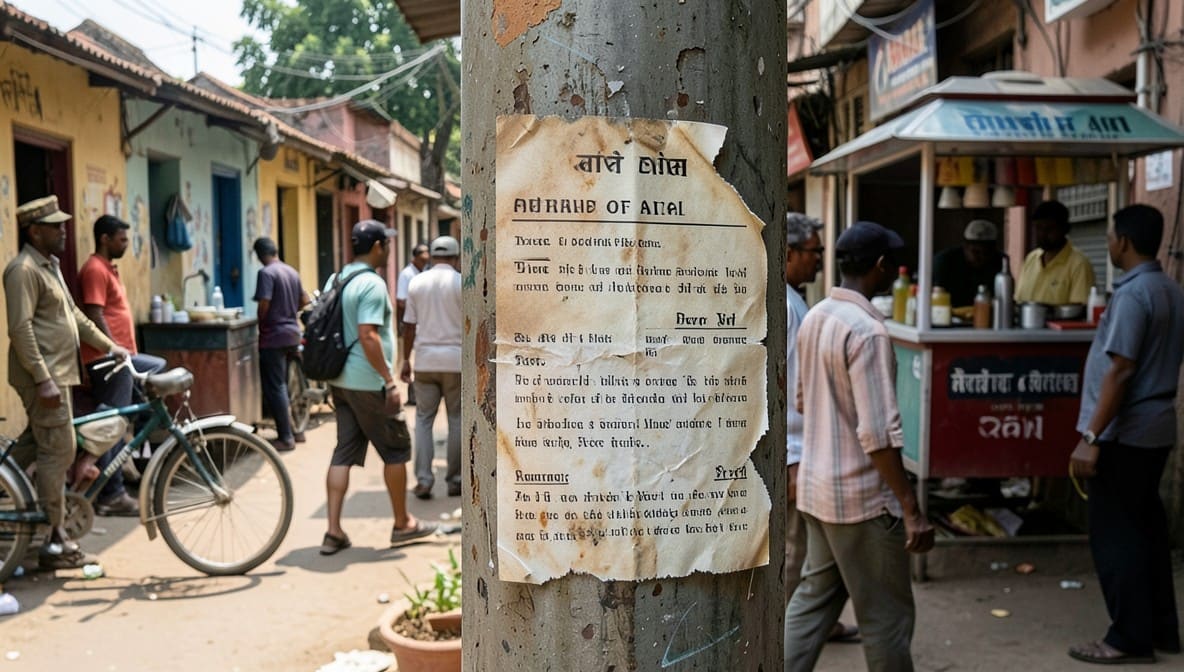
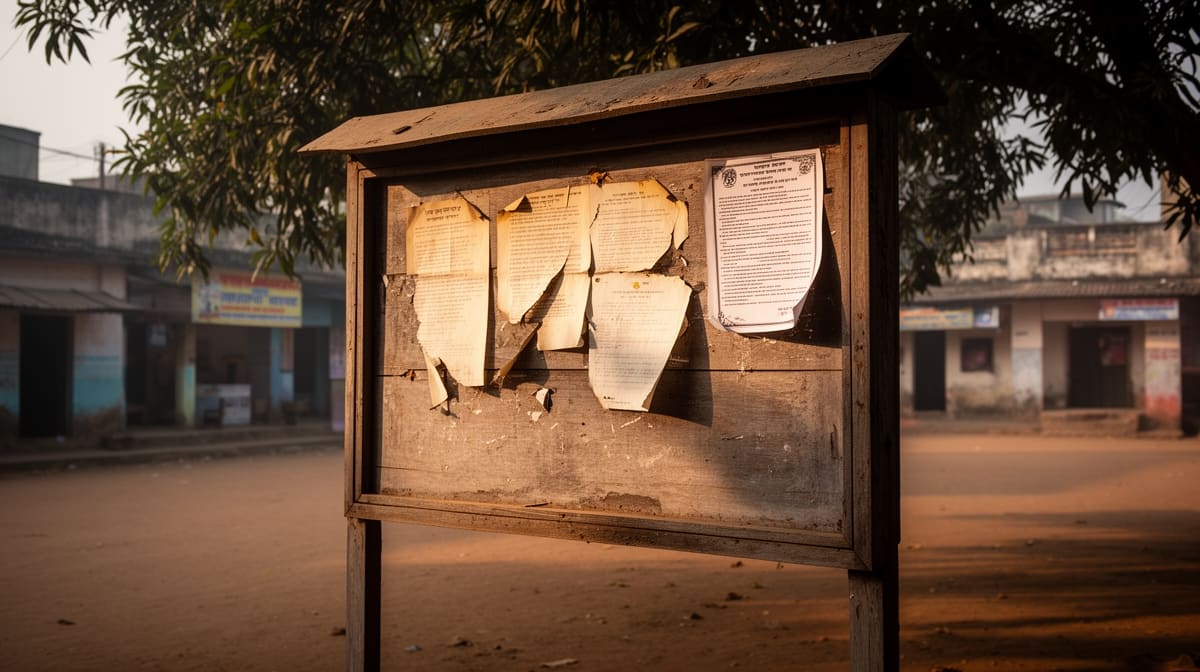
- The notice was neither pasted on the conspicuous part of the petitioners’ business premises nor displayed at the court.
- The notice was not read aloud in any public place where the petitioners ordinarily resided.
- The petitioners were, however, appearing in six other cases before the same court during the relevant period.
- On 06.02.2026, the petitioners paid the entire outstanding dues to Greater Mohali Area Development Authority (GMADA), with final certificate annexed as Annexure P-20.
Procedural History
- 17.05.2023: Complaint filed under Section 138 NI Act before Judicial Magistrate First Class, SAS Nagar.
- 14.11.2024: Trial court issued proclamation order under Section 82 CrPC against petitioners.
- 16.03.2026: Writ petition filed before the High Court of Punjab & Haryana, Chandigarh, seeking quashing of the proclamation order.
The Parties' Positions
For the Petitioners
The petitioners argued that the trial court failed to comply with the mandatory requirements of Section 82(2) CrPC. They submitted that:
- The notice was not pasted on their business premises.
- The notice was not displayed at the court.
- The notice was not read publicly in any conspicuous place of the town or village where they ordinarily resided.
- The newspaper "Azad Soch" has minimal circulation and is not a recognized medium for public notice.
- Their non-appearance was not wilful or evasive, as they were actively litigating in six other matters before the same court.
- They were ready to surrender and join the proceedings.
For the Respondent
The respondent, Greater Mohali Area Development Authority, through its counsel, accepted notice and did not oppose the petition, acknowledging that the petitioners had fully discharged their financial liability to GMADA.
Relief Sought
The petitioners sought:
- Quashing of the proclamation order dated 14.11.2024.
- An opportunity to surrender before the trial court.
- Withdrawal of their status as proclaimed persons.
The Legal Issue
The central question was whether Section 82(2) CrPC permits procedural compliance through newspaper publication alone, or whether the mandatory requirements of public display and reading must be cumulatively fulfilled to validate a proclamation order.
Arguments Presented
For the Petitioner
The petitioners relied on Gurbir Singh Mundi and Sonu v. State of Haryana to argue that compliance with Section 82(2) CrPC is not alternative but cumulative. They emphasized that publication in a low-circulation newspaper without physical posting or public reading renders the proclamation void ab initio. They further submitted that their consistent appearance in six other cases before the same court negated any inference of wilful evasion.
For the Respondent
The respondent did not oppose the petition, conceding that the petitioners had settled the underlying debt and were willing to cooperate with the trial court. No substantive counter-arguments were advanced.
The Court's Analysis
The Court examined the statutory mandate under Section 82(2) CrPC, which requires that notice to a proclaimed person be:
"(a) posted in some conspicuous place in the court-house, and also in some conspicuous place of the town or village in which the accused ordinarily resides; and (b) published in such newspaper as the Court may direct; and (c) read in public in some conspicuous place of the town or village in which the accused ordinarily resides."
The Court held that the Supreme Court in Gurbir Singh Mundi had unequivocally ruled that these three steps are mandatory and must be performed cumulatively, not alternatively. The Court further cited Sonu v. State of Haryana, which held that non-compliance with Section 82 CrPC is not a mere irregularity but renders the entire proceeding a nullity.
The Court rejected the argument that payment of dues or willingness to appear could cure a procedural defect. It emphasized that the purpose of proclamation is not merely to compel appearance but to uphold the rule of law through strict adherence to due process. The fact that the petitioners were appearing in other cases before the same court further undermined any claim of concealment or evasion.
The Court observed:
"The very purpose of initiation of proclamation proceedings, is to compel and secure the presence of the accused to face trial and establish the rule of law, as also to ensure finalization of the proceedings."
It concluded that the failure to comply with any of the three steps under Section 82(2) CrPC invalidates the proclamation, regardless of the accused’s subsequent conduct.
The Verdict
The petition succeeded. The High Court set aside the proclamation order dated 14.11.2024. The petitioners are directed to surrender before the trial court on or before 15.04.2026. They must deposit Rs. 25,000 as costs with the Sai Aasra Paraplegic Rehab Centre (Account No: 9612001641, IFSC: KKBK0004201). Upon furnishing bail/surety bonds, they must submit an affidavit undertaking to appear on all hearing dates unless exempted by the court, and not leave the country without prior permission. The trial court may impose additional conditions as deemed fit. Failure to comply will result in automatic dismissal of the petition without further reference to this Court.
What This Means For Similar Cases
Proclamation Is Not a Shortcut
- Practitioners must now treat Section 82 CrPC as a non-negotiable procedural code, not a tool for expediting trials.
- Any proclamation based solely on newspaper publication, without physical posting and public reading, is void and subject to immediate quashing.
- Courts must record explicit satisfaction on record that all three steps under Section 82(2) have been fulfilled.
Willingness to Appear Does Not Cure Procedural Defects
- Even if an accused is willing to surrender or has settled the underlying dispute, this cannot validate a procedurally defective proclamation.
- The remedy lies in challenging the proclamation itself, not in seeking leniency after the fact.
- Prosecutors must ensure strict compliance before initiating proclamation proceedings.
Judicial Scrutiny of Newspaper Publication
- Courts must evaluate the circulation and credibility of the newspaper used for publication.
- Local, low-circulation newspapers cannot substitute for statutory public notice requirements.
- Publication in a recognized national or regional newspaper with verifiable circulation may be considered, but only as a supplement - not a substitute - for physical posting and public reading.