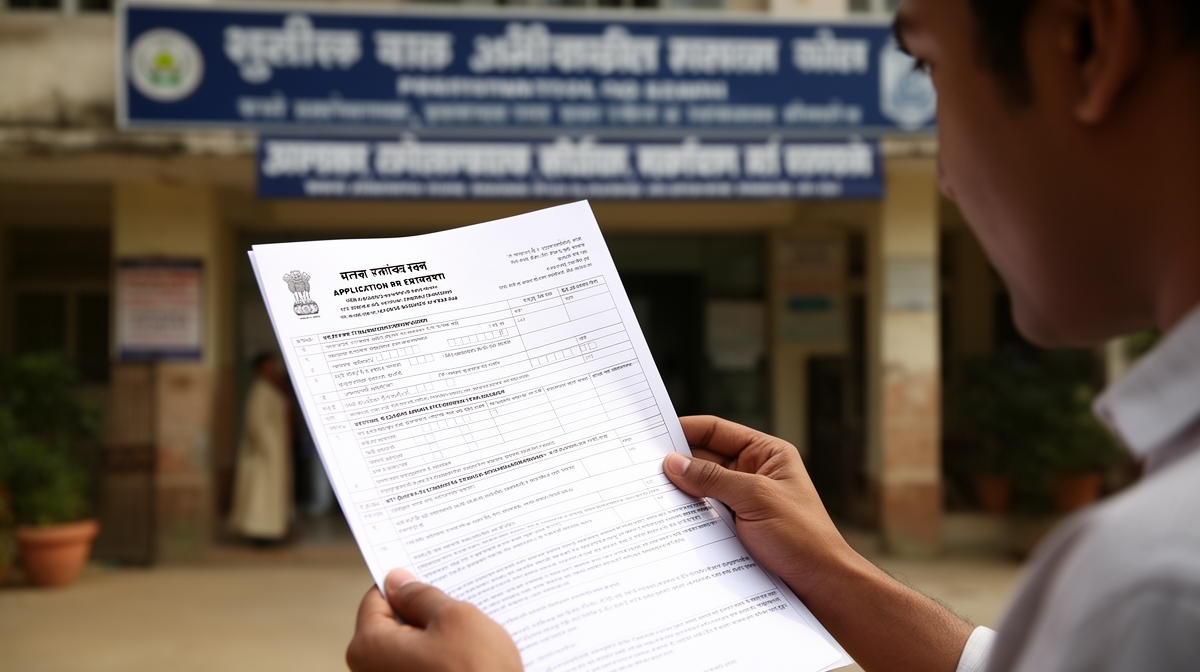

The Income Tax Appellate Tribunal, Delhi, has clarified that compliance with Section 68 of the Income Tax Act does not require the physical production of donors during assessment proceedings. Merely furnishing verified donor details, including names, addresses, PAN copies, and income tax returns, along with confirmations, is sufficient to rebut the presumption of unexplained cash credit. The Tribunal also held that a mismatch between the name on a TDS certificate and the vendor’s trade name does not invalidate an expenditure if payment and service are substantiated by bank records and Form 16A.
The Verdict
The Revenue’s appeal was dismissed. The Tribunal upheld the CIT(A)’s order deleting additions of Rs. 1.99 crore under Section 68 for unexplained cash credits and Rs. 24.46 lakh as fabrication charges. The core legal holding is that Section 68 does not mandate the physical appearance of donors; documentary evidence of identity, genuineness, and creditworthiness suffices. Similarly, TDS compliance via Form 16A and bank statements validates expenditures even when the payee’s legal name differs from its trade name.
Background & Facts
The assessee, Guru Gobind Singh Educational Circle - 1(1)(E) Charitable Trust, is a registered entity under Sections 12A and 80G(5)(vi) of the Income Tax Act. It operates the SGT Institute of Engineering & Technology in Gurgaon. For Assessment Year 2015-16, the Trust filed a return disclosing nil income but received voluntary contributions of Rs. 4.69 crore and corpus donations of Rs. 2.80 crore.
The Assessing Officer issued notices under Section 133(6) to 28 voluntary donors and 3 corpus donors on a sample basis. Only partial responses were received. Based on non-responses, the AO treated receipts from 12 donors as unexplained cash credits under Section 68 and added Rs. 1.99 crore, taxing them at 30% under Section 115BBE. Separately, the AO disallowed Rs. 24.46 lakh as fabrication charges for three buses, citing a mismatch between the TDS certificate issued in the name of Ms. Alka Gupta and the vendor name, Neo Bus Technology.
The assessee appealed to the CIT(A), who deleted both additions. The CIT(A) found that donor details, including PAN and ITR copies, were furnished and that the fabrication expenditure was supported by bank statements and Form 16A. The Revenue then appealed to the Tribunal.
The Legal Issue
The central legal questions were: (1) Whether the mere failure to produce donors physically during assessment proceedings justifies invoking Section 68, or whether documentary evidence of donor identity and creditworthiness suffices? (2) Whether a discrepancy between the name on a TDS certificate and the vendor’s trade name invalidates an expenditure if payment and service are otherwise substantiated?
Arguments Presented
For the Petitioner (Revenue)
The Revenue contended that Section 68 mandates proof of genuineness, identity, and creditworthiness of donors. It argued that non-response to notices under Section 133(6) rendered the donations suspect. The absence of physical production of donors, it submitted, created a presumption of unexplained cash credit that the assessee failed to rebut. Regarding fabrication charges, the Revenue insisted that TDS compliance must align precisely with the payee’s legal name, and a mismatch rendered the expense non-deductible.
For the Respondent (Assessee)
The assessee submitted that it had provided comprehensive documentation: names, addresses, PAN cards, and copies of income tax returns of all donors. It relied on the Delhi High Court’s decision in Keshav Social and Charitable Foundation (2005) 278 ITR 152, which held that physical production is not mandatory if documentary evidence is complete. Regarding fabrication, it produced bank statements showing payment to Neo Bus Technology and Form 16A issued under the PAN of Ms. Alka Gupta, who, it claimed, was the proprietor of the firm. The expenditure was real, documented, and tax-compliant.
The Court's Analysis
The Tribunal emphasized that Section 68 creates a rebuttable presumption, not a conclusive one. The burden shifts to the assessee to explain the nature and source of credit, but the law does not prescribe a rigid method of proof. The Tribunal noted that the CIT(A) had correctly observed that donor details, including PAN and ITR copies, were furnished. The Tribunal cited Keshav Social and Charitable Foundation with approval, stating:
"The mere fact that the donors were not produced before the Assessing Officer does not mean that the assessee has failed to discharge its burden under Section 68. If the identity, creditworthiness and genuineness of the transaction are established through documentary evidence, the addition under Section 68 cannot be sustained."
The Tribunal further held that Section 115BBC, which deals with anonymous donations, was not invoked by the AO, and therefore could not be applied retrospectively. The Trust’s application of income exceeded the disputed amount, further negating any adverse inference.
On the fabrication charges, the Tribunal found no merit in the Revenue’s objection. The AO had not disputed the purchase of buses or the fact that fabrication was performed. The TDS certificate, issued under the PAN of Ms. Alka Gupta, was accompanied by bank records confirming payment to Neo Bus Technology. The Tribunal accepted the assessee’s explanation that Ms. Alka Gupta was the proprietor of Neo Bus Technology, and that the TDS certificate reflected the legal identity of the payee, not necessarily its trade name. The Tribunal held:
"The law does not require perfect nomenclature alignment between trade name and PAN holder. What matters is the substantiation of payment and compliance with TDS provisions."
The Tribunal concluded that the expenditure was genuine, documented, and tax-compliant.
What This Means For Similar Cases
This judgment significantly clarifies the evidentiary standard under Section 68. Practitioners representing charitable trusts or entities receiving large donations can now rely on documentary proof - PAN, ITR copies, and written confirmations - as sufficient to rebut the presumption of unexplained cash credit. Physical production of donors is no longer a legal requirement. This reduces procedural burdens and aligns practice with the spirit of Section 68, which is to prevent benami transactions, not to penalize good faith donors.
Regarding TDS compliance, the ruling establishes that a mismatch between trade name and PAN holder’s name does not invalidate an expense if the payment is traceable and Form 16A is valid. This is particularly relevant for businesses operating under trade names or proprietorships. Practitioners should ensure that Form 16A, bank statements, and work orders are consistently maintained to support such claims.
The decision reinforces that tax authorities must focus on substance over form. Future assessments must evaluate whether the transaction is genuine and documented, not whether every administrative detail matches perfectly.