The Central Excise and Service Tax Appellate Tribunal (CESTAT) Allahabad has delivered a definitive ruling clarifying that the supply of electricity, even through diesel generator sets, constitutes a sale of goods and not a taxable service under the Finance Act, 1994. The judgment also reinforces that extended limitation periods cannot be invoked merely because an audit uncovered non-disclosed CENVAT credit claims, placing the onus squarely on tax authorities to scrutinize returns diligently under self-assessment regimes.
Background & Facts
The Dispute
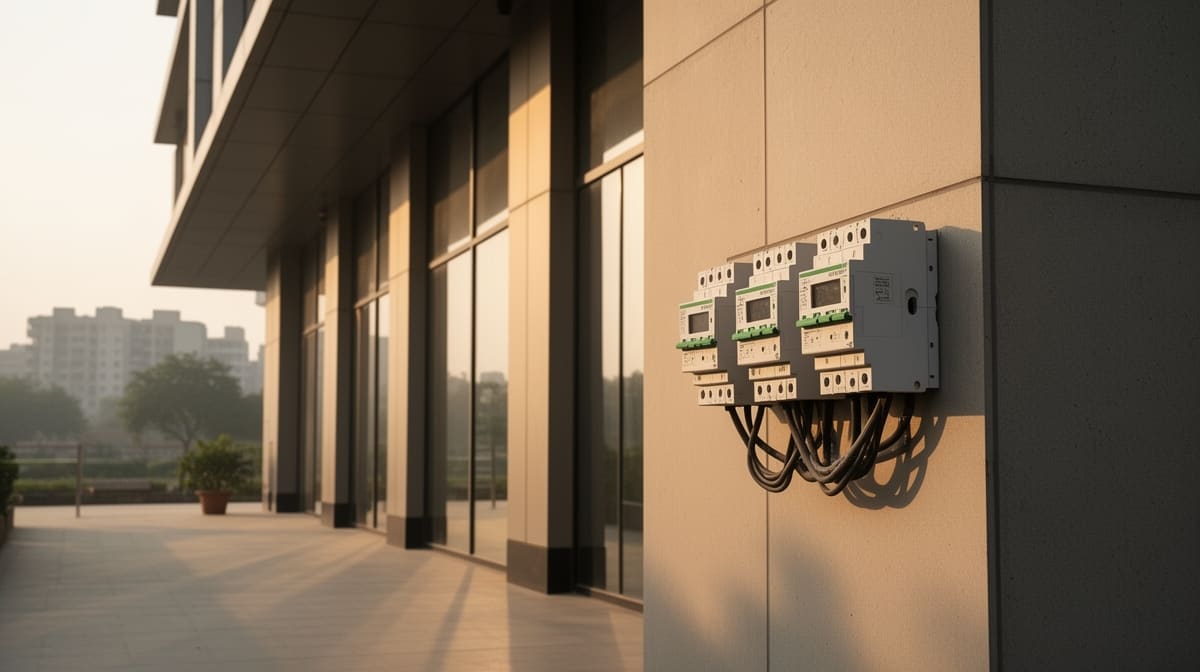
M/s STG Softex Pvt. Ltd., a property owner in Noida, rented out commercial premises and provided tenants with electricity and power backup via a diesel generator set (DG set). The company charged tenants for electricity consumption through sub-meters, raising separate invoices. The Department of Revenue assessed the company for Service Tax on these electricity charges, arguing they formed part of the rental service. It also alleged improper availing of CENVAT credit and delayed payment of interest.
Procedural History
- October 2015 to June 2017: Period under audit for Service Tax compliance.
- 19 April 2021: Show Cause Notice (SCN) issued demanding Service Tax on electricity, disallowance of CENVAT credit, and interest penalties.
- 30 June 2025: Commissioner (Appeals) upheld the demand, rejecting the appellant’s arguments.
- 29 January 2026: Hearing before CESTAT Allahabad.
- 10 March 2026: Final order issued allowing the appeal.
Relief Sought
The appellant sought to set aside the Service Tax demand on electricity supply, reverse the disallowance of CENVAT credit on grounds of limitation, and quash the penalties imposed under Section 78 of the Finance Act, 1994.
The Legal Issue
The central questions were: (1) Whether the supply of electricity through a DG set constitutes a taxable service under the Finance Act, 1994, or is it a sale of goods excluded from the definition of service? (2) Can the extended period of limitation under Section 73 be invoked solely on the basis of audit findings when returns were regularly filed and no wilful suppression is proven?
Arguments Presented
For the Appellant
The appellant’s Chartered Accountant argued that electricity is a commodity classified under Chapter Heading 2716 of the Central Excise Tariff and has consistently been held by courts as goods, not service. He cited precedents including ICC Reality (India) Pvt. Ltd. v. CCE, Logix Soft Tel Pvt. Ltd. v. CCE, and Electronics Technology Parks v. CCE, all of which held that charging for electricity is not subject to Service Tax. He further contended that the SCN issued on 19 April 2021 was beyond the normal 30-month limitation period and that the extended period could not be invoked because there was no evidence of fraud, suppression, or wilful misstatement. He emphasized that the appellant had filed ST-3 returns regularly and that the burden of scrutiny lay with the Department under Section 72.
For the Respondent
The Department’s Authorized Representative defended the order, asserting that the electricity charges were integral to the composite service of renting immovable property and thus taxable. It argued that the failure to disclose the electricity charges in returns amounted to suppression of facts, justifying invocation of the extended limitation period. It relied on the audit findings as conclusive evidence of non-compliance.
The Court's Analysis
The Tribunal examined the nature of electricity under both statutory and judicial frameworks. It noted that the Supreme Court in State of Andhra Pradesh v. NTPC Ltd. and Commissioner of Sales Tax v. Madhya Pradesh Electricity Board had unequivocally held that electricity is a good, not a service. The definition of service under Section 65(B)(44) explicitly excludes transfer of title in goods. The Tribunal further observed that the appellant’s billing structure - charging per unit consumed via sub-meters - mirrored a sale transaction, not a service provision.
"Electricity is specifically covered under Tariff Heading 27 of the Central Excise Tariff Act... Therefore, the supply of electricity to tenant amounts to sale of goods and not supply of service."
The Tribunal then turned to the issue of limitation. It relied on its own Division Bench decision in G.D. Goenka Pvt. Ltd., which held that self-assessment does not equate to suppression. The Court emphasized that Section 72 imposes a statutory duty on the Central Excise Officer to scrutinize returns and conduct best judgment assessments. Failure to do so cannot be blamed on the assessee. The Tribunal rejected the Revenue’s argument that audit alone justified invoking extended limitation, stating:
"If the officer fails to scrutinise the returns and make the best judgment assessment and some tax escapes assessment which is discovered after the normal period of limitation is over, the responsibility for such loss of Revenue rests squarely on the shoulders of the officer."
The Tribunal also cited the CBEC’s own Manual on Scrutiny of Service Tax Returns, which affirms that assessment is the primary responsibility of officers, not audit. No evidence of fraud, collusion, or wilful suppression was presented. Consequently, the extended period of limitation could not be applied.
The Verdict
The appellant won. The Tribunal held that supply of electricity through a DG set is sale of goods and not a taxable service, and that extended limitation under Section 73 cannot be invoked absent proof of wilful suppression or fraud. The Service Tax demand on electricity, CENVAT credit disallowances, and penalties under Section 78 were all set aside.
What This Means For Similar Cases
Electricity Charges Are Exempt from Service Tax
- Practitioners must now argue that any charge for electricity - whether from grid or DG set - is outside the scope of Service Tax.
- Composite service providers (e.g., co-working spaces, malls, residential complexes) should review billing structures to ensure electricity is billed separately as goods.
- Past assessments on electricity charges may be challenged if within limitation.
Audit Alone Cannot Justify Extended Limitation
- Tax authorities cannot rely on audit findings alone to invoke extended limitation under Section 73.
- Practitioners should insist that the Department prove actual suppression, fraud, or violation with intent - not mere non-disclosure or oversight.
- Regular filing of returns creates a strong defense against extended limitation claims.
Scrutiny Duty Rests with the Department
- The burden of detecting errors lies with the tax officer under Section 72, not the taxpayer.
- Practitioners can cite the CBEC’s Manual to counter arguments that self-assessment absolves the Department of scrutiny obligations.
- Failure to conduct return scrutiny cannot be used to penalize taxpayers years later.