The Andhra Pradesh High Court has clarified a critical procedural safeguard under the GST regime: once a taxpayer files delayed returns with the prescribed late fee, any assessment order issued under Section 62 of the CGST Act is automatically deemed withdrawn. This ruling provides immediate relief to businesses facing arbitrary recovery actions and reinforces statutory compliance over punitive enforcement.
Background & Facts
The Dispute
The petitioner, Vijayalakshmi Housing, a registered GST taxpayer, faced three separate assessment orders under Section 62 of the Central Goods and Services Tax Act, 2017, for non-filing of returns for the months of November 2022, December 2022, and January 2023. The first respondent, the Assistant Commissioner (ST)(Fac), Ramavarappadu Circle, issued these orders on 04.03.2023, 10.03.2023, and 12.05.2023 respectively, on the ground that the petitioner had not filed GSTR-3B returns. Subsequently, the respondents initiated recovery proceedings by attaching the petitioner’s bank accounts and attempting to debit electronic credit and cash ledgers to recover the disputed tax amounts.
Key Facts
- The petitioner filed GSTR-3B returns for all three months on 08.11.2023, well after the due dates
- The returns disclosed exempted turnover and hence no tax or interest was payable
- The petitioner paid the applicable late fees under Section 62(2) for each month:
- November 2022: CGST late fee Rs. 18,900 and SGST late fee Rs. 18,900
- December 2022: CGST late fee Rs. 18,300 and SGST late fee Rs. 18,300
- January 2023: CGST late fee Rs. 12,000 and SGST late fee Rs. 12,000
- Total late fees paid: Rs. 98,400
- No tax or interest was payable as the returns pertained to exempt supplies
- Recovery proceedings were initiated despite the filing of returns and payment of late fees
Procedural History
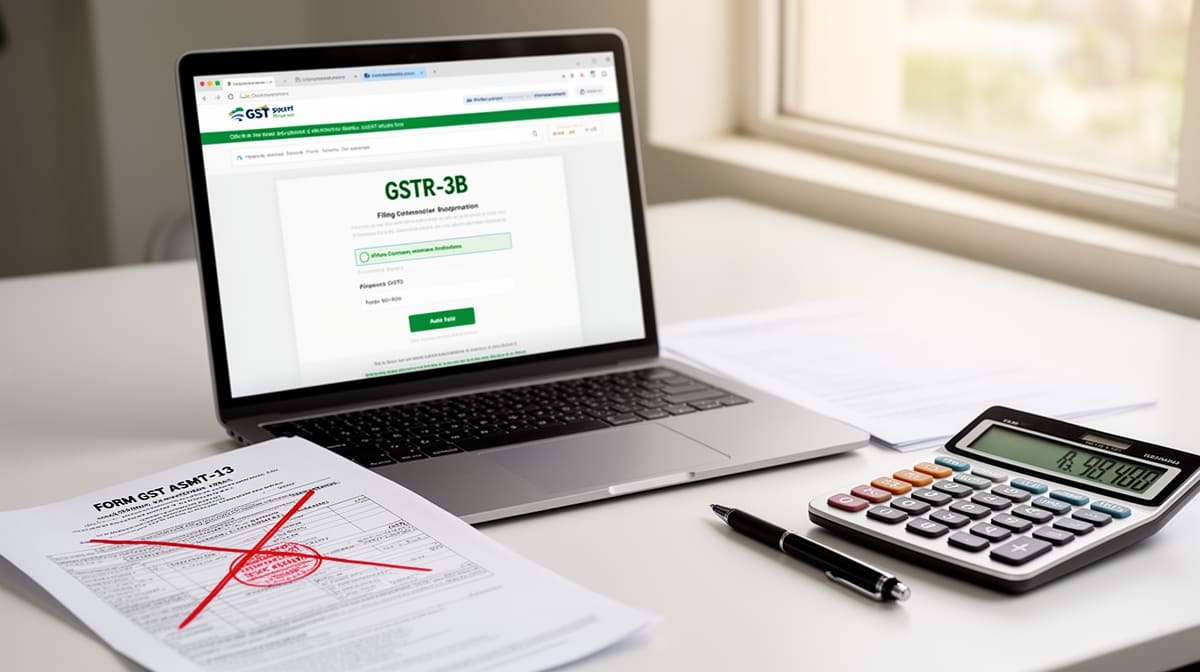
- 04.03.2023: Assessment order issued for November 2022 (FORM GST ASMT-13)
- 10.03.2023: Assessment order issued for December 2022 (FORM GST ASMT-13)
- 12.05.2023: Assessment order issued for January 2023 (FORM GST ASMT-13)
- 08.11.2023: Petitioner filed GSTR-3B returns for all three months with payment of late fees
- Post-08.11.2023: Respondents initiated bank account attachments and ledger debits to recover disputed tax
- 16.03.2026: Writ petitions filed before the Andhra Pradesh High Court seeking quashing of assessment orders and stay of recovery
Relief Sought
The petitioner sought:
- Declaration that the assessment orders dated 04.03.2023, 10.03.2023, and 12.05.2023 are illegal and void
- Direction to withdraw the assessment orders
- Setting aside of bank account attachments and recovery actions
- Cessation of all further proceedings based on the impugned orders
The Legal Issue
The central question was whether an assessment order passed under Section 62 of the CGST Act remains operative after the taxpayer files the required return with payment of late fee, or whether such an order is automatically deemed withdrawn under the statutory mandate.
Arguments Presented
For the Petitioner
The petitioner contended that Section 62(2) of the CGST Act explicitly provides that any order passed under Section 62 shall be deemed to have been withdrawn if the registered person files the return within the period specified under that provision. The petitioner filed GSTR-3B returns on 08.11.2023 and paid the full late fees, thereby satisfying the statutory condition for deemed withdrawal. The recovery actions, including bank attachments and ledger debits, were therefore illegal, arbitrary, and violative of Article 14 and Article 265 of the Constitution. Reliance was placed on the plain language of the statute and the principle that tax recovery cannot proceed once statutory compliance is achieved.
For the Respondent
The respondents did not contest the factual assertion that returns were filed with late fees. However, they argued that the assessment orders were validly issued due to initial non-filing and that the recovery proceedings were initiated in good faith. They did not dispute the applicability of Section 62(2) but sought to justify the timing of recovery actions as administrative necessity.
The Court's Analysis
The Court undertook a strict textual interpretation of Section 62(2) of the CGST Act, which states: "Any order passed under sub-section (1) shall be deemed to have been withdrawn if the registered person files the return in Form GSTR-3B within the period specified in sub-section (1)."
"The provision is unambiguous: once the return is filed with the late fee, the assessment order stands withdrawn by operation of law. There is no discretion left to the tax authority to retain or enforce it."
The Court emphasized that the legislature intended to provide a clear and automatic remedy to taxpayers who rectify their default. The payment of late fee is not a penalty to be endured but a statutory mechanism to restore compliance. The Court rejected the notion that recovery proceedings could continue after compliance, noting that such conduct would render the statutory provision otiose and defeat the legislative intent of encouraging voluntary compliance.
The Court further held that bank attachments and ledger debits based on a withdrawn assessment order are illegal and violate the taxpayer’s right to property under Article 265 of the Constitution, which mandates that no tax shall be levied or collected except by authority of law. Since the assessment order was deemed withdrawn, no legal authority remained to justify recovery.
The Verdict
The writ petitions were allowed. The Court set aside the assessment orders dated 04.03.2023, 10.03.2023, and 12.05.2023, and directed that all bank attachments and recovery actions initiated on the basis of these orders be immediately lifted. The electronic credit and cash ledgers of the petitioner shall be restored to their pre-recovery state. All pending miscellaneous petitions related to recovery are closed. There shall be no order as to costs.
What This Means For Similar Cases
Deemed Withdrawal Is Automatic and Non-Discretionary
- Practitioners must immediately challenge any recovery action initiated after GSTR-3B filing with late fee, regardless of whether the tax liability is disputed
- Tax authorities cannot delay withdrawal or insist on additional compliance beyond filing the return and paying late fee
- The moment GSTR-3B is filed with late fee, the assessment order ceases to exist legally
Recovery Actions Post-Compliance Are Illegal
- Bank account attachments, ledger debits, or demand notices issued after filing of returns under Section 62(2) are ultra vires
- Petitioners can seek immediate stay and restoration of accounts under Article 226
- Any recovery made after deemed withdrawal must be refunded with interest
Procedural Compliance Trumps Administrative Convenience
- Tax departments cannot justify illegal recovery on grounds of "administrative delay" or "processing backlog"
- The statutory timeline under Section 62(2) is mandatory, not directory
- This judgment reinforces that GST law prioritizes compliance over punishment when the taxpayer acts within the statutory window