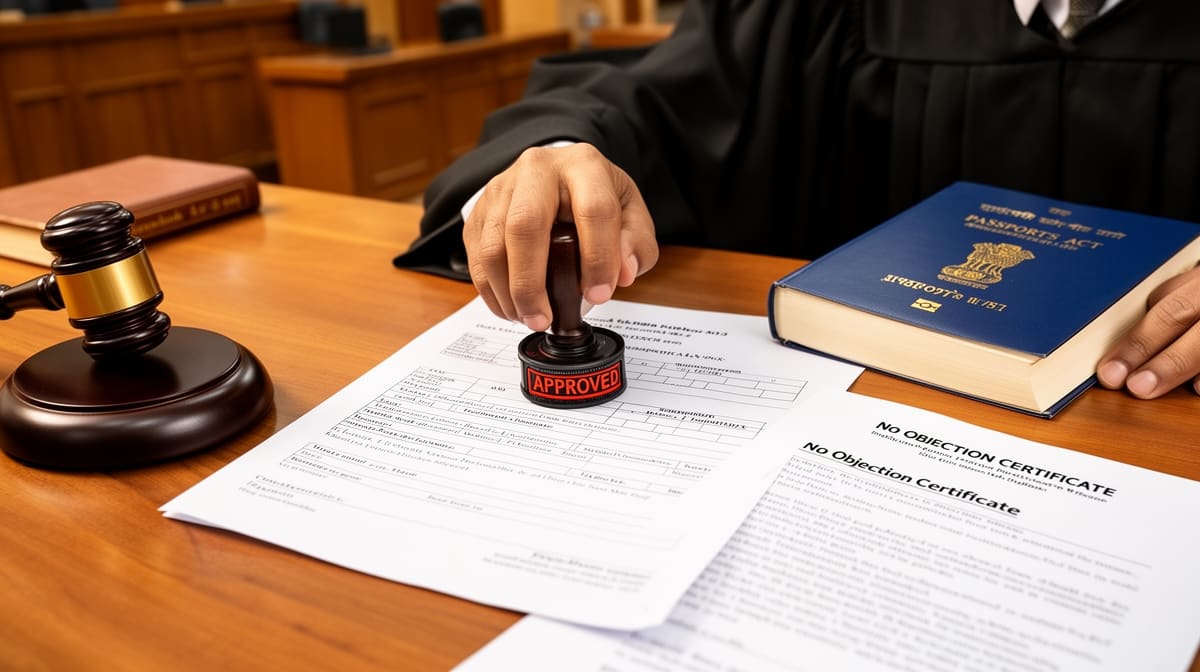
The Andhra Pradesh High Court has clarified that the pendency of criminal proceedings against an applicant cannot, by itself, justify the denial of a passport under the Passport Act, 1967. The judgment affirms that the right to travel abroad is an integral facet of personal liberty under Article 21 of the Constitution, and administrative denial without individualized assessment violates Articles 14 and 19. This ruling establishes a critical procedural safeguard for applicants caught in prolonged criminal litigation.
Background & Facts
The Dispute
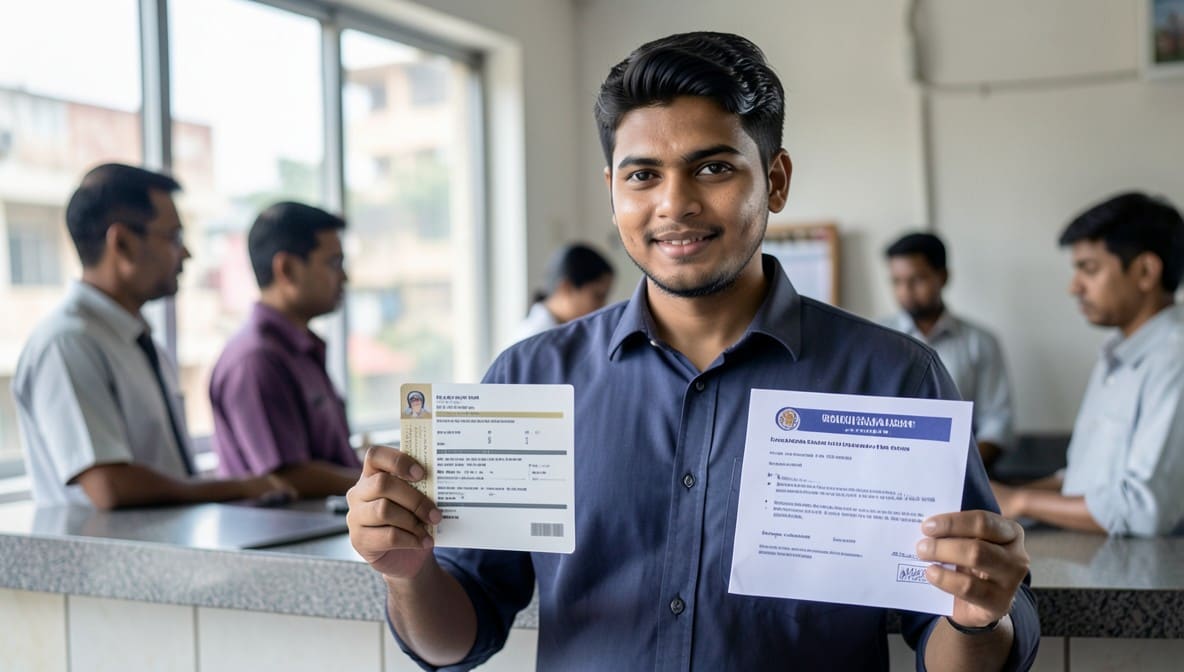
The petitioner, Syed Abdal Hussaini, applied for a passport on 29.12.2025 under File No. 25-1069436807. His application was denied by the Regional Passport Office, Vijayawada, on the ground that criminal proceedings were pending against him before a court in Nandyal District. The petitioner challenged this refusal as arbitrary, unreasonable, and violative of his fundamental rights under Articles 14, 19, and 21 of the Constitution, as well as contrary to the statutory framework of the Passport Act, 1967 and the Passport Rules, 1980.
Key Facts
- The petitioner is a 43-year-old businessman residing in Banaganapalle, Nandyal District, Andhra Pradesh
- His passport application was submitted on 29.12.2025
- The Regional Passport Office refused the application without providing reasons beyond the pendency of criminal proceedings
- No specific allegations or findings of flight risk, obstruction of justice, or national security concern were cited
- The petitioner has not been convicted or even charge-sheeted in the pending proceedings
- The criminal case remains at the stage of trial, with no interim order restraining travel
Procedural History
- 29.12.2025: Petitioner submitted passport application (File No. 25-1069436807)
- Early January 2026: Passport Office issued notice of refusal citing pending criminal proceedings
- 07.04.2026: Andhra Pradesh High Court delivered a common order in W.P.No.5769 of 2026 and batch, laying down a uniform procedure for passport issuance where criminal cases are pending
- 16.04.2026: Present writ petition (W.P.No.9769/2026) was heard and disposed of by reference to the earlier order
Relief Sought
The petitioner sought:
- A declaration that the refusal of passport was illegal, arbitrary, and violative of Articles 14, 19, and 21
- A writ of mandamus directing the Respondents to issue the passport forthwith
- An interim direction under Section 151 CPC for immediate issuance of passport pending final disposal
The Legal Issue
The central question was whether the mere pendency of criminal proceedings against an applicant can justify the automatic denial of a passport under the Passport Act, 1967, or whether the Passport Authorities must conduct an individualized assessment based on statutory grounds and constitutional rights.
Arguments Presented
For the Petitioner
The petitioner’s counsel argued that:
- The Passport Act, 1967 does not contain a blanket bar on passport issuance for persons with pending criminal cases
- Denial based solely on pendency of proceedings violates Article 14 as it is arbitrary and lacks intelligible differentia
- The right to travel abroad is protected under Article 21, as held in Maneka Gandhi v. Union of India
- The Passport Authorities must apply the principles of natural justice and consider whether the applicant poses a genuine risk of absconding or obstructing justice
- The refusal was not based on any specific statutory ground under Section 6 or Section 10 of the Passport Act
For the Respondent
The Government Pleader for Home conceded that the matter was squarely covered by the earlier common order dated 07.04.2026 in W.P.No.5769 of 2026 and batch, and did not oppose the petitioner’s prayer. The Respondents accepted that the principles laid down in that order should apply uniformly.
The Court's Analysis
The Court observed that the issue had already been authoritatively settled in a batch of writ petitions decided on 07.04.2026. The earlier order had held that the mere existence of pending criminal proceedings cannot be a ground for automatic denial of a passport. The Court emphasized that the Passport Act, 1967 is a regulatory statute, not a punitive one, and its provisions must be interpreted in harmony with fundamental rights.
"The right to travel abroad is an essential component of personal liberty under Article 21. Denial of a passport on the sole ground of pending criminal proceedings, without any specific finding of risk of flight or obstruction of justice, amounts to a disproportionate restriction."
The Court noted that Section 10 of the Passport Act permits the Passport Authority to impound or refuse a passport only if the applicant is under a court order prohibiting departure, or if the applicant is a proclaimed offender, or if the issuance is contrary to the interests of the sovereignty and integrity of India. None of these conditions were met here.
The Court further held that the Passport Authorities must act in accordance with Rule 12 of the Passport Rules, 1980, and the Gazette Notification GSR No.570(E) dated 25.08.1993, which permit issuance of passports subject to conditions, not outright denial.
The Court concluded that a balanced approach is required: while the State has a legitimate interest in ensuring that accused persons do not evade trial, this interest must be addressed through judicial supervision and conditional issuance, not administrative refusal.
The Verdict
The writ petition was allowed. The Court directed the Passport Authorities to consider the petitioner’s application under File No. 25-1069436807 dated 29.12.2025 for issuance of a passport for a period of ten (10) years, subject to the following conditions:
- The petitioner shall submit an undertaking and affidavit affirming he will not leave the country during the pendency of criminal proceedings without prior permission of the trial court
- The trial court shall issue a certified copy of the undertaking within two (2) weeks of filing
- The petitioner shall submit the certified copy to the Passport Officer
- The Passport Officer shall decide the application within two (2) weeks of receiving the undertaking
- On renewal, the petitioner shall deposit the original renewed passport with the trial court
- The petitioner shall seek prior permission from the trial court for any foreign travel There shall be no order as to costs.
What This Means For Similar Cases
Passport Denial Requires Specific Grounds
- Practitioners must now argue that blanket denials based on pending criminal cases are legally unsustainable
- Passport Authorities must record reasons linking the denial to a specific statutory ground under Section 6 or 10 of the Passport Act
- Mere mention of a pending FIR or chargesheet is insufficient to justify refusal
Conditional Issuance Is the New Norm
- Applications from accused persons must be processed with conditions, not denied outright
- The undertaking and court certification mechanism established here is now binding precedent
- Practitioners should prepare standardized affidavits and undertakings for clients in pending criminal cases seeking passports
Judicial Oversight Trumps Administrative Discretion
- The Court has shifted the burden: it is no longer on the applicant to prove innocence, but on the State to prove risk
- Any refusal must now be supported by evidence of flight risk, tampering with evidence, or threat to national security
- This precedent applies uniformly across India, as it is based on constitutional principles and a Gazette Notification