The High Court of Himachal Pradesh clarified that a civil suit challenging erroneous revenue entries does not fall within the jurisdictional bar of Section 57 of the Himachal Pradesh Holdings (Consolidation and Prevention of Fragmentation) Act, 1971, where the dispute stems from a clerical mistake in periodical records rather than consolidation proceedings. Affirming the concurrent findings of the trial and first appellate courts, the Court held that the plaintiffs proved title and possession under a registered sale deed and that the closure of defendants’ evidence was a lawful exercise of judicial discretion. The Regular Second Appeal was dismissed, upholding the declaration of joint ownership and permanent prohibitory injunction.
Background & Facts
The Dispute
The plaintiffs (original respondents) instituted a suit seeking declaration and permanent prohibitory injunction over land they alleged they purchased from Santo via registered sale deed dated 07.04.1967, measuring 21 Kanals 1 Marla, and over additional suit land allotted to defendants under erroneous revenue entries. The defendants (original appellants) contested the suit, asserting hostile title and challenging the sale deed as fraudulent, while also challenging the civil court’s jurisdiction under the Consolidation Act.
Key Facts
- Santo, predecessor-in-interest of defendants, owned 90 Kanals 6 Marlas in Khata No.64 per Jamabandi 1961 - 62.
- On 07.04.1967, Santo executed a registered sale deed (Ex.PW-1/A) selling 6315/27090 share, measuring 21 Kanals 1 Marla, to the plaintiffs for valid consideration; possession delivered same day.
- Mutation No.391, attesting the sale, was sanctioned on 24.04.1967.
- While preparing Jamabandi for 1967 - 68, revenue officials erroneously recorded plaintiffs’ share as 6315 instead of 6315/27090, reducing recorded area to 8 Kanals 10 Marlas (0-32-71 HM).
- Despite the error, plaintiffs remained in continuous cultivating possession of the purchased parcel on the spot, where they raised an orchard (Bagicha).
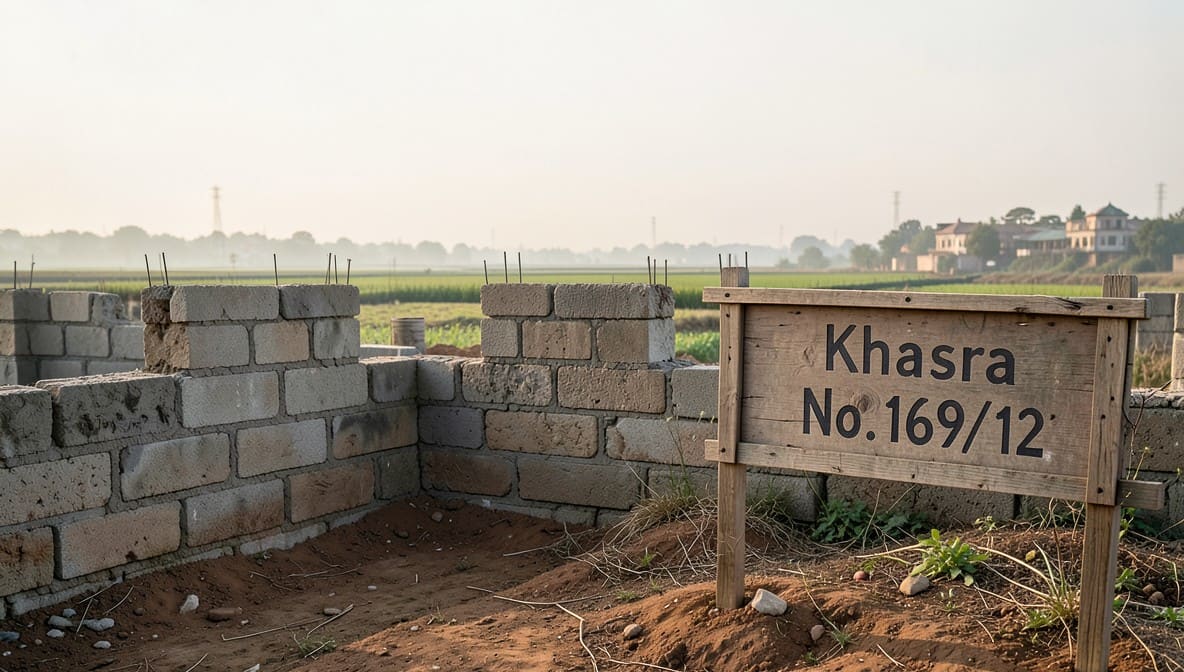
- During settlement operations, separate Khasra numbers were carved out: Khasra No.229 (0-57-41 HM) recorded as plaintiffs’ exclusive cultivating possession; later, consolidation proceedings allotted plaintiffs’ share as Khasra No.140/1 (0-32-71 HM) and the remainder as Khasra No.141 (0-24-70 HM) to defendants, though actual possession of Khasra No.141 remained with plaintiffs.
- Additionally, six plots under Khasra Nos.144,163,184,185,191 (total 1-22-54 HM) in Khata No.30 min, Khatauni No.35 min, Jamabandi 1994 - 95, situated in Tikka Bassa, Mauza Chhattar, Tehsil Nurpur, were allotted to defendants; plaintiffs claimed joint ownership of 4800/12254 share measuring 0-48-00 HM of this suit land.
- Defendants asserted hostile title and threatened dispossession; plaintiffs became aware of the erroneous entries on 10.03.2001 and, after defendants refused to acknowledge title, filed the suit.
- The suit was filed prior to 22.01.2007, when the trial court framed issues.
- On 22.01.2007, the trial court framed eight issues concerning title, injunction, maintainability, cause of action, locus standi, estoppel, limitation, and validity of the sale deed.
- Plaintiffs adduced oral and documentary evidence, including the registered sale deed, attesting witness PW-4, handwriting expert PW-2, and Jamabandies from 1961 - 62 to 1994 - 95.
- Defendants failed to lead any evidence despite repeated opportunities; on 19.12.2009, the trial court closed their evidence after rejecting an adjournment request based on illness.
- The trial court, by order dated 19.12.2009, held the sale deed valid, mutation attested, and plaintiffs in possession, decreeing declaration and permanent prohibitory injunction in favour of plaintiffs for 4800/12254 share measuring 0-48-00 HM of suit land.
- The first appellate court (Additional District Judge-I, Kangra) affirmed the trial court’s findings on 08.03.2018, noting the reduction in recorded share was a clerical mistake mechanically carried forward and that defendants had not substantiated fraud claims.
- The present Regular Second Appeal (RSA No.257 of 2018) was admitted on 06.05.2019, raising three substantial questions of law concerning jurisdiction under Section 57 of the Consolidation Act, vitiation of findings due to closed evidence, and validity of ex parte proceedings.
- The High Court reserved judgment on 18.09.2026 and delivered its decision on 25.09.2026.
Procedural History
- 07.04.1967: Execution of registered sale deed (Ex.PW-1/A) by Santo in favour of plaintiffs.
- 24.04.1967: Sanction of Mutation No.391 attesting the sale.
- 1967 - 68: Erroneous recording of plaintiffs’ share in Jamabandi (6315 instead of 6315/27090).
- 10.03.2001: Plaintiffs acquired knowledge of incorrect revenue entries.
- Prior to 22.01.2007: Institution of civil suit by plaintiffs seeking declaration and injunction.
- 22.01.2007: Trial court framed issues.
- 19.12.2009: Trial court closed defendants’ evidence after denying adjournment request.
- 08.03.2018: Judgment and decree of learned Additional District Judge-I, Kangra (first appellate) affirming trial court.
- 06.05.2019: Admission of Regular Second Appeal RSA No.257 of 2018 by High Court.
- 18.09.2026: Reservation of judgment.
- 25.09.2026: Date of decision.
The Parties' Positions
For the Appellant/Petitioner
The appellants (original defendants) contended that the civil court lacked jurisdiction under Section 57 of the Consolidation Act because the matter arose out of consolidation proceedings. They argued that the suit was barred as the plaintiffs were allotted lesser land due to superior quality allocation under consolidation, and any grievance should be raised before statutory authorities. They claimed that Ramesh Kumar (defendant No.1(a)) was never served, rendering the ex parte order of 23.12.2006 illegal. They asserted that the closure of defendants’ evidence on 19.12.2009 was arbitrary and deprived them of a fair trial. They maintained that the sale deed was procured by fraud, misrepresentation and undue influence, and that the burden to disprove the presumption of valid execution lay on plaintiffs, which they failed to discharge.
For the Respondent/State
The respondents (original plaintiffs) argued that the dispute originated from a clerical error in revenue records under the Land Revenue Act, 1954, not from any consolidation scheme or order. They contended that Section 57 of the Consolidation Act is attracted only when the matter arises out of consolidation proceedings or where a suit/application can be filed under the Act; neither condition was satisfied. They emphasised that the defendants had ample opportunity to adduce evidence, and the closure of their evidence on 19.12.2009 was a lawful exercise of judicial discretion after repeated defaults and refusal to seek examination on commission. Relying on Section 27 of the General Clauses Act, 1897 and Order V Rule 19-A of the CPC, they asserted that summons sent to Ramesh Kumar’s permanent address by registered post, unreturned, justified the presumption of valid service. They highlighted that the plaintiffs proved the sale deed through attesting witness PW-4 and handwriting expert PW-2, and that the defendants failed to rebut the presumption of valid execution. They stressed that concurrent findings of trial and first appellate courts regarding possession and validity of the sale deed are pure findings of fact, immune from interference in second appeal absent perversity.
Relief Sought
The plaintiffs (respondents) sought a declaration of title and permanent prohibitory injunction over the suit land to the extent of their purchased share (4800/12254 share measuring 0-48-00 HM) and compensation for damages (though no specific amount quantified in judgment). The appellants sought to set aside the trial court and first appellate court judgments, to have the suit dismissed, and to retain exclusive possession of the disputed land.
The Legal Issue
The court had to determine three substantial questions of law: (i) whether the civil court’s jurisdiction was barred under Section 57 of the Himachal Pradesh Holdings (Consolidation and Prevention of Fragmentation) Act, 1971, given the plaintiffs’ challenge to erroneous revenue entries; (ii) whether the findings of the trial and first appellate courts concerning the validity of the registered sale deed (Ex.PW-1/A) and the plaintiffs’ continuous possession were vitiated by the closure of the defendants’ evidence in the absence of any counter-evidence; and (iii) whether the ex parte proceedings against defendant No.1(a) on 23.12.2006 and the alleged ex parte treatment of defendants Nos.2(a) - 2(g) on 19.12.2009 contravened the Code of Civil Procedure, thereby rendering the impugned judgments unlawful.
Arguments Presented
For the Appellant/Petitioner
The appellants submitted that under Section 57 of the Consolidation Act, the jurisdiction of civil courts is barred in respect of matters arising out of consolidation proceedings. They contended that during consolidation, separate Khatas and Khataunis were prepared and lands were re-partitioned strictly in accordance with the Act, and that the plaintiffs’ grievance about quantum of land allotted could only be agitated before the statutory authorities created under the Consolidation Act. They further argued that Ramesh Kumar was never served with process, making the ex parte order of 23.12.2006 illegal, and that the closure of defendants’ evidence on 19.12.2009 was arbitrary because an adjournment request based on illness was denied without offering examination on commission. They maintained that the sale deed was a product of fraud, misrepresentation and undue influence, and that the plaintiffs failed to discharge the burden of rebutting the presumption of valid execution attached to a registered document.
For the Respondent/State
The respondents countered that the dispute did not arise out of any order or determination made by the consolidation authorities; it originated from a clerical mistake by revenue officials while preparing the Jamabandi for 1967 - 68 under the Land Revenue Act, 1954. They pointed out that Section 57 bars jurisdiction only when the matter arises out of consolidation proceedings or where a suit/application can be filed under the Consolidation Act, neither of which applied here. They highlighted that the defendants were given repeated opportunities to lead evidence, and the closure of their evidence on 19.12.2009 was a lawful exercise of judicial discretion after they failed to seek examination on commission despite repeated defaults. They relied on Section 27 of the General Clauses Act, 1897 and Order V Rule 19-A of the CPC to justify the presumption of valid service of summons sent to Ramesh Kumar’s permanent address by registered post, which was not returned unserved. They emphasised that the plaintiffs proved the sale deed through attesting witness PW-4 and handwriting expert PW-2, and that the defendants failed to set out specific particulars of alleged fraud, misrepresentation or undue influence as required by Order VI Rule 4 of the CPC, thus failing to displace the presumption of valid execution. They also relied on the principle of concurrent findings of fact, citing Mukhtiar Devi and Ors. v. Gauran and Ors., 2000 (3) Sim.L.C. 154, to argue that the trial and first appellate courts’ findings on the sale deed and possession, being based on evidence, could not be disturbed in second appeal.
The Court's Analysis
The Court first examined Section 57 of the Consolidation Act, which bars civil court jurisdiction only where (a) the matter arises out of consolidation proceedings, or (b) the matter is one in respect of which a suit or application can be filed under the Consolidation Act. It held that the plaintiffs’ grievance stemmed from an error in revenue records under the Land Revenue Act, 1954, not from any consolidation scheme or order. The Court observed that the error regarding the plaintiffs’ share in the revenue records was not an outcome of any order passed under the Consolidation Act, but was an uncorrected clerical discrepancy arising out of the preparation of periodical records under the Himachal Pradesh Land Revenue Act, 1954. Consequently, neither condition of Section 57 was attracted, and the civil court retained jurisdiction.
On the second question, the Court noted that the trial court afforded numerous opportunities to the defendants to lead evidence. On 19.12.2009, when an adjournment was sought on the ground of illness, the trial court declined the prayer and closed the evidence after observing a history of repeated adjournments. The Court pointed out that if the defendant was genuinely incapacitated, the appropriate course was to move an application under Order XXVI of the CPC for examination on commission, which was not done. The defendants subsequently appealed the closure order but withdrew that appeal unconditionally, thereby permitting the order to attain finality. The Court held that the closure of evidence was a lawful exercise of judicial discretion and could not be termed arbitrary or perverse.
Regarding the merits, the Court found that the execution and validity of the registered sale deed dated 07.04.1967 (Ex.PW-1/A) was duly proved by the plaintiffs through the attesting witness PW-4 and the handwriting expert PW-2. The defendants had failed to set out specific material particulars of alleged fraud, misrepresentation or undue influence as mandated by Order VI Rule 4 of the CPC, and led no evidence to substantiate these assertions. A registered document carries a presumption of valid execution, and the burden lay heavily on the defendants to displace that presumption by cogent evidence, which they failed to do.
The Court further relied on the principle of concurrent findings of fact, citing Mukhtiar Devi (supra) and Shyam Sunder Dutta v. Baikuntha Nath Banerjee, (1994) 6 SCC 545, to hold that the concurrent finding of the trial and first appellate courts regarding the lawful execution of the sale deed and the plaintiffs’ continuous physical possession over the suit land is a pure finding of fact based on evidence and cannot be disturbed by the High Court in a second appeal under Section 100 of the CPC unless it is perverse or arbitrary. Since the findings were based on evidence and the defendants’ absence of evidence was a consequence of their own default, the findings were not vitiated in law.
On the third question, the Court held that summons were dispatched to Ramesh Kumar’s permanent residential address by registered post; the postal cover was not returned unserved within the statutory period. Under Section 27 of the General Clauses Act, 1897 and Order V Rule 19-A of the CPC, the trial court was justified in drawing the presumption of valid service and proceeding against him ex parte vide order dated 23.12.2006. Ramesh Kumar never filed an application under Order IX Rule 13 of the CPC to set aside the ex parte order, nor did he dispute the correctness of the address. Having submitted to the appellate jurisdiction without demonstrating prejudice or denial of notice, he could not assail the ex parte order in the Regular Second Appeal. As regards defendants Nos.2(a) - 2(g), the record shows they were never proceeded against ex parte on 19.12.2009; only their evidence was closed, and they were duly represented by counsel throughout the trial. Thus, the assertion of ex parte proceedings against them was factually incorrect.
Having answered all three substantial questions of law against the appellants, the Court dismissed the Regular Second Appeal and affirmed the judgment and decree of the lower courts.
"The error regarding the plaintiffs' share in the revenue records was not an outcome of any order passed under the Consolidation Act, but was an uncorrected clerical discrepancy arising out of the preparation of periodical records under the Himachal Pradesh Land Revenue Act, 1954."
The Verdict
The Regular Second Appeal was dismissed. The High Court affirmed the judgment and decree dated 08.03.2018 of the learned Additional District Judge-I, Kangra, which in turn upheld the trial court’s decree declaring the plaintiffs to be joint owners in joint possession of 4800/12254 share of the suit land, measuring 0-48-00 HM, and granting a permanent prohibitory injunction against dispossession. No monetary award was quantified; the relief was limited to declaratory and injunctive relief confirming the plaintiffs’ title and possession.
What This Means For Similar Cases
Jurisdiction Not Barred by Consolidation Act for Revenue Errors
Where a dispute arises from a clerical mistake in revenue records under the Land Revenue Act, 1954, and not from any consolidation scheme or order, Section 57 of the Himachal Pradesh Holdings (Consolidation and Prevention of Fragmentation) Act, 1971 does not oust the jurisdiction of civil courts. Practitioners must examine the source of the error before asserting a jurisdictional bar.
- Identify whether the grievance stems from consolidation proceedings or a revenue-record error.
- If the error is under the Land Revenue Act, the civil court retains jurisdiction to declare title and grant injunction.
Concurrent Findings of Fact Immune from Interference in Second Appeal
A concurrent finding of fact by the trial and first appellate courts, based on evidence, is binding in a second appeal under Section 100 of the CPC unless shown to be perverse or arbitrary. The closure of a party’s evidence due to their own default does not vitiate such findings.
- Ensure that any challenge to concurrent findings is grounded in demonstrable perversity, not merely the absence of counter-evidence.
- Rely on the presumption of valid execution of registered documents; the burden to disprove it lies heavily on the party alleging fraud.
Presumption of Valid Service Stands Unchallenged Without Protest
Where summons are sent to a party’s permanent address by registered post and are not returned unserved, the presumption of valid service under Section 27 of the General Clauses Act, 1897 and Order V Rule 19-A of the CPC stands. A party who does not seek to set aside the ex parte order or dispute the address cannot later challenge the proceedings.
- Timely file an application under Order IX Rule 13 of the CPC to contest ex parte orders.
- Verify and contest the correctness of the address at the earliest opportunity to preserve the right to challenge service.