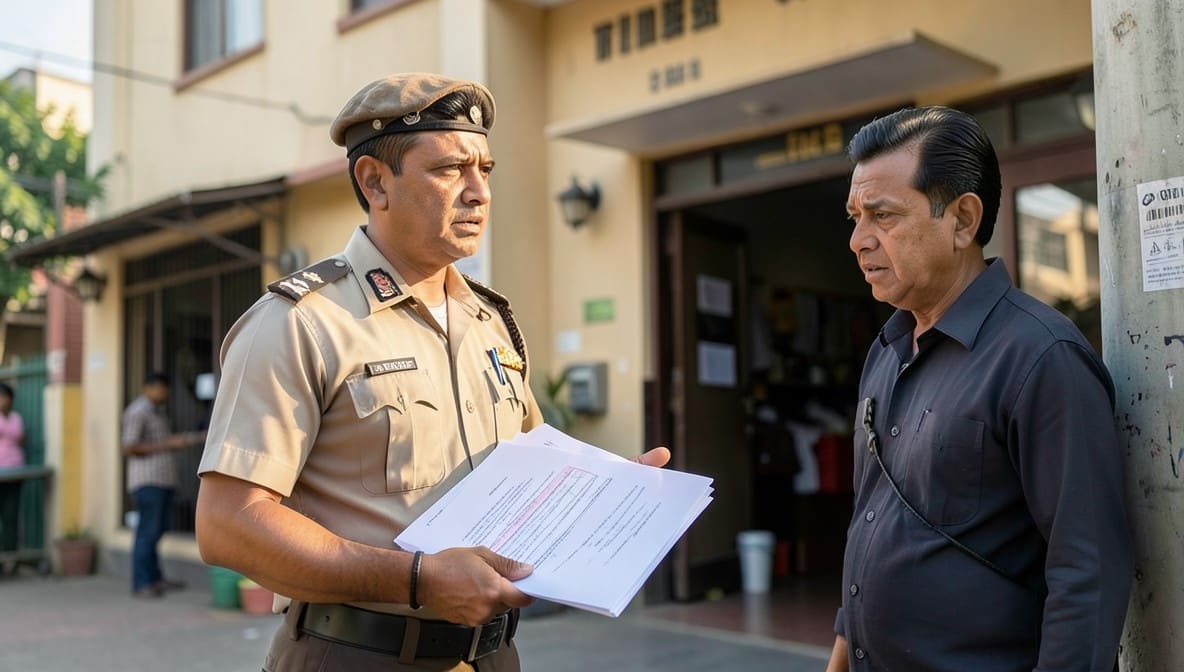
The Madhya Pradesh High Court has reinforced the constitutional right to a speedy investigation in corruption cases, issuing binding directions to municipal authorities to cease obstruction and cooperate fully with law enforcement. The judgment clarifies that institutional non-cooperation cannot justify indefinite investigative delays, affirming that Article 21 protections extend to the pre-trial phase.
Background & Facts
The Dispute
The applicant, Ramesh Upadhyay, is the accused in Crime No. 0013/2024 registered at the Economic Offences Wing (EOW), Gwalior, under Sections 409, 420, 468, 471, and 120-B of the Indian Penal Code, and Sections 7, 13(1)(a), and 13(2) of the Prevention of Corruption Act, 1988. The case pertains to alleged fraudulent manipulation of land records and municipal documentation involving property transactions between private parties and municipal authorities.
Key Facts
- The FIR was registered on 15.01.2024 following a complaint by a private complainant alleging collusion between the accused and municipal officials to falsify property ownership records.
- The investigation has been ongoing since the date of registration, with no charge sheet or closure report filed as of the date of the petition.
- The investigating officer has sent multiple written requests to the Municipal Corporation, Morena, and the Municipal Council, Kailaras, for production of land mutation records, building plan approvals, tax payment receipts, and property registration documents.
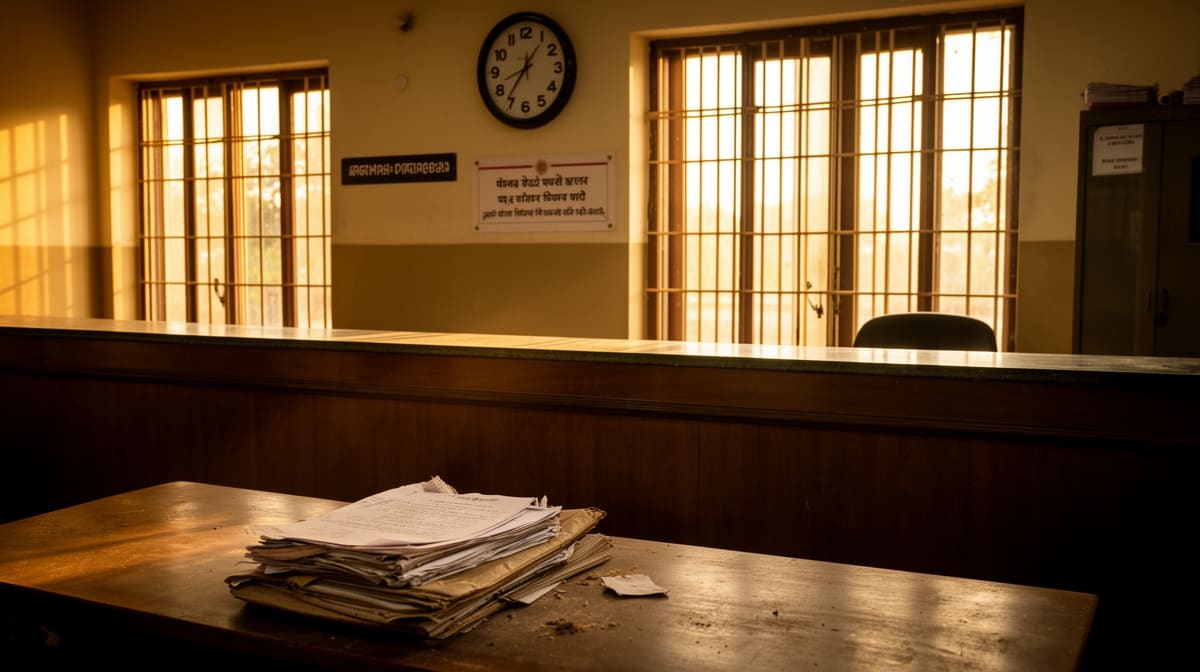
- These authorities have neither responded to the letters nor provided the requested documents despite repeated follow-ups.
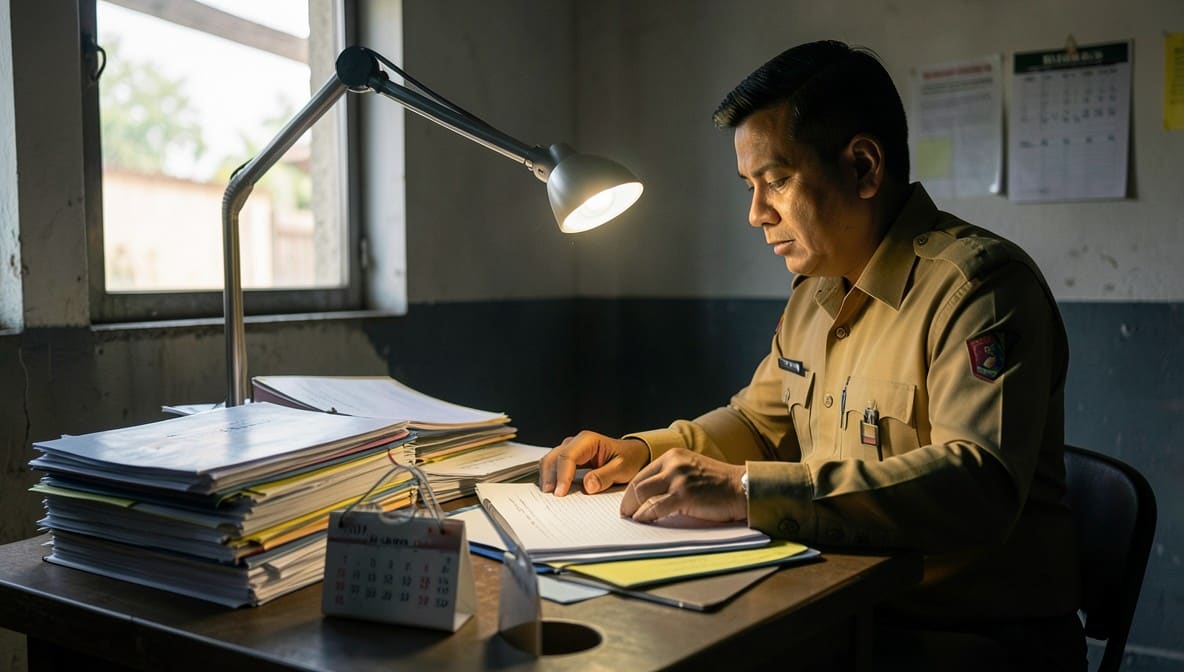
- The investigating officer has personally visited the offices of both municipal bodies on at least five occasions between February and April 2026, but was denied access to records or obstructed by administrative staff.
- No formal written refusal has been issued by either municipal body explaining the non-supply of documents.
Procedural History
- 15.01.2024: FIR registered at EOW, Gwalior, Crime No. 0013/2024.
- 05.02.2024 to 10.04.2026: Investigating officer issued 12 written requests to Municipal Corporation, Morena, and Municipal Council, Kailaras.
- 12.03.2026: First personal visit by investigating officer to Municipal Corporation, Morena; denied access to records.
- 20.04.2026: Second personal visit to Municipal Council, Kailaras; staff refused to acknowledge request.
- 15.04.2026: Petition filed under Section 528 of the Bharatiya Nagarik Suraksha Sanhita (BNSS) before the High Court seeking direction for completion of investigation.
- 05.05.2026: Hearing before Division Bench of Justices G.S. Ahluwalia and Pushpendra Yadav.
The Parties' Positions
The applicant contends that the prolonged delay in investigation, exceeding 16 months without any tangible progress, violates his right to a speedy trial under Article 21 of the Constitution. He argues that the investigating agency’s inability to proceed is not due to lack of effort but due to deliberate non-cooperation by public authorities.
The State, through EOW counsel, admits the delay but attributes it entirely to the non-cooperation of the Municipal Corporation, Morena, and the Municipal Council, Kailaras. It submits that the investigating officer has acted diligently and that the delay is beyond the control of the agency.
Relief Sought
The applicant seeks a direction to complete the investigation within two months and to compel the municipal bodies to cooperate with the investigating agency.
The Legal Issue
The central question was whether the High Court can intervene under Section 528 BNSS to compel municipal authorities to cooperate in a criminal investigation when their non-cooperation is causing undue delay, and whether such delay violates the accused’s fundamental right to a speedy investigation under Article 21.
Arguments Presented
For the Appellant/Petitioner
The petitioner relied on Robert Lalchungnunga Chongthu @ R L Chongthu v. State of Bihar (2025) to argue that indefinite investigation without justification violates Article 21. He contended that institutional obstruction by public bodies cannot be a valid excuse for delay, and that the High Court has the power under Section 528 BNSS to issue directions to ensure expeditious completion of investigation. He emphasized that the investigating officer’s reliance on written correspondence alone, without personal follow-up, amounted to negligence.
For the Respondent/State
The State did not dispute the delay but argued that the investigating agency has no coercive power to compel municipal bodies to produce documents. It submitted that the agency has acted in good faith and that the delay is attributable to administrative inertia, not malice. It requested the Court to permit additional time without imposing strict deadlines.
The Court's Analysis
The Court began by affirming the principle laid down in Robert Lalchungnunga Chongthu that while no statutory deadline exists for investigation, it must be completed within a reasonable time. The Court held that "continuation of investigation for an indefinite period is neither in the interest of the accused nor in the interest of the complainant."
The Court observed that the investigating officer’s practice of sending letters from his office without personal follow-up was inadequate and amounted to passive conduct. The Court noted that municipal bodies, as public institutions, are under a statutory duty to assist law enforcement in criminal investigations, particularly where public funds or property records are involved.
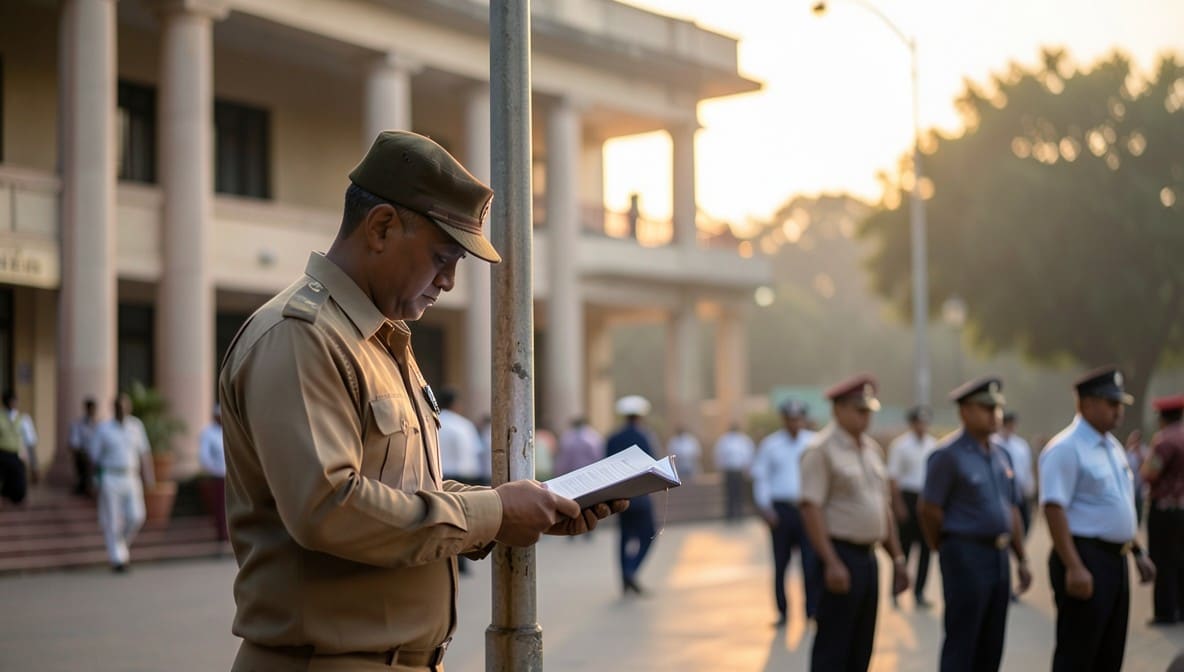
"The investigating officer cannot be permitted to sit in his office and wait for cooperation from public authorities. He must personally appear before the concerned offices, produce this Court’s order, and insist on immediate compliance."
The Court further held that silence or non-response from municipal authorities cannot be construed as consent or acquiescence. Where documents are withheld, the authorities must provide a written explanation. The Court emphasized that such obstruction, if persistent, amounts to contempt of court.
The Court rejected the State’s request for open-ended time and held that a six-month deadline was reasonable given the nature of the documents sought and the fact that the investigation had already exceeded 16 months.
The Verdict
The petition was disposed of with the following directions: (i) The Commissioner, Municipal Corporation, Morena, and the CEO, Municipal Council, Kailaras, shall fully cooperate with the investigating officer and produce all requested documents within 15 days; failure shall be treated as contempt of court, with prosecution of the respective officers; (ii) The investigating officer shall personally visit the municipal offices with a copy of this order and submit a written application for documents; (iii) Any refusal to supply documents must be communicated in writing with reasons; (iv) The investigation shall be concluded and the final report - whether charge sheet or closure report - shall be filed within six months from today, i.e., by 05.11.2026.
What This Means For Similar Cases
Municipal Bodies Cannot Be Excused from Investigative Cooperation
- Practitioners may now cite this judgment to compel any public authority - municipal, revenue, or educational - to produce records in criminal investigations.
- Non-response or silence by public bodies will no longer be accepted as a valid reason for investigative delay.
- The burden shifts to the authority to justify non-cooperation in writing.
Personal Presence of Investigating Officers Is Now Mandatory
- Written requests alone are insufficient; investigators must appear in person with court orders to demand documents.
- This creates a new procedural benchmark for police conduct in white-collar and corruption cases.
- Failure to appear personally may be grounds for challenging the integrity of the investigation.
Six-Month Deadline Sets New Norm for Complex Investigations
- In cases involving multiple agencies or documentary evidence, courts may now impose six-month timelines as a default ceiling.
- Petitioners in stalled investigations may now invoke this precedent to seek judicial intervention before 18 months elapse.
- The distinction between charge sheet and final report is clarified: the latter includes closure reports, preserving prosecutorial discretion.