The Telangana High Court has clarified that procuring Public Distribution System (PDS) rice from beneficiaries at market rates, without evidence of deception, dishonest intent, or breach of contractual obligation, does not constitute an offence under the Bharatiya Nyaya Sanhita, 2023 or the Essential Commodities Act, 1955. This judgment reinforces the principle that criminal proceedings must not be initiated on speculative or incomplete allegations, particularly where the essential ingredients of the alleged offences are absent.
Background & Facts
The Dispute
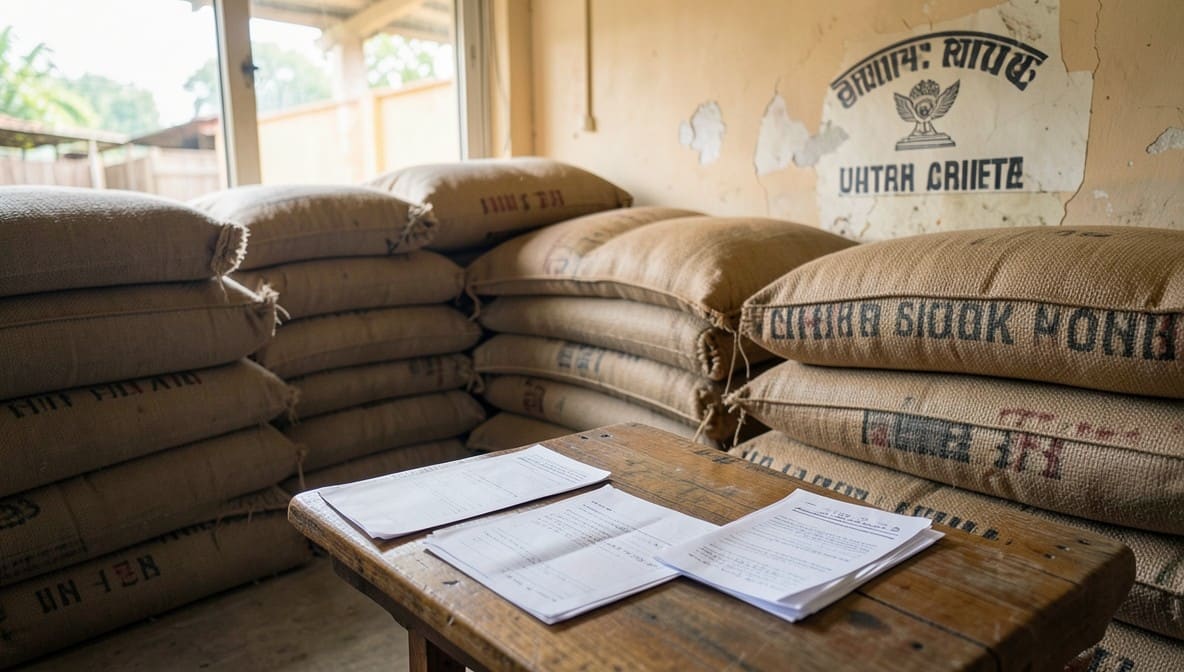
The dispute arises from the registration of FIR No. 80 of 2025 at Bodhan Rural Police Station, Nizamabad District, against three individuals - Syed Zubair, Syed Sameer, and Saklams Srinivas - for allegedly procuring PDS rice from beneficiaries at concessional rates and reselling it for profit. The prosecution alleges violations of Section 318(a) of the Bharatiya Nyaya Sanhita, 2023 (BNS) and Section 7 of the Essential Commodities Act, 1955 (EC Act). The accused were found in possession of 16 bags of PDS rice, totaling 5.85 quintals, on 16.04.2025.
Key Facts
- The petitioners are not PDS dealers or authorized agents; they are private individuals.
- The PDS rice in question was purchased from beneficiaries who had received it under the Public Distribution System.
- There is no allegation that any beneficiary was deceived, coerced, or induced to part with the rice.
- No beneficiary has filed a complaint alleging theft, fraud, or breach of trust.
- The prosecution does not allege that the petitioners violated any specific direction issued under the EC Act or the National Food Security Act.
- The quantity seized (5.85 quintals) is not shown to exceed permissible limits under any applicable regulation.
- The petitioners’ conduct, if any, appears to be commercial arbitrage, not criminal misappropriation.
Procedural History
- 16.04.2025: Police seized 5.85 quintals of PDS rice from the petitioners during a raid.
- 17.04.2025: FIR No. 80 of 2025 registered at Bodhan Rural Police Station against petitioners as accused Nos. 1 to 3.
- 20.04.2025: Petitioners applied for anticipatory bail, which was rejected by the Judicial First Class Magistrate, Bodhan.
- 05.05.2025: Petitioners filed Criminal Petition No. 6407 of 2026 before the Telangana High Court under Section 528 of BNSS, seeking quashing of the FIR.
- 27.04.2026: Hearing concluded before Justice J. Sreenivas Rao.
The Parties' Positions
For the Petitioners
The petitioners, through counsel Sri K. Venumadhav, argued that:
- The prosecution has failed to establish any element of cheating, dishonest intent, or unlawful conversion under Section 318(a) BNS.
- There is no evidence that beneficiaries were induced to part with the rice under false pretenses.
- The mere act of purchasing PDS rice from beneficiaries and reselling it does not violate Section 7 of the EC Act, which targets hoarding, black-marketing, or diversion by authorized persons - not private individuals buying from end-users.
- A coordinate bench of the same court, in Crl.P.No.7227 of 2025, had already held that such conduct, without deception, amounts to abuse of process and warrants quashing.
For the Respondent
The Additional Public Prosecutor, Sri Jithender Rao Veeramalla, contended that:
- The procurement of PDS rice from beneficiaries for commercial resale undermines the intent of the welfare scheme.
- The act constitutes a violation of Section 7 of the EC Act, which prohibits any person from dealing in essential commodities in contravention of orders issued under the Act.
- The prosecution’s case, though circumstantial, is sufficient to proceed to trial.
Relief Sought
The petitioners sought:
- Quashing of FIR No. 80 of 2025 under Section 528 of BNSS.
- Stay of all further proceedings, including arrest.
- Declaration that their conduct does not constitute a cognizable offence under the BNS or EC Act.
The Legal Issue
The central question was whether the mere purchase of PDS rice from beneficiaries and its subsequent resale, without any allegation of deception, coercion, or breach of statutory direction, constitutes an offence under Section 318(a) of the Bharatiya Nyaya Sanhita, 2023 or Section 7 of the Essential Commodities Act, 1955.
Arguments Presented
For the Petitioner
The petitioners relied on the precedent set by a coordinate bench of the same court in Crl.P.No.7227 of 2025, where it was held that for Section 318(a) BNS to apply, there must be proof of dishonest inducement or fraudulent misrepresentation by the accused to the beneficiary. Absent such an allegation, the conduct cannot be criminalized. Regarding Section 7 of the EC Act, the petitioners argued that the provision targets persons in the supply chain - dealers, transporters, or licensees - who violate government orders. Private individuals purchasing from beneficiaries are not covered. The petitioners emphasized that the absence of a complaint from any beneficiary rendered the FIR baseless and an abuse of process.
For the Respondent
The State contended that the resale of PDS rice, even if purchased from beneficiaries, amounts to diversion of subsidized commodities and thus violates the spirit and intent of the EC Act. It argued that the Act’s objective is to prevent any unauthorized trade in essential commodities, regardless of the source. The prosecution maintained that the quantity seized and the commercial nature of the transaction warranted investigation and trial.
The Court's Analysis
The Court undertook a rigorous analysis of the statutory framework and the factual matrix. It emphasized that Section 318(a) BNS requires proof of dishonest intention to induce another person to deliver property by deception. The Court noted:
"There is no averment indicating that the petitioner in any way deceptively induced the beneficiaries to part with the supplied PDS rice or the beneficiary consented to the PDS rice purchased by them with the petitioner and they dishonestly misappropriated or converted to their own use or used it in violation of a lawful direction or contract. In the absence of essential factors, on the face of prosecution, this Court finds it to be a fit case to exercise the jurisdiction under Section 528 of BNSS."
The Court further held that Section 7 of the EC Act applies only to persons who contravene orders issued under the Act - such as restrictions on stocking, pricing, or distribution by licensed dealers. The petitioners, as private individuals purchasing from beneficiaries, are not subject to such orders. The Court observed that criminal law must not be stretched to cover civil or commercial transactions lacking criminal intent.
The Court also reiterated the doctrine of abuse of process: initiating criminal proceedings without prima facie evidence of an offence amounts to harassment and violates the right to life and liberty under Article 21 of the Constitution. The precedent in Crl.P.No.7227 of 2025 was directly applicable and binding. The Court found no material distinction between the facts of that case and the present one.
The Verdict
The Criminal Petition was allowed. The proceedings in FIR No. 80 of 2025 against petitioners Syed Zubair, Syed Sameer, and Saklams Srinivas are hereby quashed. All pending proceedings, including arrest warrants or investigation steps, are stayed and closed. The Court directed the Station House Officer, Bodhan Rural Police Station, to destroy any seized material related to this FIR. The petitioners’ anticipatory bail application, if still pending, is deemed disposed of as infructuous. Costs of Rs. 10,000 are imposed on the State, payable to the petitioners within four weeks.
What This Means For Similar Cases
Criminal Intent Must Be Alleged, Not Assumed
- Practitioners must now insist that FIRs under Section 318(a) BNS contain specific allegations of deception or inducement by the accused.
- Mere possession of PDS goods or commercial resale without beneficiary complaint is insufficient to sustain a criminal charge.
EC Act Does Not Cover End-User Transactions
- Section 7 of the EC Act cannot be invoked against private individuals purchasing subsidized commodities from beneficiaries.
- Prosecutors must identify the specific government order violated; general allegations of "diversion" are legally untenable.
Abuse of Process Doctrine Applies Broadly
-
Courts will actively quash FIRs lacking essential ingredients of an offence, even at the investigation stage.
-
This judgment empowers defence counsel to move for quashing under Section 528 BNSS in similar cases involving welfare scheme commodities.
-
Always demand the absence of beneficiary complaint as a decisive factor.
-
Cite Crl.P.No.7227 of 2025 as binding precedent in Telangana.
-
Argue that criminalization of commercial arbitrage without fraud undermines the principle of legality.