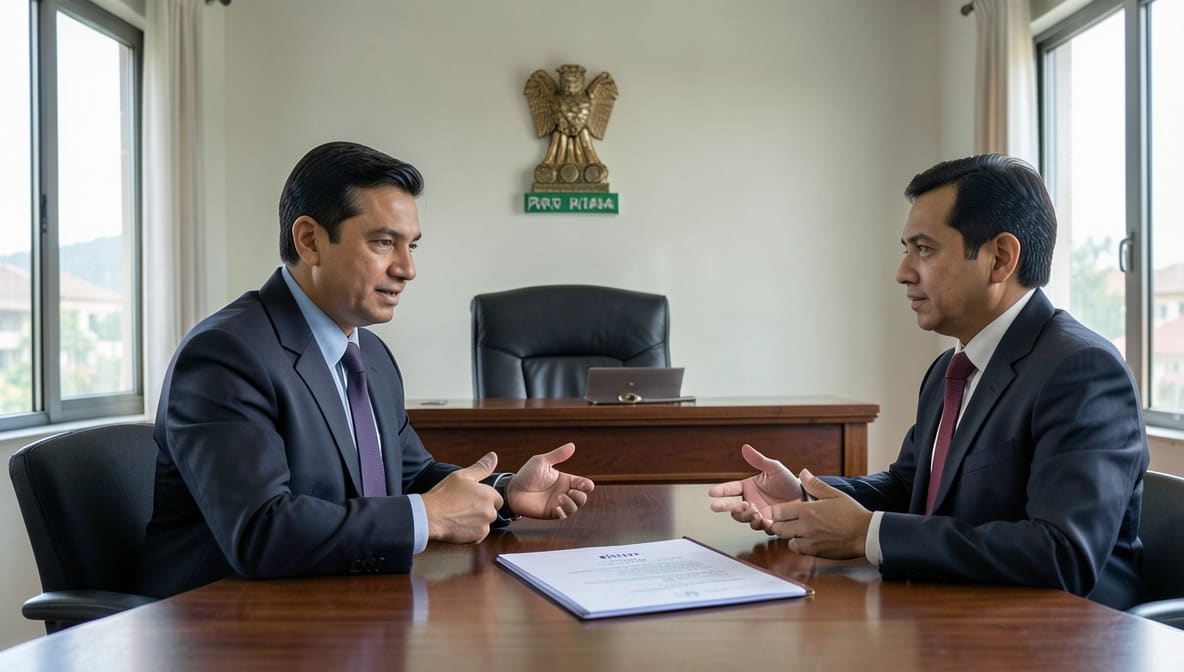
The Bombay High Court recently demonstrated the judiciary's role in facilitating amicable resolutions of private disputes by quashing an FIR registered under multiple provisions of the Indian Penal Code, following a settlement between the parties. The Court imposed costs on both parties, emphasizing that unnecessary invocation of police machinery warrants financial consequences, while still upholding the principle that criminal proceedings should not persist when the complainant no longer supports the prosecution.
Background & Facts
The Dispute
The petitioner, Meera Chandrashekhar Pardeshi, was the sole surviving accused in FIR No. 12 of 2017 registered at Sarkarwada Police Station, Nashik, for offences under Sections 406 (criminal breach of trust), 420 (cheating), 465 (forgery), 467 (forgery of valuable security), 468 (forgery for purpose of cheating), 471 (using forged document), and 120B (criminal conspiracy) of the Indian Penal Code. The FIR arose from a private dispute between the petitioner and Respondent No. 2, who was the complainant. The petitioner's husband, initially a co-accused, passed away during the pendency of the proceedings, leaving the petitioner as the sole accused.
Key Facts
- 11.01.2017: FIR registered at Sarkarwada Police Station, Nashik.
- Post-investigation: Charge sheet filed before the Chief Judicial Magistrate, Nashik, leading to Regular Criminal Case (RCC) No. 1316 of 2020.
- During pendency: The petitioner's husband, Chandrashekhar Pardeshi, passed away, leaving the petitioner as the sole accused.
- 05.06.2025: The parties executed a Memorandum of Understanding (MOU) to settle the dispute amicably.
- 30.06.2025: The Chief Judicial Magistrate, Nashik, defreezed the petitioner's company's Current Account (No. 17580200001396, Federal Bank, Nerul Branch) following the settlement.
- 24.06.2026: Respondent No. 2 filed an Affidavit before a Notary, stating his no-objection to quashing the FIR and confirming the settlement was entered into freely and without coercion.
Procedural History
- 11.01.2017: FIR registered under Sections 406, 420, 465, 467, 468, 471 r/w 34, and 120B IPC.
- Post-investigation: Charge sheet filed; RCC No. 1316 of 2020 initiated before the Chief Judicial Magistrate, Nashik.
- 05.06.2025: MOU executed between the parties.
- 30.06.2025: Chief Judicial Magistrate defreezes the company's Current Account.
- 24.06.2026: Respondent No. 2 files an Affidavit supporting quashing of the FIR.
- 29.06.2026: Present Criminal Writ Petition (No. 2357 of 2026) filed under Article 226 of the Constitution of India and Section 528 of the Bharatiya Nagarik Suraksha Sanhita, 2023, seeking quashing of the FIR and RCC.
The Parties' Positions
- Petitioner: Argued that the dispute was purely private and had been amicably resolved via the MOU. Requested quashing of the FIR and RCC, citing the complainant's no-objection.
- Respondent No. 2 (Complainant): Supported the petitioner's request, stating in his Affidavit that he had unconditionally withdrawn all allegations and did not wish to pursue the criminal proceedings. Confirmed the settlement was entered into freely and without pressure.
- State (Respondent No. 1): Did not object to the quashing of the FIR but insisted on imposition of costs, arguing that the dispute was private and should not have been escalated to the police.
Relief Sought
The petitioner sought quashing of:
- FIR No. 12 of 2017 registered at Sarkarwada Police Station, Nashik.
- RCC No. 1316 of 2020 pending before the Chief Judicial Magistrate, Nashik.
The Legal Issue
The central question before the Court was whether a criminal proceeding, arising from a purely private dispute, should be quashed when the complainant has unconditionally withdrawn allegations and entered into an amicable settlement with the accused, particularly in light of the principles laid down by the Supreme Court in cases involving quashing of FIRs.
Arguments Presented
For the Petitioner
- The dispute was purely private and had been amicably resolved via the MOU dated 05.06.2025.
- Respondent No. 2 had filed an Affidavit stating his no-objection to quashing the FIR and confirming the settlement was entered into freely.
- Continuing the criminal proceedings would serve no useful purpose, as the complainant no longer supported the prosecution.
- Relied on Supreme Court precedents, including Gian Singh v. State of Punjab, Narinder Singh v. State of Punjab, and Parbatbhai Aahir v. State of Gujarat, which permit quashing of FIRs in cases of private disputes settled amicably.
For the Respondent/State
- While the State did not object to quashing the FIR, it argued that the dispute was purely private and should not have been escalated to the police, warranting imposition of costs.
- Insisted on costs of Rs. 1,00,000 each on the petitioner and Respondent No. 2 for unnecessarily invoking police machinery.
The Court's Analysis
The Court examined the principles governing the quashing of FIRs in cases of private disputes settled amicably. It relied on the following key precedents:
In Gian Singh v. State of Punjab, the Supreme Court held that the High Court can quash criminal proceedings in cases of non-heinous offences arising from private disputes, where the parties have settled the matter amicably. The Court emphasized that continuing such proceedings would serve no purpose when the complainant no longer supports the prosecution.
In Narinder Singh v. State of Punjab, the Supreme Court laid down that quashing of FIRs is permissible in cases where the dispute is purely personal and has been resolved between the parties, provided the offence is not heinous or against society at large.
In Parbatbhai Aahir v. State of Gujarat, the Supreme Court reiterated that the power to quash criminal proceedings under Section 482 CrPC (now Section 528 of BNSS) should be exercised to secure the ends of justice, particularly when the dispute is private and the complainant has no objection to quashing.
The Court observed that the present case involved a private dispute between the petitioner and Respondent No. 2, which had been amicably resolved via the MOU. The complainant had unconditionally withdrawn all allegations and stated that he did not wish to pursue the criminal proceedings. The Court noted that no public interest or societal harm was involved, and continuing the proceedings would be an exercise in futility.
However, the Court also took cognizance of the State's argument that unnecessary invocation of police machinery warrants financial consequences. It balanced the principles of justice with the need to deter frivolous complaints, ultimately imposing costs on both parties.
The Verdict
The Court allowed the Criminal Writ Petition No. 2357 of 2026 and quashed:
- FIR No. 12 of 2017 registered at Sarkarwada Police Station, Nashik.
- RCC No. 1316 of 2020 pending before the Chief Judicial Magistrate, Nashik.
Conditions Imposed:
- The petitioner and Respondent No. 2 were directed to pay costs of Rs. 75,000 each as a condition precedent to the quashing.
- The petitioner was to deposit Rs. 75,000 in the High Court Employees Medical Welfare Fund (Account No. 000120110001337, Bank of India, Mumbai Main Branch, IFSC: BKID0000001).
- Respondent No. 2 was to deposit Rs. 75,000 in the Central Police Welfare Fund (Account No. 914010029005759, Axis Bank, Worli Branch, Mumbai, IFSC: UTIB0000060).
- Both parties were to deposit the costs within four weeks (by 31.07.2026) and file a compliance affidavit with proof of deposit.
What This Means For Similar Cases
Quashing Permissible for Private Disputes Settled Amicably
- The judgment reaffirms that criminal proceedings arising from private disputes can be quashed if the parties settle the matter amicably and the complainant withdraws allegations.
- Practitioners can rely on this judgment to argue for quashing in cases where:
- The dispute is purely personal and does not involve public funds, government offices, or financial institutions.
- The complainant unconditionally withdraws allegations and states no objection to quashing.
- The offence is non-heinous and does not affect society at large.
Costs as a Deterrent for Frivolous Complaints
- The Court imposed costs on both parties to deter unnecessary invocation of police machinery for private disputes.
- This sets a precedent that even in cases of quashing, parties may not escape financial consequences if the complaint was frivolous or avoidable.
- Practitioners should advise clients that settling disputes privately before escalating to police can avoid costs, but once police machinery is invoked, quashing may not be cost-free.
Role of MOUs and Affidavits in Quashing Proceedings
- The judgment highlights the importance of formal settlements (e.g., MOUs) and affidavits of no-objection in quashing proceedings.
- Key takeaways:
- MOUs should clearly record the terms of settlement and the complainant's no-objection to quashing.
- Affidavits should be unconditional, stating the settlement was entered into freely and without coercion.
- Courts may defreeze accounts or grant interim relief based on settlements, as seen in this case.