The Delhi High Court has affirmed that in private disputes devoid of public interest, a genuine compromise between parties can justify quashing of an FIR, even where offences under the Bharatiya Nyaya Sanhita, 2023 are alleged. This ruling reinforces the judiciary’s discretion to prevent abuse of process when justice is already served through settlement.
Background & Facts
The Dispute
The dispute arose on 14.03.2026 at Connaught Place, New Delhi, when Respondent No. 1, while returning in his Kia Seltos car, was blocked by a Honda Amaze driven by the Petitioner, Rohil Nain. The Petitioner allegedly drove on the wrong side of the road, prompting Respondent No. 1 to request him to pull over. This led to a verbal altercation, physical scuffle, and the accidental knocking off of Respondent No. 2’s turban. The incident was brief, unpremeditated, and occurred in the heat of the moment.
Key Facts
- The incident occurred on 14.03.2026 at Connaught Place, New Delhi
- FIR No. 63/2026 was registered on 14.03.2026 at Police Station Connaught Place under Sections 115(2)/126(2)/299/351(2) of the Bharatiya Nyaya Sanhita, 2023 (corresponding to Sections 323/341/295A/506 IPC)
- The Petitioner has no prior criminal antecedents and is engaged in professional engineering work
- The altercation was spontaneous, with no evidence of premeditation or intent to cause grievous harm
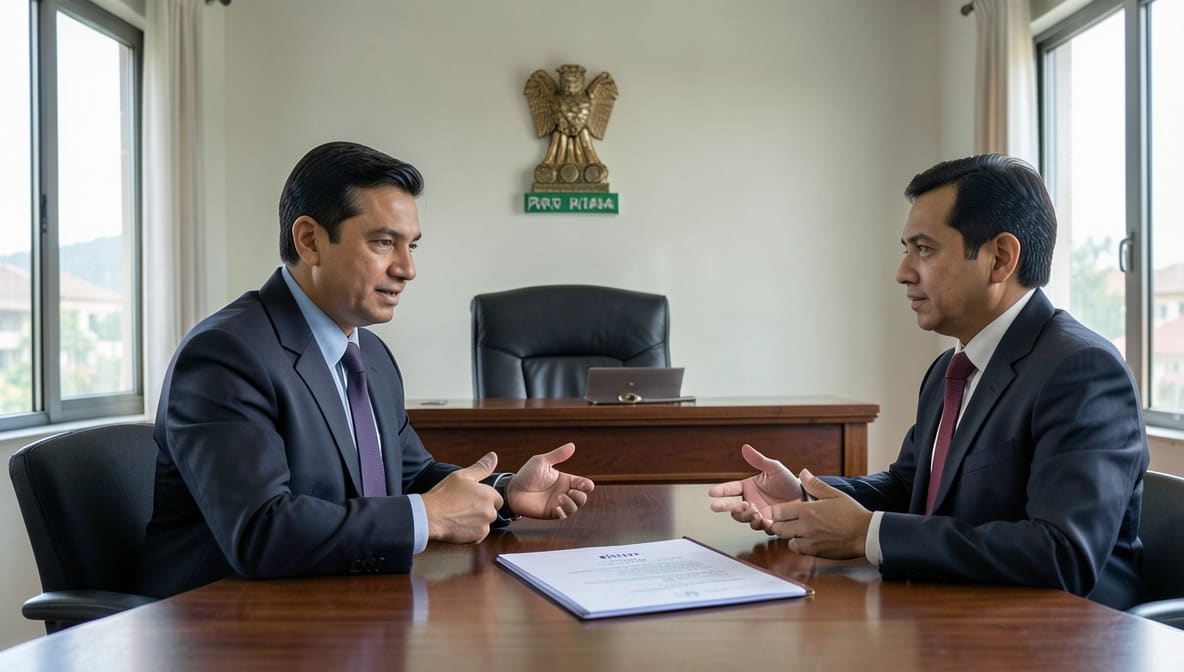
- On 27.03.2026, the parties entered into a written compromise, duly executed and filed before the Court
- Respondent No. 2, the turban-wearing individual, personally appeared before the Court on 07.04.2026 and affirmed the voluntary nature of the settlement
- Investigation was incomplete at the time of the petition, with no charge sheet filed
Procedural History
- 14.03.2026: FIR registered at Police Station Connaught Place
- 27.03.2026: Written compromise executed between parties
- 07.04.2026: Petition filed under Section 482 CrPC (now Section 528 of Bharatiya Nagarik Suraksha Sanhita, 2023) seeking quashing of FIR
- 07.04.2026: Hearing before the Delhi High Court; Respondent No. 2 appeared with counsel and confirmed settlement
Relief Sought
The Petitioner sought quashing of FIR No. 63/2026 and all consequential proceedings, citing the compromise, absence of public interest, and lack of criminal intent. He also requested that no further investigation or prosecution be permitted.
The Legal Issue
The central question was whether the High Court may exercise its inherent powers under Section 528 of the Bharatiya Nagarik Suraksha Sanhita, 2023 to quash an FIR in a private dispute where the complainant has voluntarily compromised, the offence does not involve public interest, and the accused has no prior criminal record.
Arguments Presented
For the Petitioner
The Petitioner argued that the incident was a spontaneous road rage episode with no malice or premeditation. He emphasized the absence of grievous injury, the voluntary nature of the compromise executed on 27.03.2026, and his clean record. He relied on State of Haryana v. Bhajan Lal and Gian Singh v. State of Punjab to contend that courts may quash proceedings where justice is better served by settlement in private disputes. He submitted that continuing prosecution would be an abuse of process.
For the Respondent/State
The Additional Public Prosecutor for the State acknowledged that the investigation was incomplete and that the complainant had expressed willingness to withdraw the complaint. While maintaining that the alleged offences were cognizable, the State did not oppose quashing, noting that the complainant had no objection and that the matter was purely private.
The Court's Analysis
The Court examined the nature of the dispute and found it to be entirely private, arising from a transient road incident with no broader societal implications. The Court noted that the complainant, Respondent No. 2, personally affirmed before the Court that the compromise was entered into voluntarily, without coercion or undue influence. The Court emphasized that the offences alleged - though technically cognizable - were not of a nature that required state prosecution where the victim has unequivocally withdrawn the complaint.
"Continuing with criminal proceedings would serve no useful purpose, especially when dispute does not involve any public interest and is, primarily, private in nature. In any case, even the complainant does not wish to press any charges against the petitioner."
The Court held that Section 528 of the Bharatiya Nagarik Suraksha Sanhita, 2023 empowers the High Court to quash proceedings to secure the ends of justice, particularly where the parties have resolved their differences. The Court distinguished this case from those involving heinous crimes, sexual offences, or crimes against the state, where public interest overrides private compromise. Here, the absence of public interest, the voluntary settlement, and the lack of prior criminality weighed decisively in favour of quashing.
The Verdict
The Petitioner succeeded. The Delhi High Court quashed FIR No. 63/2026 dated 14.03.2026, registered at Police Station Connaught Place for offences under Sections 115(2)/126(2)/299/351(2) of the Bharatiya Nyaya Sanhita, 2023, along with all consequential proceedings. The Petitioner was directed to deposit a cost of Rs. 25,000 in the account of the Delhi Sikh Gurdwara Management Committee (Account No. 500101013888557, IFSC CIUB0000253, City Union Bank Ltd., Chandni Chowk) within four weeks from the date of judgment. Proof of deposit and original affidavits of the parties were to be submitted before the concerned SHO within two weeks thereafter.
What This Means For Similar Cases
Compromise Can Quash Non-Heinous FIRs
- Practitioners may now confidently move for quashing of FIRs in minor road rage, verbal abuse, or scuffle cases where the complainant voluntarily settles
- The Court’s emphasis on "public interest" as a threshold criterion provides a clear filter for when compromise is legally viable
- This ruling aligns with the spirit of restorative justice in low-grade interpersonal conflicts
Procedural Compliance Remains Mandatory
- A written compromise must be filed and affirmed before the Court
- The complainant’s personal appearance and affirmation carry significant weight
- Courts will scrutinize whether the settlement is genuine and free from coercion
- Costs may be imposed even in quashing orders to deter frivolous litigation
No Automatic Bar to Quashing Under BNS
- The Bharatiya Nyaya Sanhita, 2023 does not preclude quashing under Section 528 BNSS
- Courts retain discretion to balance procedural formality with substantive justice
- This judgment reinforces that the new criminal codes do not eliminate judicial discretion to prevent abuse of process