The Bombay High Court has reaffirmed that criminal proceedings arising from private commercial disputes may be quashed where the complainant consents to settlement and no public interest is compromised. This judgment provides critical clarity on the judicial approach to terminating criminal cases rooted in civil contractual disagreements.
Background & Facts
The Dispute
The dispute originated from a commercial employment relationship between the Petitioner, Anilbabu Venkatnarayan Karlapudi, and DSV Air & Sea Private Limited. The complainant, Sandeep Suresh Tatke, who is also a Director of the company, alleged that the Petitioner committed offences under Sections 408, 420, 465, 467, 468, and 471 of the Indian Penal Code, 1860, relating to breach of employment obligations, dishonest misappropriation, and forgery.
Key Facts
- The Petitioner was employed by DSV Air & Sea Private Limited in a managerial capacity.
- Allegations were made that the Petitioner misused company resources and breached contractual obligations.
- FIR No. 57 of 2023 was registered at Sahar Police Station on 03.10.2023, later transferred to the Economic Offences Wing (EOW).
- A Chargesheet was filed as Criminal Case No. 156/PW/2024 before the 47th Metropolitan Magistrate, Esplanade, Mumbai.
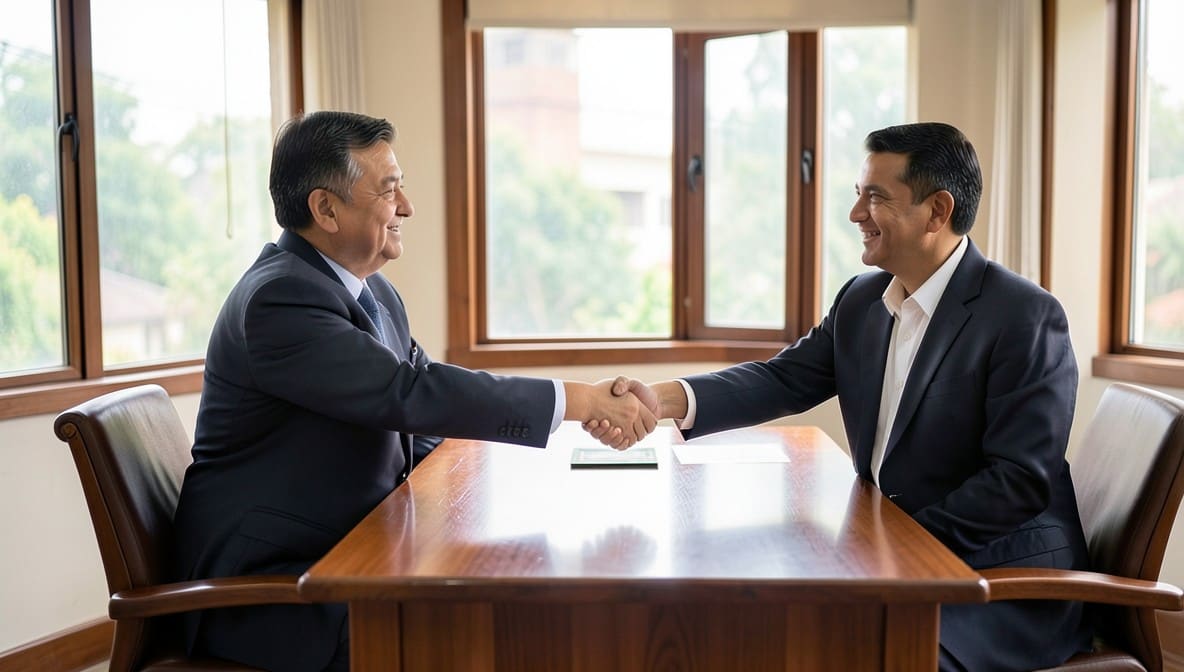
- On 19.03.2024, the Petitioner and the company executed a Settlement Agreement under which the Petitioner paid Rs. 2 Crores as full and final compensation for the alleged breach.
- The company resolved on 28.06.2024, via Board Resolution, to withdraw all allegations and consent to quashing of the criminal proceedings.
- The Director of the company, Respondent No. 2, filed an affidavit on 08.05.2026 affirming the settlement, withdrawal of complaints, and absence of coercion.
Procedural History
- 03.10.2023: FIR No. 57/2023 registered at Sahar Police Station.
- 19.03.2024: Settlement Agreement executed between Petitioner and DSV Air & Sea Private Limited.
- 28.06.2024: Board Resolution passed authorizing quashing of criminal proceedings.
- 08.05.2026: Affidavit of Respondent No. 2 filed before the High Court.
- 08.05.2026: Writ Petition No. 4336 of 2024 filed under Article 226 and Section 528 of the Bharatiya Nagarik Suraksha Sanhita, 2023.
- 08.05.2026: Hearing before the Division Bench of the Bombay High Court.
The Parties' Positions
The Petitioner contended that the matter was purely commercial and had been fully resolved through settlement. He sought quashing of the FIR and chargesheet to prevent abuse of process. Respondent No. 2, acting on behalf of the company, affirmed the settlement and withdrew all allegations. The State, through the APP, did not oppose quashing but insisted on imposition of costs.
Relief Sought
The Petitioner sought quashing of FIR No. 57 of 2023 and Criminal Case No. 156/PW/2024, along with a direction to close all proceedings.
The Legal Issue
The central question was whether criminal proceedings initiated in a private commercial dispute may be quashed under Article 226 of the Constitution when the complainant has fully settled the matter, withdrawn all allegations, and no public interest is adversely affected.
Arguments Presented
For the Appellant/Petitioner
The Petitioner relied on the settled principle that courts have inherent power to quash criminal proceedings to prevent abuse of process, particularly where the dispute is essentially civil in nature. He cited Gian Singh v. State of Punjab, Narinder Singh v. State of Punjab, and Parbatbhai Aahir v. State of Gujarat to argue that continuation of proceedings after settlement serves no public purpose. He emphasized that the complainant, through a duly authorized Director, had voluntarily withdrawn all allegations and that the settlement was complete, with Rs. 2 Crores paid in full.
For the Respondent/State
The State did not oppose quashing but insisted that exemplary costs be imposed on both parties as a deterrent against misuse of police machinery for private commercial disputes. The APP argued that while the dispute was private, the initiation of criminal proceedings consumed public resources and therefore warranted a cost imposition to discourage such conduct.
The Court's Analysis
The Court examined the nature of the dispute and found it to be entirely commercial, rooted in an employment contract and resolved through a binding settlement agreement. The Court noted that the complainant, through his affidavit, had unequivocally withdrawn all allegations and expressed no desire to pursue prosecution. The State, while maintaining its procedural stance, did not oppose quashing.
"There is no impediment in allowing this Petition, having regard to the pronouncements of the Hon'ble Supreme Court in the case of Gian Singh vs State of Punjab, Narinder Singh and Ors vs State of Punjab and Anr, and Parbatbhai Aahir @ Parbatbhai vs The State of Gujarat."
The Court emphasized that the Supreme Court has consistently held that when a criminal case arises from a civil dispute and the parties have arrived at a compromise, the court may exercise its inherent powers under Article 226 to quash proceedings to prevent abuse of the process of law. The Court found no evidence of coercion, fraud, or public interest concerns. The fact that the complainant had paid compensation and formally withdrawn the complaint rendered the continuation of criminal proceedings unnecessary and unjust.
The Court further held that while quashing is permissible, the initiation of criminal proceedings in a purely commercial context warrants a deterrent cost to discourage parties from using police machinery as leverage in civil disputes.
The Verdict
The Petition was allowed. The impugned FIR No. 57 of 2023 and the chargesheet in Criminal Case No. 156/PW/2024 are quashed. The Petitioner shall pay costs of Rs. 1,00,000 and Respondent No. 2 shall pay costs of Rs. 1,00,000. Both parties must deposit their respective costs into the Bar Council of Maharashtra and Goa Advocate Aid Fund account by 15.06.2026 and file a compliance affidavit with proof of deposit. The matter is disposed of.
What This Means For Similar Cases
Settlement in Commercial Disputes Can Terminate Criminal Proceedings
- Practitioners may now confidently seek quashing of FIRs in civil-commercial disputes where a genuine settlement is reached, supported by documentary evidence and complainant consent.
- The burden is on the petitioner to prove the settlement is voluntary, complete, and without coercion.
- Affidavits from complainants and board resolutions are critical to establish authenticity.
Costs Are Mandatory Even in Quashing
- Courts will impose costs on both parties when criminal proceedings are initiated in private disputes, regardless of outcome.
- Costs serve as a deterrent against misuse of police machinery for civil leverage.
- Practitioners must advise clients to budget for potential costs even when seeking quashing.
No Need for State Opposition to Quash
- The State’s non-opposition, coupled with complainant consent, is sufficient for quashing in civil disputes.
- Courts will not insist on prosecution merely because the State is a party to the proceedings.
- This reinforces the principle that criminal law is not a tool for enforcing civil contracts.