The Andhra Pradesh High Court has reaffirmed that courts possess discretion to modify the mandatory 20% deposit condition under Section 528 of the Bharatiya Nagarik Suraksha Sanhita, 2023 (BNSS) or Section 482 of the Code of Criminal Procedure, 1973 (CrPC) in exceptional cases. This order provides relief to accused persons facing financial hardship while balancing the interests of complainants in cheque bounce cases.
Background & Facts
The Dispute
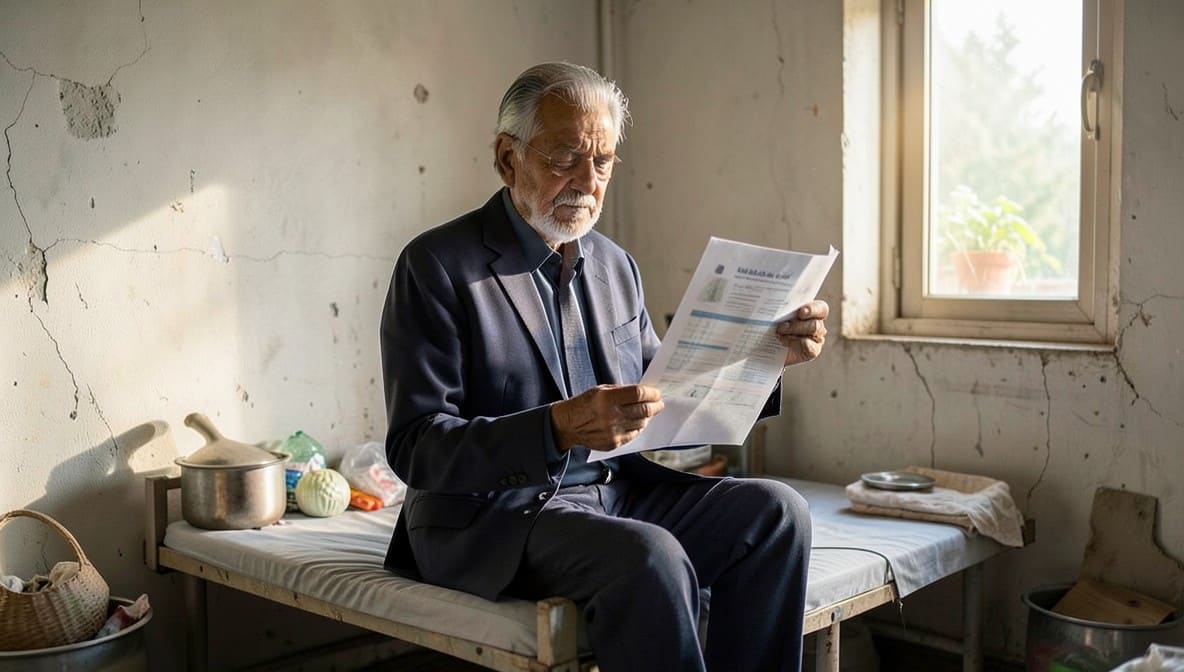
The petitioner, Abburi Vara Prasad, was directed by the II Additional District & Sessions Judge, Visakhapatnam, to deposit 20% of the cheque amount as a condition for suspending the sentence in a cheque bounce case. The impugned order was passed on 27.05.2026 in Crl.M.P.No. 602 of 2026 in Crl.A.No. 152 of 2026. The petitioner challenged this condition before the High Court, citing severe financial constraints and a heart disease that rendered him unable to comply.
Key Facts
- The petitioner was accused in a cheque bounce case, likely under Section 138 of the Negotiable Instruments Act, 1881
- The appellate court imposed a condition to deposit 20% of the cheque amount for suspending the sentence
- The petitioner suffers from heart disease and claimed financial incapacity to comply with the condition
- The petitioner filed Criminal Revision Case No. 711/2026 under Section 482 CrPC/Section 528 BNSS seeking modification of the deposit condition
Procedural History
- 27.05.2026: Impugned order passed by the II Additional District & Sessions Judge, Visakhapatnam, directing deposit of 20% of the cheque amount (Crl.M.P.No. 602 of 2026 in Crl.A.No. 152 of 2026)
- 01.07.2026: Present Criminal Revision Case filed before the High Court of Andhra Pradesh at Amaravati
Relief Sought
The petitioner sought modification of the deposit condition from 20% to a lower percentage, citing financial hardship and medical condition as exceptional circumstances warranting relief.
The Legal Issue
The central question was whether a court, under Section 482 CrPC or Section 528 BNSS, possesses discretion to reduce or waive the mandatory 20% deposit condition for suspending a sentence in cheque bounce cases when the accused demonstrates exceptional financial hardship or medical incapacity.
Arguments Presented
For the Petitioner
The petitioner’s counsel relied on the Supreme Court’s judgment in Jamboo Bhandari v. M.P. SIDC Ltd ((2023) 10 SCC 446), specifically Paragraphs 7 to 10, which held that courts may suspend sentences without imposing the 20% deposit condition in exceptional cases. The counsel argued that the petitioner’s heart disease and financial incapacity constituted such exceptional circumstances, justifying modification of the condition.
For the Respondent
The Public Prosecutor, representing the State, did not oppose the petitioner’s request for modification, likely in light of the medical condition and financial hardship presented. Respondent No. 1 (complainant) was not issued notice, as the impugned order pertained solely to the deposit condition, which did not require the complainant’s input.
The Court's Analysis
The High Court examined the legal framework governing suspension of sentences in cheque bounce cases, particularly the mandatory deposit condition under Section 528 BNSS (or Section 482 CrPC). The Court noted that while the 20% deposit condition is generally imposed to balance the interests of the complainant, courts retain inherent discretion to modify or waive it in exceptional circumstances.
"It is apposite to refer judgment of the Hon’ble Apex Court wherein at Jamboo Bhandari v. M.P. SIDC Ltd at Paragraph Nos.7 to 10, it is held that the court under exceptional cases may grant suspension of sentence without imposing the condition of deposit of 20% of the fine/compensation amount/cheque amount."
The Court observed that the petitioner’s medical condition (heart disease) and financial incapacity constituted exceptional circumstances warranting relief. While the Court did not waive the deposit condition entirely, it reduced the requirement from 20% to 10% and extended the timeline for compliance, ensuring that the complainant’s interests were not unduly prejudiced.
The Verdict
The High Court partially allowed the Criminal Revision Case with the following directions:
- The impugned order dated 27.05.2026 in Crl.M.P.No. 602 of 2026 in Crl.A.No. 152 of 2026 was modified to reduce the deposit condition from 20% to 10% of the cheque amount
- The petitioner was directed to deposit 10% of the cheque amount within four (04) weeks from the date of receipt of the order
- Upon such deposit, Respondent No. 1 (complainant) was permitted to withdraw the amount upon furnishing sufficient surety to the satisfaction of the Trial Court
- The Criminal Revision Case was disposed of, and all pending miscellaneous petitions were closed
What This Means For Similar Cases
Courts Can Exercise Discretion in Exceptional Cases
This judgment reaffirms that while the 20% deposit condition under Section 528 BNSS (or Section 482 CrPC) is mandatory in general, courts retain inherent discretion to modify or waive it in exceptional circumstances. Practitioners should:
- Argue for modification when the accused demonstrates genuine financial hardship, medical incapacity, or other exceptional circumstances
- Rely on Jamboo Bhandari v. M.P. SIDC Ltd to support requests for reduced deposit conditions
- Ensure compliance with modified timelines to avoid adverse orders
Balancing Complainant’s Interests with Accused’s Rights
The Court struck a balance between the complainant’s right to compensation and the accused’s right to fair treatment in exceptional cases. Key takeaways include:
- Reduction, not waiver: Courts may reduce the deposit percentage rather than waive it entirely to protect the complainant’s interests
- Surety requirement: Complainants may be permitted to withdraw the deposited amount upon furnishing sufficient surety, ensuring financial security
- Medical evidence: Accused persons should submit medical records to substantiate claims of incapacity
Practical Implications for Cheque Bounce Litigation
- Defence strategy: Accused persons facing financial hardship should proactively file applications under Section 482 CrPC/Section 528 BNSS seeking modification of deposit conditions
- Complainant’s safeguards: Complainants should insist on surety to mitigate risks of non-compliance by the accused
- Appellate courts: Lower courts should exercise discretion judiciously, ensuring that modifications do not prejudice complainants while providing relief to deserving accused