The Kerala High Court has clarified that appellate courts cannot mechanically deny waiver of the statutory deposit under Section 148 of the Negotiable Instruments Act without examining exceptional circumstances. This ruling reinforces judicial discretion as a safeguard against disproportionate hardship, particularly for elderly or medically vulnerable accused.
Background & Facts
The Dispute
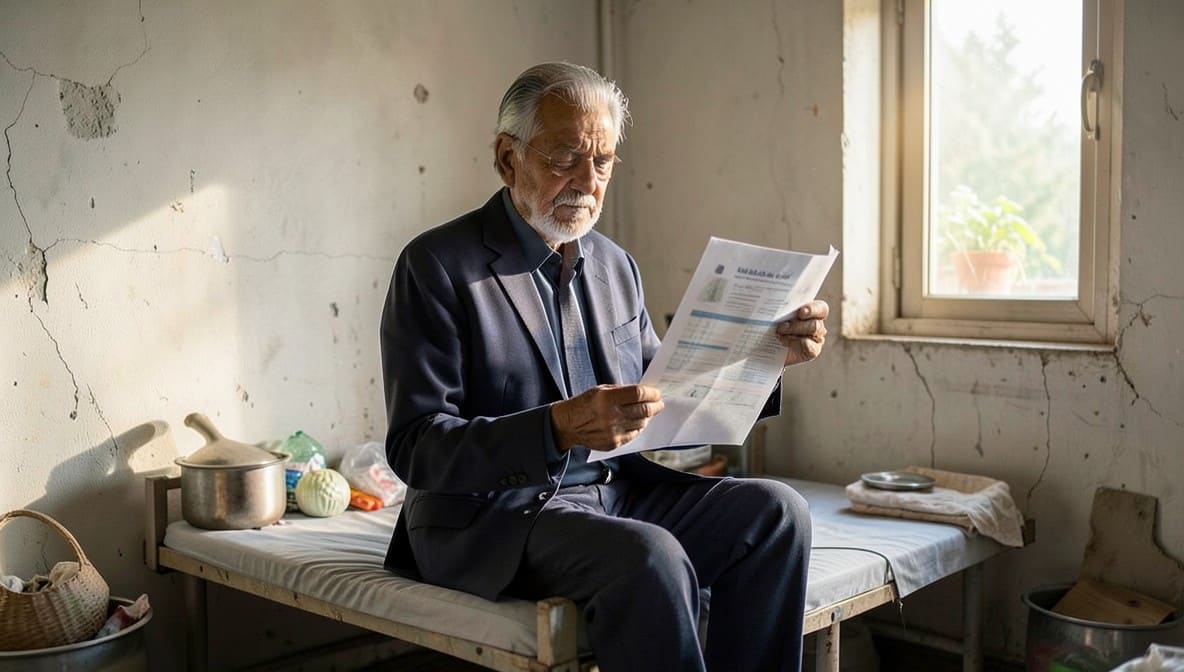
The petitioner, Vasudevan, aged 68, was convicted by the Judicial First Class Magistrate, Chavakkad, in Criminal Case No. 3131 of 2014 under Section 138 of the Negotiable Instruments Act for issuing a cheque that was dishonoured. The conviction was based on a complaint filed by the 2nd respondent, Vineesh. The Trial Court sentenced the petitioner to six months’ imprisonment and a fine of Rs. 1,00,000, with default imprisonment of three months.
Key Facts
- The cheque in question was issued on 25.11.2013 and presented for payment on 15.12.2013
- The cheque was returned unpaid on 20.12.2013
- Legal notice was issued on 05.01.2014 and received by the petitioner on 10.01.2014
- The petitioner filed a reply on 20.01.2014, asserting he was abroad during the relevant period
- The Trial Court rejected the defence and convicted the petitioner on 07.04.2026
- The petitioner filed an appeal before the District and Sessions Court, Thrissur, on 06.05.2026
- Along with the appeal, the petitioner filed two applications: (i) to suspend the sentence (Annexure-3), and (ii) to waive the 20% deposit under Section 148 NI Act (Annexure-4)
- Annexure-4 specifically pleaded: (a) petitioner’s age (68 years), (b) poor health, (c) absence from India between 04.04.2010 and 09.09.2020, and (d) lack of financial means to deposit Rs. 20,000 (20% of Rs. 1,00,000 fine)
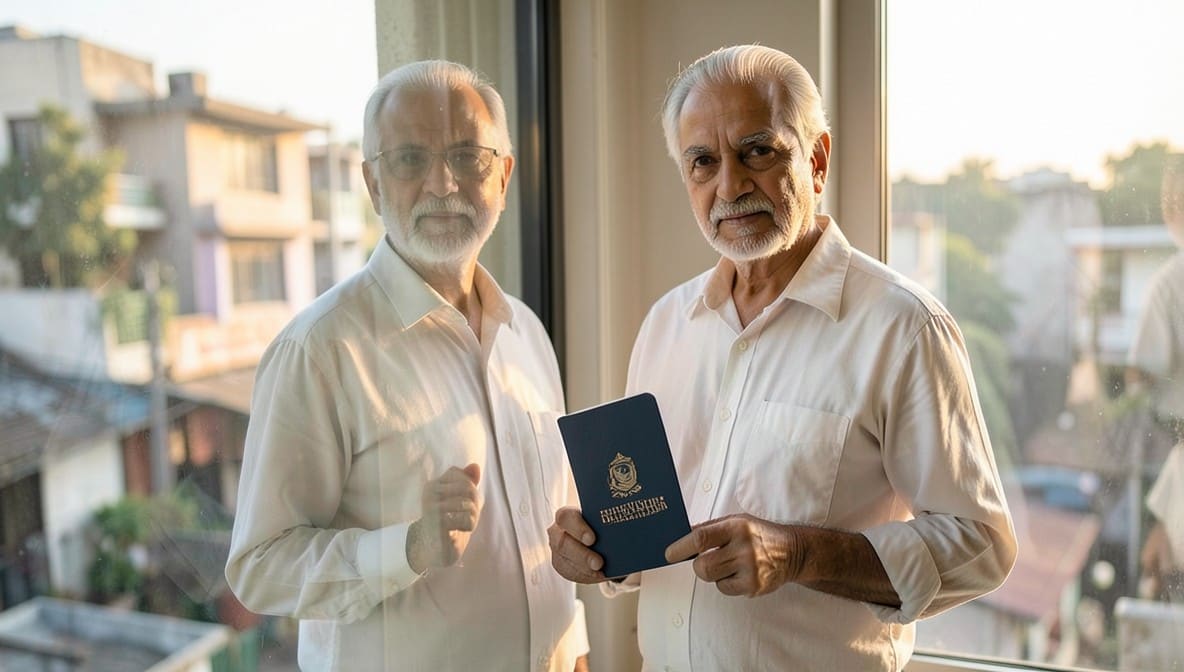
- Annexure-6 and Annexure-7 submitted as evidence: passport showing departure from UAE on 04.04.2010 and return on 09.09.2020
Procedural History
- 25.11.2013: Cheque issued
- 15.12.2013: Cheque presented for payment
- 20.12.2013: Cheque dishonoured
- 05.01.2014: Legal notice sent
- 10.01.2014: Notice received by petitioner
- 20.01.2014: Petitioner’s reply filed
- 07.04.2026: Trial Court conviction and sentencing
- 06.05.2026: Appeal filed before District Court, Thrissur (Crl.A. No. 169 of 2026)
- 06.05.2026: Applications for suspension of sentence and waiver of deposit filed
- 08.05.2026: Appellate Court passed Annexure-5 order: dismissed waiver application without reasons; allowed suspension subject to 20% deposit
- 09.06.2026: Criminal Miscellaneous Case filed before Kerala High Court
The Parties' Positions
Petitioner: Argued that he was physically absent from India during the entire period of cheque issuance and presentation. His passport endorsements (Annexures 6 and 7) corroborate his presence abroad from 04.04.2010 to 09.09.2020. He is elderly, in poor health, and lacks financial capacity to deposit Rs. 20,000. The Appellate Court’s refusal to waive the deposit was arbitrary and contrary to Supreme Court precedents.
Respondent State: Did not oppose the waiver application on merits, as the 2nd respondent was not served notice. The Public Prosecutor acknowledged the absence of reasons in the Appellate Court’s order.
Relief Sought
The petitioner sought: (i) setting aside of Annexure-5 order; (ii) waiver of the 20% deposit under Section 148 NI Act; (iii) suspension of sentence without financial condition; and (iv) direction to the Appellate Court to dispose of the appeal expeditiously.
The Legal Issue
Whether the Appellate Court is obligated to assign reasons before denying waiver of the statutory deposit under Section 148 of the Negotiable Instruments Act, and whether the petitioner’s age, ill-health, and prolonged absence from India constitute exceptional circumstances warranting waiver.
Arguments Presented
For the Petitioner
The petitioner’s counsel relied on Surinder Singh Deswal @ Col. S.S. Deswal and others v. Virendar Gandhi (2019 (11) SCC 341) and Jamboo Bhandari v. M.P. State Industrial Development Corporation Ltd (2023 (6) KHC 80), arguing that Section 148 uses the word "may" and not "shall", thereby conferring discretionary power on the Appellate Court. The discretion must be exercised judicially, with reasons recorded, especially when exceptional circumstances such as advanced age, illness, or absence abroad are established. The Appellate Court’s perfunctory order violated the principles of natural justice and the spirit of the 2018 amendment to Section 148, which aims to prevent undue hardship.
For the Respondent
The State, through the Senior Public Prosecutor, did not contest the petitioner’s contentions. The absence of the 2nd respondent from the proceedings and the lack of any rebuttal to the documentary evidence (passports) rendered opposition unnecessary. The State acknowledged the Appellate Court’s failure to record reasons.
The Court's Analysis
The Court examined the statutory language of Section 148 of the NI Act, which states: "The Appellate Court may, if it thinks fit, require the appellant to deposit..." The use of "may" indicates discretion, not compulsion. The Court emphasized that this discretion is not unfettered; it must be exercised in accordance with judicial principles.
"The discretion under Section 148 is not a mechanical exercise. It must be guided by the object of the amendment - to prevent hardship to accused persons who are genuinely unable to comply with the deposit requirement."
The Court referred to Jamboo Bhandari, where the Supreme Court held that when an accused applies for suspension of sentence under Section 389 CrPC, the Appellate Court must consider whether exceptional circumstances exist. The Kerala High Court’s own Division Bench in Sreenivasan P. v. Babu Raj (2024 (2) KHC 621) had similarly held that reasons must be recorded for either granting or denying waiver.
In the present case, the Appellate Court’s order contained no reasoning whatsoever. It did not address the petitioner’s age, his documented absence from India during the relevant period, his health condition, or his financial incapacity. The Court found this omission fatal. The petitioner’s passport endorsements, dated 04.04.2010 and 09.09.2020, placed him outside India during the entire period of the alleged offence and subsequent proceedings. The Court accepted this as a compelling exceptional circumstance.
The Court further noted that the Appellate Court’s failure to consider these facts rendered its order arbitrary and violative of Article 14 of the Constitution. The Court held that the petitioner had discharged the burden of establishing exceptional circumstances, and the Appellate Court’s silence amounted to an abuse of discretion.
The Verdict
The petitioner succeeded. The Court set aside the Appellate Court’s order dated 08.05.2026. The statutory deposit of 20% of the fine amount under Section 148 of the NI Act was waived. The execution of the sentence was suspended on the petitioner executing a bond of Rs. 20,00,000 with two solvent sureties of the like sum, to be approved by the Trial Court, within three weeks from today. The Appellate Court was directed to dispose of the appeal in accordance with law and as expeditiously as possible.
What This Means For Similar Cases
Discretion Under Section 148 Must Be Reasoned
- Practitioners must now insist that Appellate Courts record specific reasons for denying waiver of the 20% deposit under Section 148 NI Act
- Blanket orders without analysis of age, health, financial status, or absence abroad are liable to be set aside
- Failure to record reasons constitutes a violation of natural justice and renders the order unsustainable
Exceptional Circumstances Include Absence Abroad
- Documentary proof of prolonged foreign travel during the period of cheque issuance or dishonour can constitute exceptional circumstances
- Passports with immigration endorsements are admissible and credible evidence for establishing absence
- Courts must treat such evidence as prima facie valid unless rebutted by the complainant
Age and Health Are Material Factors
- Advanced age and documented ill-health must be weighed as independent grounds for waiver
- Financial incapacity, when substantiated, cannot be ignored when the accused is elderly and has no income
- Courts should adopt a humanitarian interpretation of Section 148 in favour of vulnerable accused