The Chhattisgarh High Court has clarified that mere possession of a misleading logo or identity card, without proof of dishonest intent or actual misuse of authority, does not automatically justify denial of bail under the Bharatiya Nagarik Suraksha Sanhita, 2023. In granting regular bail to a young applicant with no prior antecedents, the Court underscored the importance of proportionality and the presumption of innocence during investigation.
Background & Facts
The Dispute
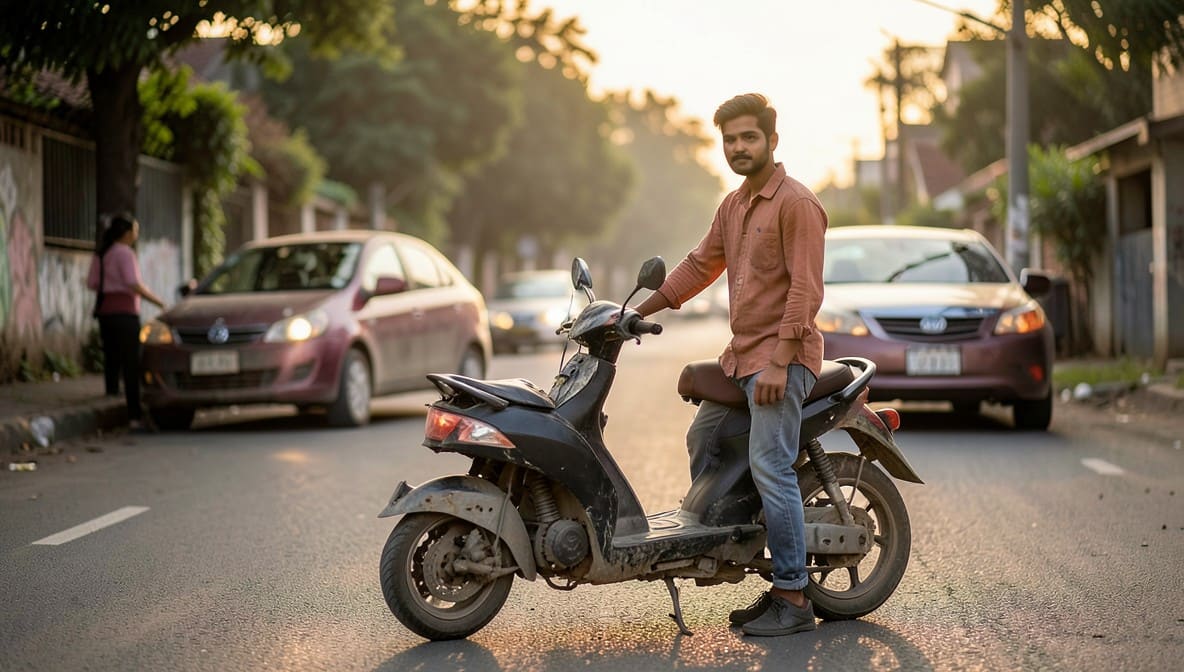
The applicant, Tikeshwar Nareti, a 28-year-old resident of Village Dangara, District Uttar Baster, Kanker, Chhattisgarh, was arrested on 21.02.2026 in connection with Crime No. 66/2026 registered at Police Station City Kotwali, Dhamtari. The case stems from allegations that while crossing a toll plaza near Aamatalab Road, Dhamtari, he attempted to evade toll payment by affixing a sticker bearing the logo of the "National Crime Control Organization" on his Scorpio vehicle and presenting an identity card identifying him as its Vice President.
Key Facts
- The applicant is a member of a registered social NGO, 'Ek Naya Savera', based in Delhi, to which he paid a membership fee.
- The NGO's stated objective includes social welfare and crime prevention, and the applicant believed the "National Crime Control Organization" was a legitimate initiative under it.
- The applicant had no prior criminal record.
- The logo and identity card were obtained through an online Facebook advertisement, which the applicant claims misled him.
- No evidence suggests the applicant used the identity to gain financial benefit, access restricted areas, or impersonate a public servant.
- The prosecution has not yet filed a charge sheet as of the date of the bail order.
Procedural History
- 21.02.2026: FIR registered under Sections 204, 205, and 336(3) of the Bharatiya Nagarik Suraksha Sanhita, 2023; applicant arrested same day.
- 21.02.2026: Applicant placed in judicial custody.
- 24.03.2026: First bail application filed under Section 483 of the Bharatiya Nagarik Suraksha Sanhita, 2023 before the Chhattisgarh High Court.
The Parties' Positions
For the Applicant
The applicant’s counsel argued that the applicant acted in good faith, without criminal intent, and was misled by an online advertisement. The affixation of a logo on a vehicle, without any act of fraud, deception, or impersonation of a public servant, does not satisfy the ingredients of Sections 204 (destruction of evidence), 205 (false evidence), or 336(3) (false representation as an authorized person) of the BNS. The applicant’s youth, lack of antecedents, and prolonged custody since 21.02.2026 were emphasized.
For the Respondent/State
The State opposed bail on the ground that the charge sheet had not been filed, implying the investigation was ongoing and the allegations were serious. No specific counter-evidence was presented to refute the applicant’s claim of bona fide belief.
Relief Sought
The applicant sought regular bail with reasonable conditions, arguing that continued custody was unjustified given the absence of criminal intent and the likelihood of prolonged trial duration.
The Legal Issue
The central question was whether Section 336(3) of the Bharatiya Nagarik Suraksha Sanhita, 2023 requires proof of deliberate impersonation of an authorized person with criminal intent, or whether mere possession of a misleading logo and identity card, without further acts of fraud or misuse, suffices to deny bail.
Arguments Presented
For the Appellant/Petitioner
Counsel relied on the principle that criminal intent is a necessary ingredient for offences under Sections 204, 205, and 336(3) of the BNS. He cited State of Rajasthan v. Bhagwan Das (2021) to argue that absence of mens rea negates criminal liability. He emphasized that the applicant’s actions were the result of naivety, not malice, and that the NGO’s existence and stated objectives provided a plausible, non-criminal context. The applicant’s custody of over 30 days without charge sheet filing, coupled with no prior record, warranted bail under the presumption of innocence.
For the Respondent/State
The State contended that the act of displaying a false organizational logo and presenting a fake identity card at a toll plaza constituted a prima facie case of impersonation and deception under the BNS. It argued that the seriousness of the allegations, even without a charge sheet, justified continued custody to prevent tampering with evidence or influencing witnesses. No precedent was cited to substantiate the claim that such conduct automatically warrants denial of bail.
The Court's Analysis
The Court examined the nature of the allegations and found no evidence that the applicant sought to deceive toll authorities for financial gain, obstruct justice, or impersonate a government official. The Court noted that Section 336(3) of the BNS criminalizes false representation as an authorized person with the intent to induce belief in official authority. The Court held that the applicant’s conduct, while potentially negligent, lacked the requisite mens rea.
"The applicant appears to have been misled by an online advertisement and acted bona fide without any criminal intent. The mere affixation of a logo sticker on his vehicle, without any further act of fraud or impersonation of a public servant, does not constitute an offence under the aforesaid provisions."
The Court further observed that the investigation had not culminated in a charge sheet despite over 30 days of custody, indicating the absence of strong prima facie evidence. The Court applied the triple test for bail - nature of accusation, likelihood of flight, and possibility of tampering - and found none of the factors strongly militated against bail. The applicant’s youth, clean record, and the prolonged period of custody weighed heavily in his favor.
The Court also emphasized that bail is the rule and jail the exception, particularly where the accused is not a flight risk and the investigation remains incomplete.
The Verdict
The applicant succeeded. The Chhattisgarh High Court granted regular bail to Tikeshwar Nareti on furnishing a personal bond with two local sureties in the like sum. The applicant must comply with the following conditions: (i) file an undertaking not to seek adjournments when witnesses are present; (ii) appear before the trial court on all dates personally or through counsel; (iii) face proceedings under Section 209 of the Bharatiya Nyaya Sanhita if proclamation under Section 84 of BNSS is issued and he fails to appear; and (iv) personally appear on dates for opening of case, framing of charge, and recording of statement under Section 351 of BNSS. Failure to comply may be treated as abuse of bail and result in cancellation. The order was directed to be communicated to the trial court forthwith.
What This Means For Similar Cases
Bona Fide Belief Negates Criminal Intent Under BNS
- Practitioners must argue that Section 336(3) BNS requires proof of deliberate impersonation with intent to deceive, not mere possession of misleading materials.
- Evidence of membership in a registered NGO or reliance on online advertisements may support a claim of good faith.
- Absence of financial gain, access to restricted areas, or actual deception of authorities weakens the prosecution’s case.
Custody Duration Without Charge Sheet Favors Bail
- Courts are likely to view prolonged pre-charge sheet custody (beyond 30 days) as a factor favoring bail, especially for first-time offenders.
- The burden shifts to the prosecution to demonstrate why custody remains necessary if no charge sheet is filed within a reasonable time.
- This judgment reinforces the principle that bail is not a privilege but a right under Article 21 when custody exceeds the investigative necessity.
Conditions on Bail Must Be Reasonable and Specific
- The Court’s conditions are narrowly tailored to ensure trial participation without imposing undue restrictions.
- Conditions such as mandatory personal appearance on key dates are enforceable and do not amount to pre-trial punishment.
- Practitioners should propose similar, proportionate conditions in future bail applications to avoid blanket opposition from the State.