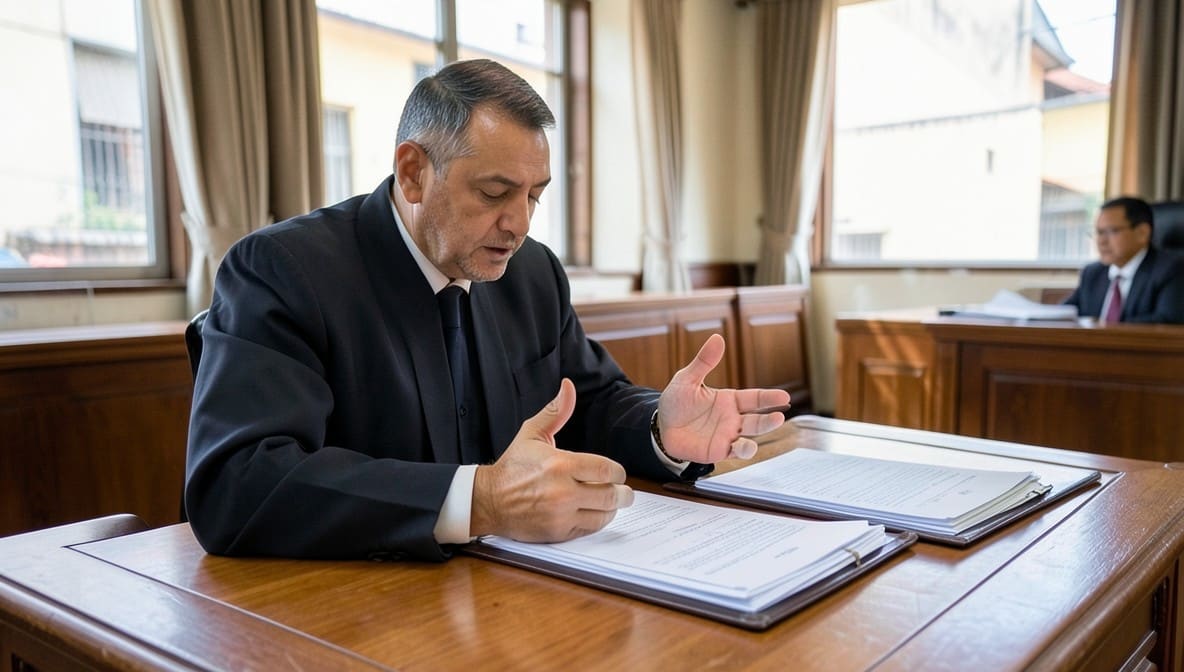
The Patna High Court has quashed cognizance and all consequent criminal proceedings against a panel advocate of UCO Bank who furnished legal opinions on property titles for loan sanction, holding that professional legal advice rendered in good faith without mala fide or conspiracy cannot attract criminal liability under Sections 406, 409, 420, 467, 468, 471 and 120B IPC. The Court emphasized that a legal opinion is advisory and non-binding, and prosecuting an advocate merely because the opinion proved incorrect strikes at the root of the justice delivery system.
Background & Facts
The Dispute
The petitioner, Gopal Krishna Agrawal, an advocate with over 35 years of practice at the Patna High Court, was empanelled as a panel lawyer for UCO Bank, Exhibition Road Branch, Patna. In this capacity, he furnished two legal opinions on property titles offered as collateral security for cash-credit facilities sanctioned to borrowers M/s New Adarsh Medical Hall (Rs. 10 lakhs) and M/s Jai Mata Di (Rs. 10 lakhs). The Bank officials, borrowers and guarantors allegedly conspired to sanction loans against forged title deeds, causing a loss of Rs. 29.54 lakhs to the Bank. The petitioner was arrayed as an accused in the FIR and charge-sheet, and the Additional Chief Judicial Magistrate, Patna took cognizance against him.
Key Facts
- 02.05.2002: Petitioner furnished first legal opinion for M/s New Adarsh Medical Hall regarding 19 decimals of land at Plot No. 2678, Khata No. 1614, Village-Isopur, advising the Bank to verify the non-encumbrance certificate at its own level before sanction
- 21.10.2003: Petitioner furnished second legal opinion for M/s Jai Mata Di based on search report receipts from Registrar Office, Patna Sadar (No. 0309843 dated 26.09.2003) and Sub-Registrar Office, Patna City (No. 586176 dated 08.10.2003), and non-encumbrance certificates from both offices
- 28.11.2008: Chief Manager, UCO Bank lodged written report alleging criminal conspiracy by Bank officials, borrowers and guarantors in sanctioning cash-credit facilities against forged title deeds
- 03.12.2008: Gandhi Maidan P.S. Case No. 366 of 2008 registered under Sections 406, 409, 420, 467, 468, 471, 474 and 120B IPC
- 31.08.2014: Charge-sheet No. 223 of 2014 filed under Sections 406, 409, 420, 467, 468, 471, 474 and 120B IPC
- 21.01.2016: ACJM, Patna passed order taking cognizance under Sections 406, 409, 420, 467, 468, 471 and 120B IPC (Section 474 dropped)
- 28.04.2005: Medical Board, Patna issued disability certificate certifying 60% permanent physical disability to petitioner following a road accident in 2004
Procedural History
- 28.11.2008: Written complaint by Chief Manager, UCO Bank
- 03.12.2008: FIR registered (Gandhi Maidan P.S. Case No. 366/2008)
- 31.08.2014: Charge-sheet filed (No. 223/2014)
- 21.01.2016: ACJM, Patna took cognizance against petitioner and others
- 2016: Criminal Miscellaneous No. 50456 of 2016 filed before Patna High Court under Section 482 CrPC
- 26.10.2026: Judgment delivered by Justice Rana Vikram Singh
The Parties' Positions
Petitioner: Contended that as panel advocate, he rendered opinions in good faith based on government records, advised independent verification, had no role in loan sanction, derived no benefit, and no allegation of conspiracy or mala fide existed. The cognizance order was mechanically passed without judicial application of mind.
Respondent (State/UCO Bank): Contended that legal opinions formed part of investigation materials disclosing petitioner's involvement and connivance. At cognizance stage, the Magistrate only needed prima facie case from FIR and case diary; defence could be raised at trial. The order was in accordance with law.
Relief Sought
Quashing of the order dated 21.01.2016 taking cognizance under Sections 406, 409, 420, 467, 468, 471 and 120B IPC insofar as it pertains to the petitioner, and all consequent criminal proceedings emanating therefrom.
The Legal Issue
Whether an advocate can be fastened with criminal liability for discharging professional duty by rendering legal opinions on property titles for bank loan sanction, in the absence of any allegation or evidence of mala fide, conspiracy, illegal gratification, or active participation in fraud.
Arguments Presented
For the Petitioner
Mr. Siddhartha Prasad submitted that the petitioner was a panel advocate who furnished opinions on 02.05.2002 and 21.10.2003 based on documents made available to him. He specifically advised the Bank to verify original documents at the time of deposit. The decision to sanction loans was taken by Bank officials; the petitioner had no role in decision-making, no knowledge of alleged forgery, derived no benefit, and was not entrusted with any Bank property or funds. No allegation of meeting of minds, conspiracy, or participation existed. The FIR informant did not even pray for action against lawyers. Continuing prosecution amounted to abuse of process.
For the Respondent
Mr. Rajesh Kumar Pandey (for UCO Bank) submitted that the petitioner's legal opinions formed part of investigation materials disclosing his involvement and connivance. The counter-affidavit asserted that a bare perusal of the FIR and opinions made his involvement apparent. Mr. Sanjay Kumar Tiwary (APP) submitted that the Magistrate rightly took cognizance on prima facie materials, and at this stage detailed evidence appreciation or defence examination was not required. No ground for Section 482 interference existed.
The Court's Analysis
The Court framed the core issue: whether an advocate could be prosecuted criminally for furnishing legal opinion to his client. It examined the nature of legal opinion, citing Black's Law Dictionary: a written document providing an attorney's understanding of law applied to specific facts - objective, professional, advisory, non-binding, and of persuasive value only.
"An Advocate owes a duty of care to client if the opinion is tendered carelessly, negligently and without having examined and verified the factual substance, the Advocate can be sued for professional negligence in the form of disciplinary proceedings... On the contrary, an Advocate can never be penalized for tendering his opinion simply because his opinion turned out to be incorrect or if a Court later took a different view of the law."
The Court relied on CBI v. K. Narayana Rao (2012) 9 SCC 512, where the Supreme Court held that liability against an opining advocate arises only when the lawyer was an active participant in a plan to defraud the Bank. Mere negligence or want of greater professional care does not attract criminal liability absent tangible evidence. This principle was affirmed in Surendra Nath Pandey v. State of Bihar (2020) 18 SCC 730, where the Supreme Court quashed proceedings against panel advocates, holding allegations were "bald and omnibus" without specific reference to their role in conspiracy.
The Court then analysed each offence:
Sections 406/409 IPC (Criminal Breach of Trust): Essential ingredient of "entrustment" of property was absent. The petitioner was never entrusted with Bank property or funds. Citing Anand Kumar Mohatta v. State (2019) 11 SCC 706 and Radheyshyam v. State of Rajasthan (2024), the Court held non-payment of commercial dues or loan default does not constitute criminal breach of trust without entrustment and dishonest intention from inception.
Section 420 IPC (Cheating): Required fraudulent/dishonest inducement to deliver property. The petitioner neither cheated nor induced anyone to deliver property or valuable security. The foundational ingredient of cheating was conspicuously absent.
Sections 467/468 IPC (Forgery): No specific act of making, signing, executing or altering false documents was attributed to the petitioner. He enclosed government-verified documents with his opinions.
Section 471 IPC (Using Forged Document): Required proof that accused used forged document as genuine knowing it to be forged. The petitioner submitted documents obtained from government offices after verification; no evidence showed he knew or had reason to believe they were forged. Citing Vandna v. State of Maharashtra (2025), the Court held suspicion cannot replace legal proof.
Section 120B IPC (Criminal Conspiracy): Citing State v. Nalini (1999) 5 SCC 253 and Rajeev v. State of Kerala (2023), the Court held mere presence of several accused does not establish conspiracy; there must be material indicating agreement or meeting of minds. No evidence connected the petitioner to Bank officials or borrowers.
The Court also condemned the cognizance order as mechanically drafted by court staff with only the word "cognizance" filled in by the Magistrate, citing Darshan Singh Ram Kishan v. State of Maharashtra (1971) 2 SCC 654: cognizance requires application of judicial mind, not a proforma order. Applying State of Haryana v. Bhajan Lal grounds (1), (3) and (7), the Court found the prosecution manifestly mala fide and vexatious.
The Verdict
The petitioner succeeded fully. The Court quashed and set aside the order dated 21.01.2016 passed by the ACJM, Patna taking cognizance under Sections 406, 409, 420, 467, 468, 471 and 120B IPC in Gandhi Maidan P.S. Case No. 366 of 2008, insofar as it pertains to the petitioner. All consequent criminal proceedings emanating therefrom were also quashed qua the petitioner. The Criminal Miscellaneous Application No. 50456 of 2016 was allowed. All pending interlocutory applications were disposed of.
What This Means For Similar Cases
Legal Opinion Is Advisory, Not Guarantee
- A legal opinion represents professional evaluation based on facts provided; it is non-binding and of persuasive value only
- An advocate cannot be criminally liable merely because the opinion proved incorrect or a court later took a different view
- Criminal liability arises only when the advocate is an active participant in a plan to defraud, with tangible evidence of mala fide, conspiracy, or illegal gratification
Entrustment Is Sine Qua Non for Criminal Breach of Trust
- Sections 406/409 IPC require actual entrustment of property or dominion over property to the accused
- Professional advice on title verification does not constitute entrustment of Bank funds or property
- Commercial loan defaults or NPA classification alone cannot ground criminal breach of trust charges against panel advocates
Cognizance Requires Judicial Application of Mind
- Orders taking cognizance cannot be mechanical proformas filled by court staff
- The Magistrate must reflect consideration of allegations and satisfaction of prima facie case
- A mechanically passed cognizance order is bad in law and liable to be quashed under Section 482 CrPC
Prosecution of Advocates for Professional Work Threatens Justice Delivery
- Fear of criminal prosecution for bona fide professional advice undermines advocate independence
- The Bar's fearlessness and integrity are essential to the justice system
- Vexatious prosecution of advocates for professional opinions constitutes abuse of process under Bhajan Lal ground (7)