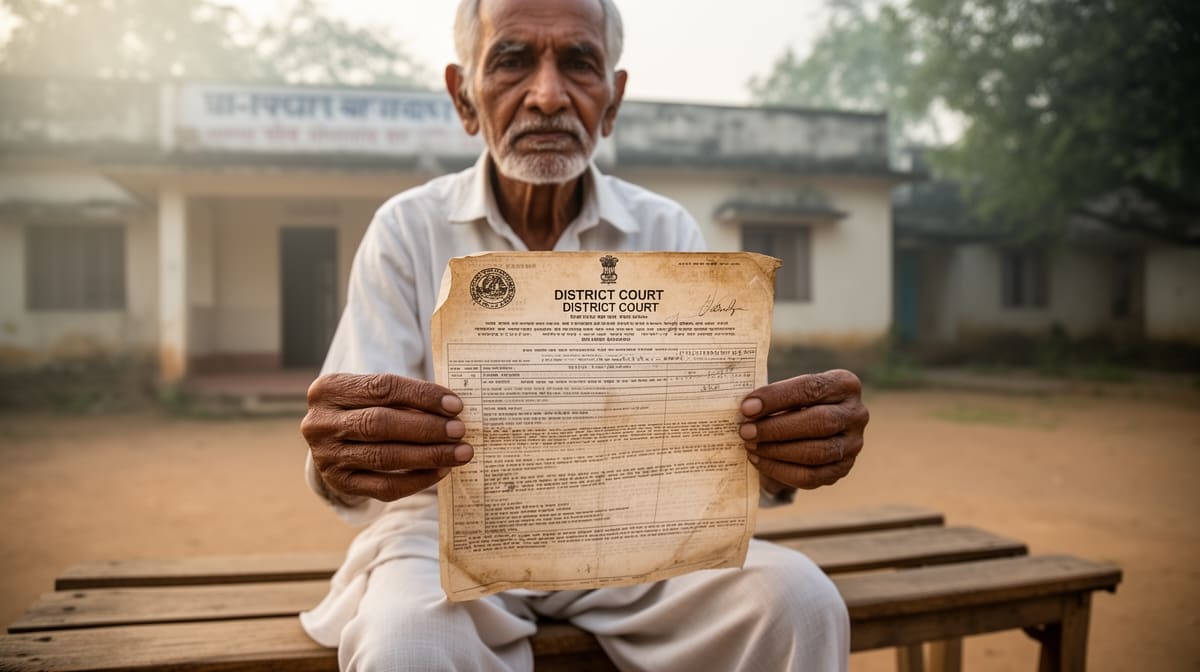
The Allahabad High Court has partially allowed an appeal against the forfeiture of surety bonds under Section 446 of the Code of Criminal Procedure, 1973, reducing the penalty imposed on two sureties from Rs.1,00,000 each to Rs.50,000 each. The Court exercised its discretion under Section 446(3) CrPC to remit a portion of the penalty, considering the socio-economic condition of the sureties and the fact that the accused had since been arrested and produced before the court.
Background & Facts
The Genesis
The appellants, Mundrika Yadav and Shiv Chandra, stood as sureties for the accused Vishwakarma Rajbhar, who was released on bail. The accused failed to appear before the trial court despite service of non-bailable warrant and notice, leading to the forfeiture of the surety bonds.
Key Facts
- The accused was released on bail on the surety of the appellants on [Date not specified in judgment].
- The trial court issued a non-bailable warrant and notice to the accused, which were served upon the appellants on 30.01.2024.
- The accused did not appear before the trial court, prompting the trial court to forfeit the surety bonds and convert the bond amount into a fine/penalty.
- The appellants filed an application on 02.04.2024, stating that the accused had been arrested and was lodged in District Jail, Ballia, and prayed for withdrawal of the notice and exoneration from liability.
- The trial court rejected the application by order dated 02.04.2024, holding that the appellants had failed to discharge their obligations under the bond and directed recovery of Rs.1,00,000 each from the appellants.
Procedural History
- 30.01.2024: Trial court issued non-bailable warrant and notice to the accused, served upon the appellants.
- 02.04.2024: Trial court passed the impugned order forfeiting the surety bonds and directing recovery of Rs.1,00,000 each from the appellants.
- 26.05.2026: Appeal reserved by the High Court.
- 21.07.2026: Judgment delivered by the High Court.
The Parties' Positions
For the Appellants
The appellants contended that they were poor agriculturists with no independent source of livelihood, that the accused had absconded and was not cooperating, and that the accused had since been arrested and produced before the court. They prayed for setting aside the forfeiture order or reducing the quantum of recovery.
For the Respondent
The State opposed the appeal, supporting the reasoning of the trial court. It submitted that the appellants had failed to show sufficient cause for non-production of the accused and that the subsequent arrest of the accused did not absolve them of their default.
The Legal Issue
The central question was whether the High Court could exercise its discretion under Section 446(3) CrPC to remit a portion of the penalty imposed on the sureties, considering their socio-economic condition and the fact that the accused had since been arrested and produced before the court.
Arguments Presented
For the Appellant
- The appellants are poor agriculturists with no independent source of livelihood.
- The accused absconded and was not cooperating, making it difficult for the appellants to secure his appearance.
- The accused has since been arrested and produced before the court, achieving the purpose of the bond.
- The quantum of recovery should be reduced in the interest of justice.
For the Respondent
- Notice under Section 446 CrPC was duly served upon the appellants.
- The appellants neither showed sufficient cause for non-production of the accused nor secured his appearance.
- The subsequent arrest of the accused by the police does not absolve the sureties of their default.
The Court's Analysis
The Court examined the provisions of Section 446 CrPC and the discretionary power vested in it under Section 446(3) CrPC to remit any portion of the penalty. The Court noted that the trial court had duly served notice upon the appellants and that they had failed to show sufficient cause for non-production of the accused. However, the Court also considered the socio-economic condition of the appellants and the fact that the accused had since been arrested and produced before the court.
The Court relied on the Supreme Court's decision in Istkar v. State of U.P. & Anr. (2022) to hold that the Court retains discretion to remit any portion of the penalty and enforce payment only in part, having regard to the facts and circumstances of the case.
"This clearly enunciates that even when a person fails to show sufficient cause as to forfeiture of the bond amount, the Court is not bound to direct payment or recovery of the entire bond amount. The Court can exercise its discretion and remit some portion of the bond owing to the nature of the offence, status and position of the person, and having regard to other facts and circumstances of the case or when the amount of bond is unduly excessive."
The Court found no infirmity in the trial court's order confirming forfeiture of the bonds but considered the quantum of recovery to call for a measure of leniency.
The Verdict
The appeal was partly allowed. The Court modified the trial court's order dated 02.04.2024 to reduce the penalty payable by each of the appellants from Rs.1,00,000 to Rs.50,000. The appellants were directed to deposit the said sum within two months from the date of the judgment. The trial court was directed to modify its recovery warrant accordingly.
What This Means For Similar Cases
Discretion to Remit Penalty is Inherent
- Courts retain discretion under Section 446(3) CrPC to remit any portion of the penalty imposed on sureties, even if they fail to show sufficient cause for non-production of the accused.
- The discretion must be exercised having regard to the facts and circumstances of the case, including the socio-economic condition of the sureties and the nature of the offence.
Socio-Economic Condition Matters
- The Court acknowledged the socio-economic condition of the sureties as a relevant factor in reducing the penalty.
- Practitioners should highlight the socio-economic background of sureties in similar cases to seek leniency in penalty.
Purpose of Bond Must Guide Recovery
- The underlying purpose of the bond is to secure the appearance of the accused.
- If the accused has since been arrested and produced before the court, the purpose of the bond is achieved, and the quantum of recovery may be reduced accordingly.