The Kerala High Court has clarified that sureties who post bail for an accused who subsequently absconds are not automatically liable for the full penal sum. In a significant ruling under the Bharatiya Nagarik Suraksha Sanhita, 2023, the Court reduced the penalty imposed on one surety, affirming that equity and proportionality must guide judicial discretion in forfeiture cases.
Background & Facts
The Dispute
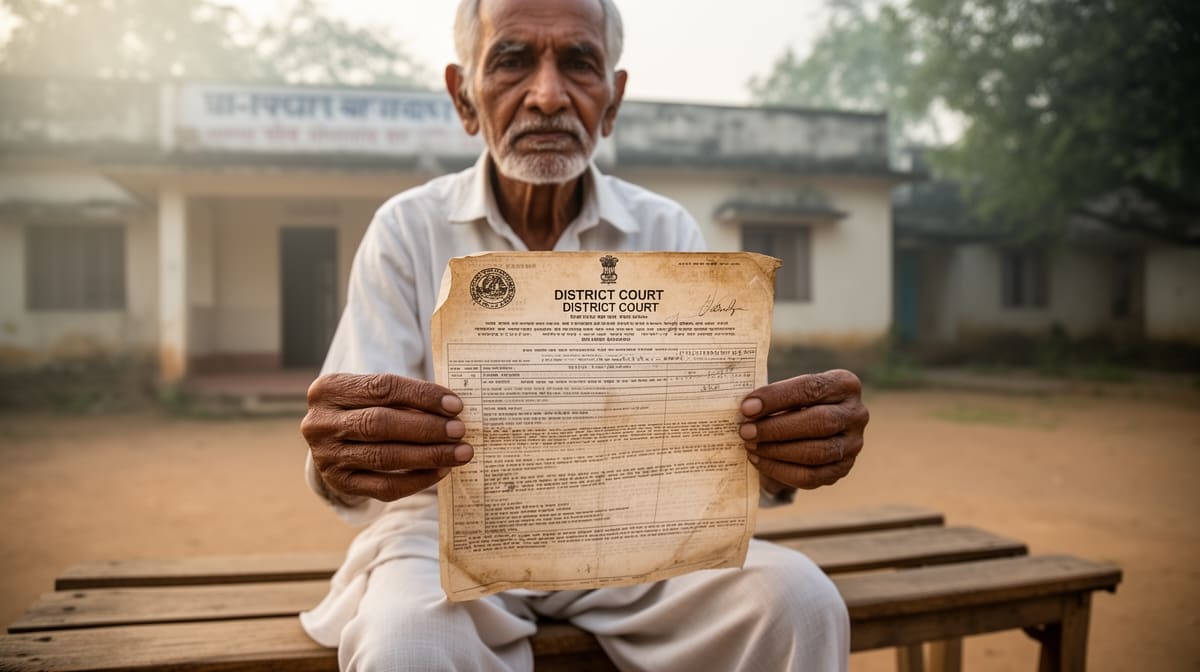
The appellants, Sreelatha and Dinesh Babu, acted as sureties for the accused in Crime No. 341/2012 registered at Vellarada Police Station, Thiruvananthapuram. The accused was granted bail by the Fast Track Special Court I, Neyyattinkara, on the execution of a bail bond with the appellants as sureties. Subsequently, the accused failed to appear before the trial court on multiple occasions, leading to the forfeiture of the bail bond.
Key Facts
- The accused was released on bail on an unspecified date prior to 2026, with sureties Sreelatha and Dinesh Babu executing bonds for Rs. 25,000 each
- The accused failed to appear before the Fast Track Special Court on dates not specified but confirmed as recurring
- On 12.05.2026, the Fast Track Special Court ordered forfeiture of the entire bail bond amount of Rs. 25,000 against each surety
- No evidence was presented that the sureties wilfully facilitated the accused’s absence
- The appellants filed a miscellaneous petition seeking reduction of penalty, which was dismissed
Procedural History
- Crime No. 341/2012: FIR registered at Vellarada Police Station on an unspecified date
- Bail granted: Date not specified, but prior to non-appearance
- 12.05.2026: Fast Track Special Court I, Neyyattinkara, ordered forfeiture of Rs. 25,000 against each surety
- 12.05.2026: Miscellaneous Petition No. 4/2026 filed by sureties seeking reduction of penalty
- 12.05.2026: M.C. 4/2026 dismissed by the trial court
- 24.06.2026: Criminal Appeal No. 830 of 2026 filed before the Kerala High Court
Relief Sought
The appellants sought reduction of the penalty amount imposed on them, arguing that they had no role in the accused’s non-appearance and that the full penalty of Rs. 25,000 was disproportionate and unjust.
The Legal Issue
The central question was whether Section 495 of the Bharatiya Nagarik Suraksha Sanhita, 2023 permits a court to reduce the penalty on forfeiture of a bail bond when the sureties have not acted negligently or in collusion with the accused.
Arguments Presented
For the Appellant/Petitioner
The learned counsel argued that the sureties had fulfilled their obligations by securing the accused’s release and had no control over his subsequent conduct. Reliance was placed on Thundichi v. State of Kerala [2009(4) KLT 67], which held that while sureties cannot escape liability upon forfeiture, courts may exercise leniency in fixing the quantum of penalty. It was submitted that the penalty of Rs. 25,000 was excessive and punitive, especially in the absence of any evidence of misconduct by the sureties.
For the Respondent/State
The Public Prosecutor did not contest the legal principle that leniency is permissible. He conceded that a reasonable reduction in penalty was warranted, acknowledging that the sureties were not responsible for the accused’s non-appearance and that the full amount was not justified under principles of equity.
The Court's Analysis
The Court examined the nature of suretyship under Section 495 of the Bharatiya Nagarik Suraksha Sanhita, 2023, which replaces the corresponding provisions under the CrPC. The Court reaffirmed the principle laid down in Thundichi v. State of Kerala, that forfeiture of a bail bond does not absolve the surety of liability, but the quantum of penalty is not rigidly fixed and must reflect fairness.
"On forfeiture of the bond, the accused would be produced by the sureties or the accused was later arrested would not save the sureties from paying the forfeited amount of penalty, though leniency in the quantum of penalty can be considered."
The Court noted that the trial court had imposed the maximum penalty without considering mitigating circumstances. The sureties had no prior record of default, and there was no allegation of collusion or negligence on their part. The State’s concession further supported the view that the penalty was disproportionate.
The Court emphasized that bail bonds serve a procedural purpose - ensuring appearance - and not punitive deterrence against sureties. Imposing the full amount in the absence of fault would violate the principle of proportionality and render the surety system oppressive.
The Verdict
The appeal was allowed in part. The Court reduced the penalty imposed on the first appellant (Sreelatha) from Rs. 25,000 to Rs. 10,000, while confirming the penalty of Rs. 25,000 against the second appellant (Dinesh Babu). The first appellant was directed to pay Rs. 10,000 to the Fast Track Special Judge, Neyyattinkara on or before 06.07.2026. If unpaid by that date, the full original penalty of Rs. 25,000 shall become payable, and the court may proceed to enforce imprisonment as per law.
What This Means For Similar Cases
Penalty Reduction Is a Right, Not a Privilege
- Practitioners must now argue for reduction as a matter of right when sureties demonstrate no fault or collusion
- Courts must record reasons for rejecting reduction requests - silence or mechanical imposition is impermissible
- The burden shifts to the prosecution to prove negligence or misconduct by sureties to justify full forfeiture
Proportionality Must Guide Judicial Discretion
- The penalty must be commensurate with the risk posed and the surety’s conduct
- Factors to consider: duration of bail, accused’s prior compliance, financial capacity of surety, and whether the accused was apprehended later
- Full forfeiture should be reserved for cases of active obstruction or repeated defaults by sureties
Documentation Is Critical for Relief
- Sureties must file affidavits affirming their lack of involvement in the accused’s absence
- Evidence of attempts to locate the accused or notify authorities should be submitted
- A record of communication with the accused prior to non-appearance strengthens the case for leniency